The landscape of computer programming has fundamentally shifted over the last year. With the rise of advanced AI coding assistants, developers are generating lines of code faster than ever before. But this sudden shift has raised a critical question in the tech community: Are we relying too much on automation, and are our core skills atrophying?
When a major AI service goes offline, many programmers experience a sudden drop in productivity. It feels like a roadblock, leading to the fear that we are losing our ability to build software independently.
However, the reality of modern software engineering tells a different story. AI isn't making developers obsolete; it is shifting the nature of expertise.
The Evolution of the Developer's Role
In the past, computer programming required spending hours memorizing syntax, writing repetitive boilerplate code, and hunting down missing semicolons. Today, AI handles those low-level tasks instantly.
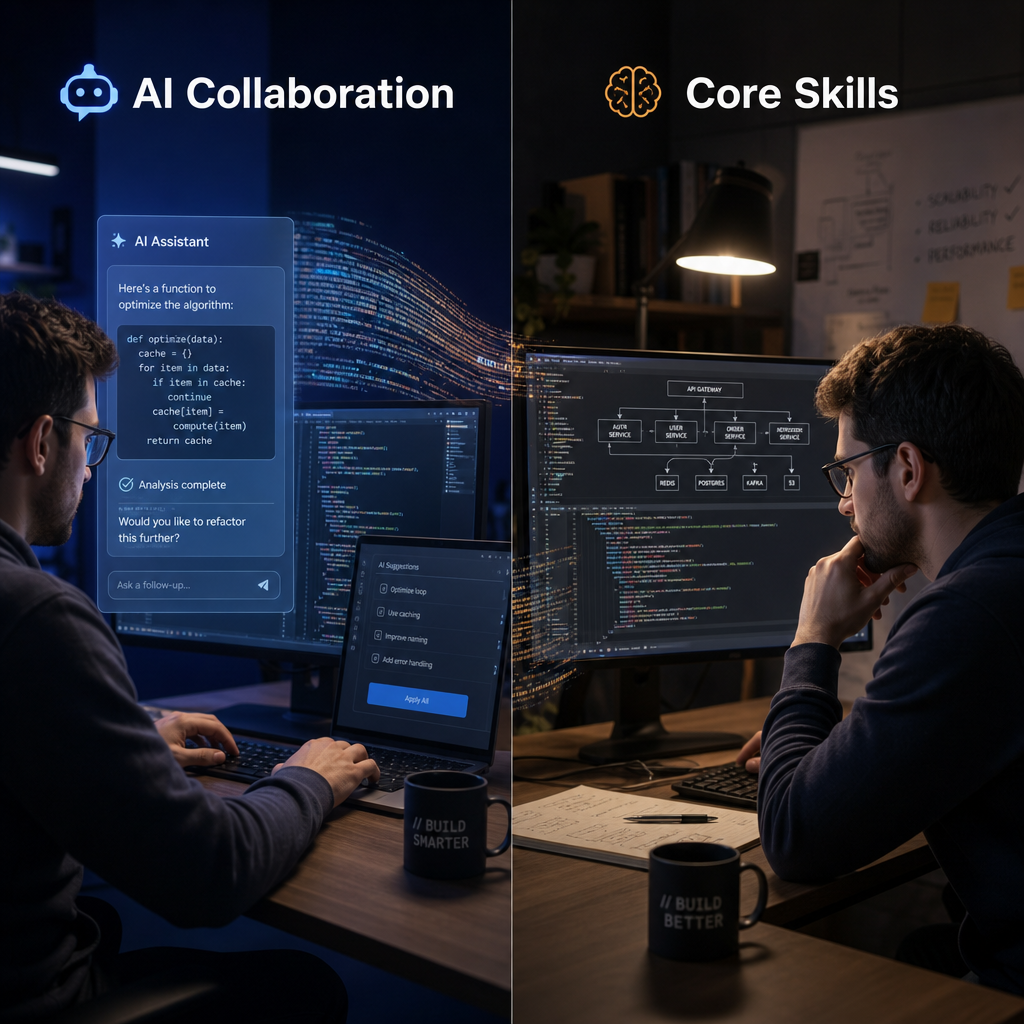
This doesn't mean the human element is gone. In fact, relying on AI requires a high level of critical thinking:
Code Comprehension: You cannot safely deploy AI-generated code without thoroughly understanding it. A developer must review, debug, and refactor the output to ensure security and efficiency.
Systems Architecture: AI can write a function, but it cannot design a complex, scalable ecosystem or understand the unique nuances of your specific project infrastructure.
Protecting Your Coding Edge
The key to surviving the AI evolution without losing your edge is intentional practice. The best developers treat AI as a high-speed collaborator, not a replacement for thought. By maintaining the ability to code from scratch and regularly challenging the logic that the machine provides, you ensure that your foundational skills remain razor-sharp.
Ultimately, computer programming has never just been about typing code—it is about problem-solving. As long as you understand the underlying mechanics of what you build, AI is simply an accelerator for your own expertise.