Is Mount Aso worth the trip? Yes. Standing at the edge of the Nakadake crater was the first time I had ever seen an active volcano, and I'm in my forties. You look down into a pool of milky blue water that never stops steaming, and the smell of rotten eggs hits you as soon as you get out of the car. Just check that the crater is open before you go, and skip it if you have breathing or heart problems.
We went in December 2025, on one of our stopovers in Japan on the way back to Hong Kong. The fare is about the same, so we often stop for a few days. Every photo below is my own.
I talk through the whole day in Cantonese on my podcast, in my own voice, with English subtitles on screen.
What is the Aso caldera?
A giant bowl left by ancient eruptions. Mount Aso isn't one peak. A huge eruption long ago left a basin about 25 km from north to south and 18 km from east to west, one of the largest calderas in the world. (In the podcast I called it the largest. It isn't quite; a few, like Toba in Indonesia, are bigger.) Newer peaks then rose in the middle, and one of them, Nakadake (1,506 m), is still active.
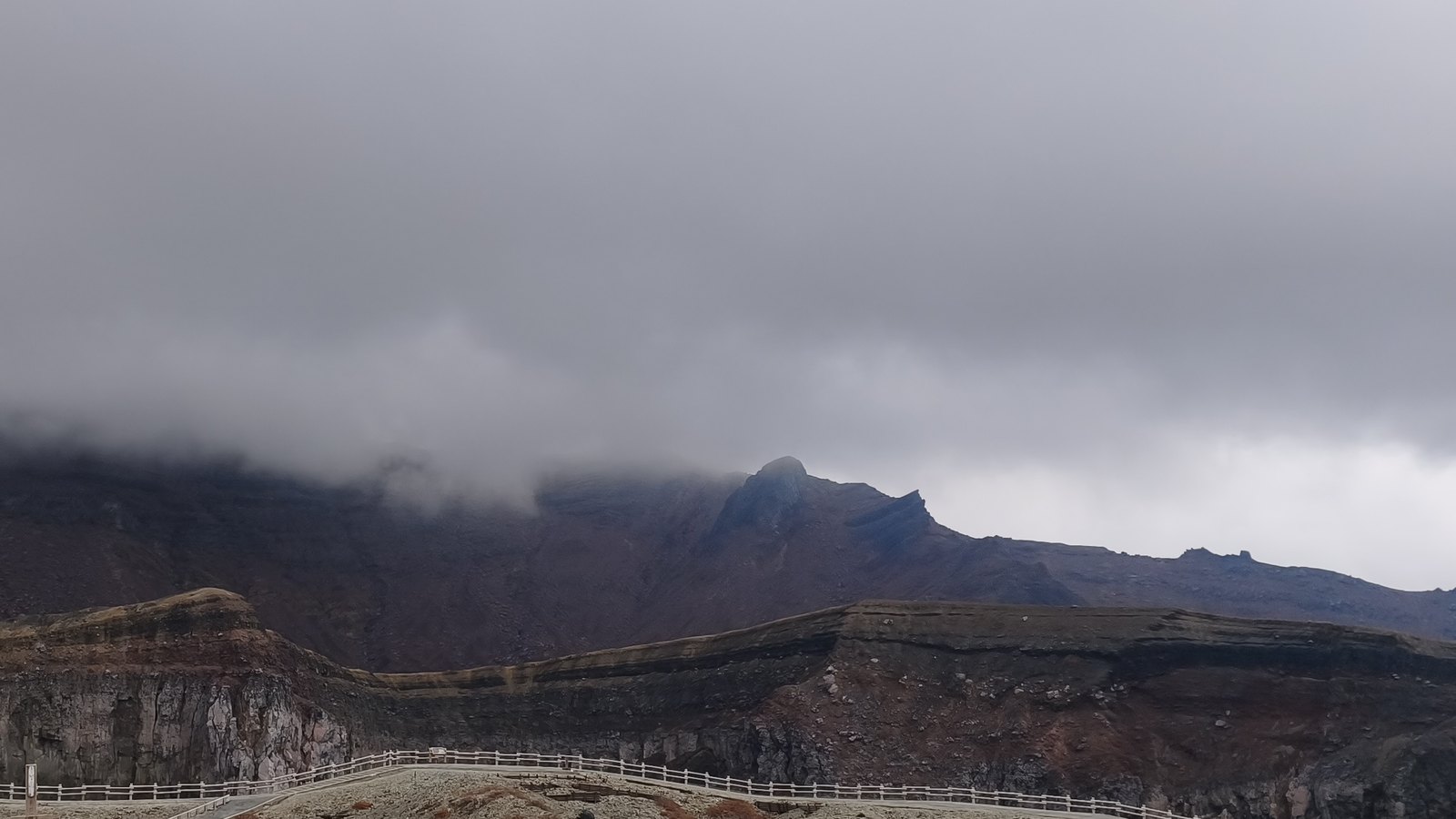
Do people really live inside the volcano?
Yes, about 50,000 of them. That surprised me most. The caldera floor has towns like Aso City and Minami-Aso village, farms, grazing cattle, even a hospital, and a good road network. We drove out from Kumamoto that morning, and the roads were easy the whole way up. Down in the basin, it doesn't feel like volcano country at all.
What should you eat around Aso?
Anything made with Aso milk. Along the way you keep seeing red-brown akaushi cattle and Aso milk for sale. There's Aso milk chocolate too, and at the Daikanbo lookout (936 m) they even make ice cream with it. We passed Daikanbo on the way up; that one deserves a post of its own.
What is Kusasenri like?
A huge, wide grassland on the way to the crater. On the day we went it was golden-brown winter grass under a heavy sky.
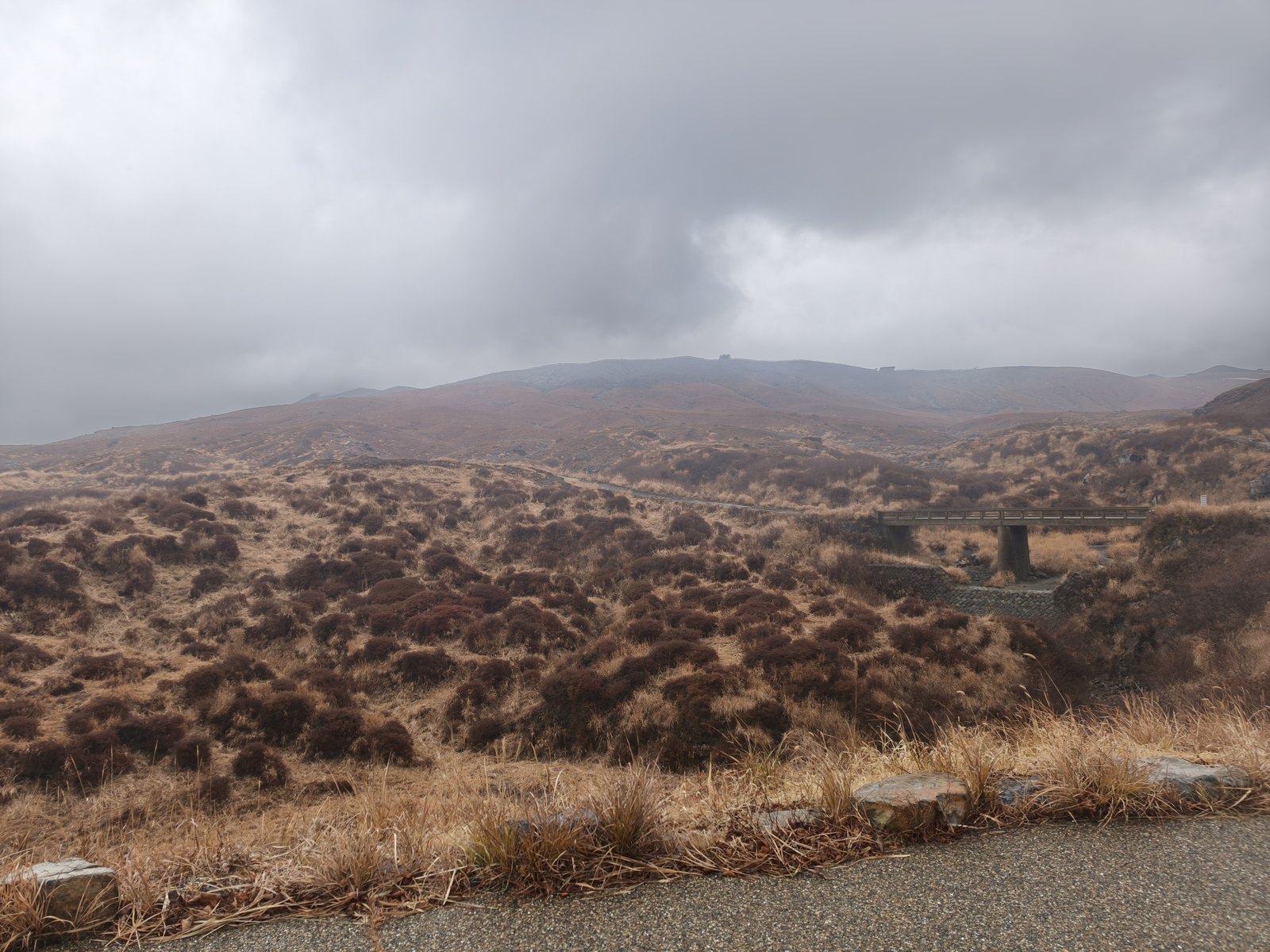
The weather was fine going up. Coming back down, it poured, and we had to run into the Kusasenri visitor centre to wait out the rain. Luckily we had a big umbrella with us. My advice for any trip to Japan: pack a folding umbrella.
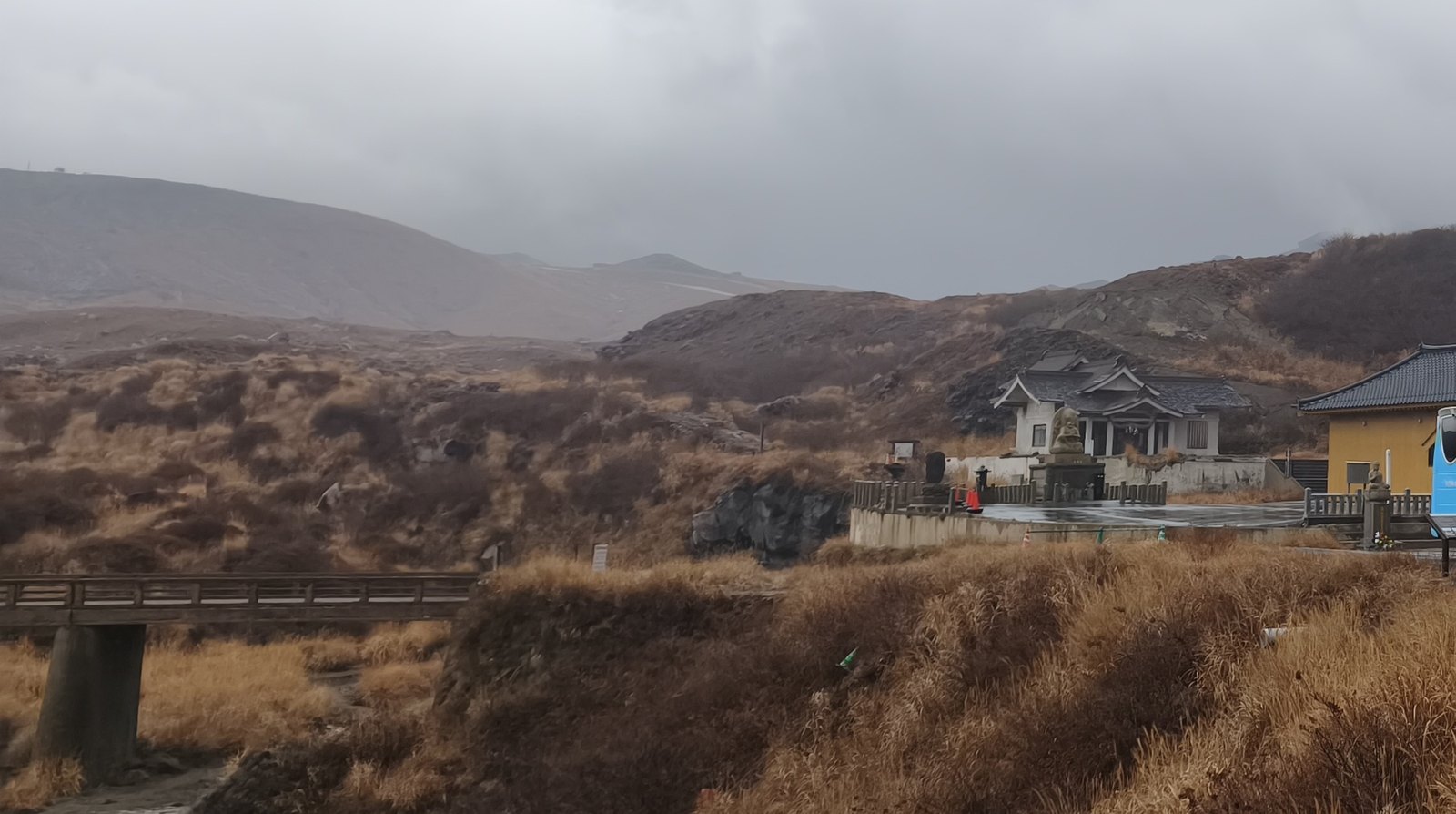
What does the Nakadake crater look like?
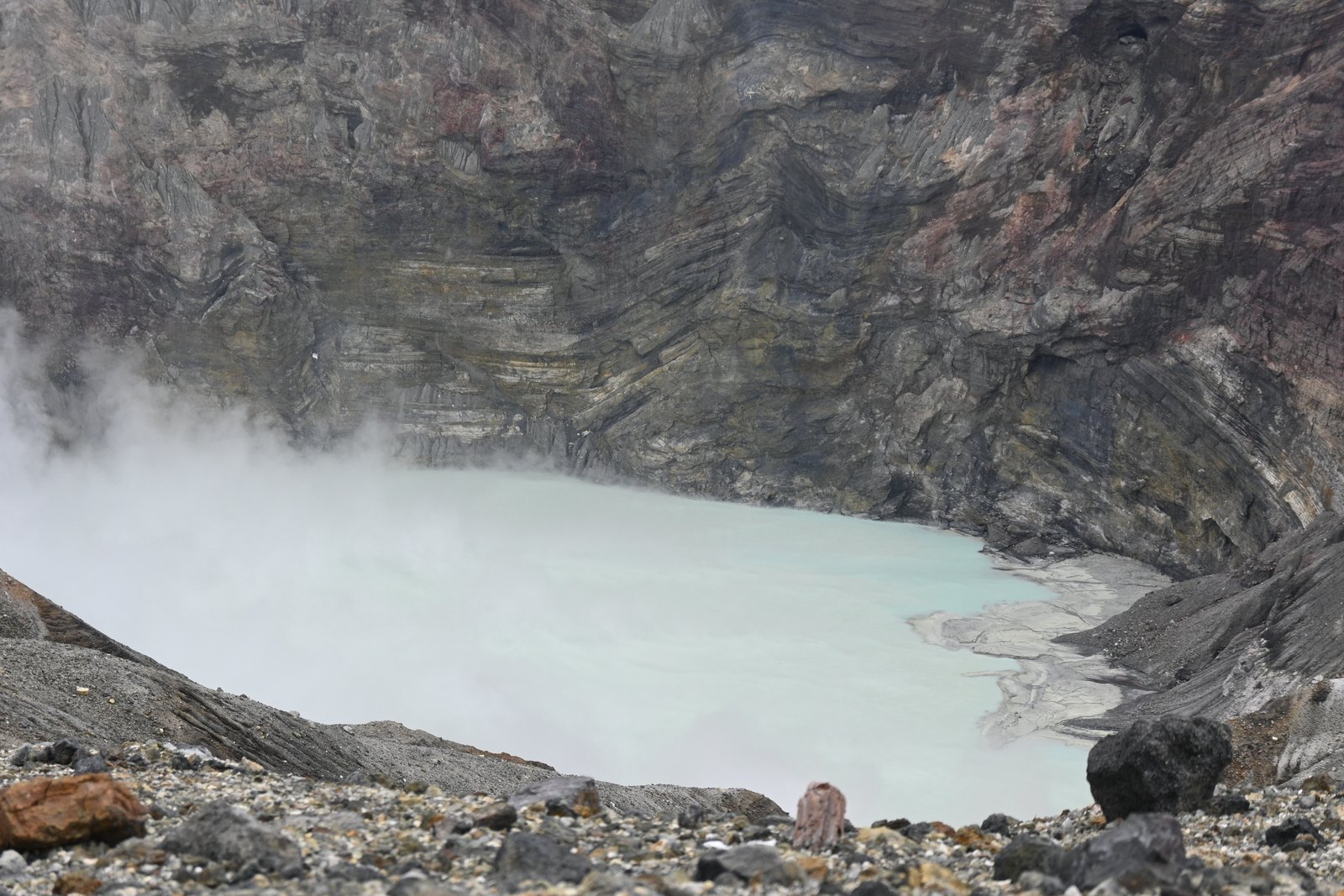
Like a giant pot on the boil. From the car park you walk up to the rim, and there it is: a lake deep inside the crater, with steam rolling off it all the time. In Japanese the lake is called the Yudamari, meaning "pool of hot water".
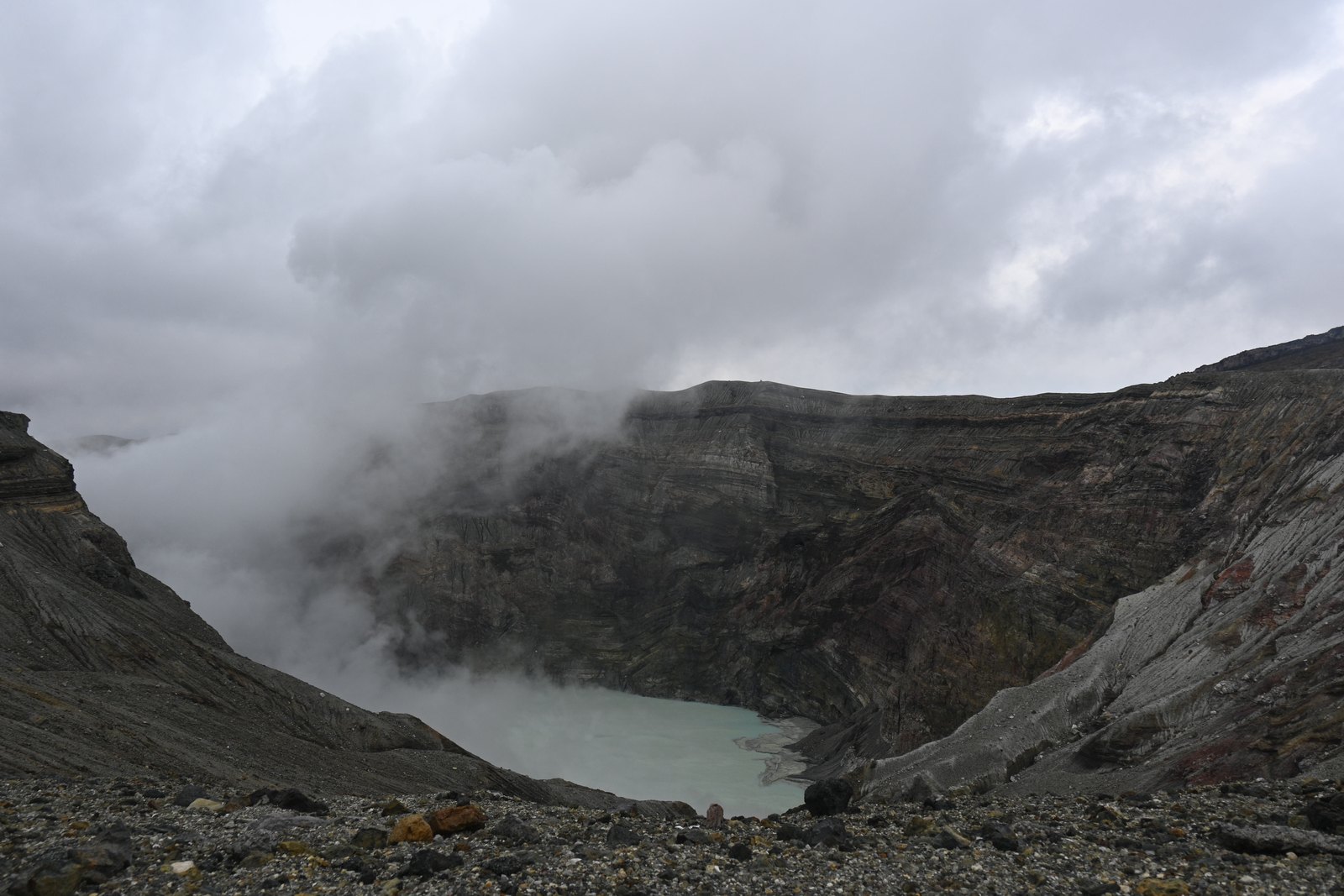
The crater walls are striped in grey, red and purple, layer after layer of old eruptions.
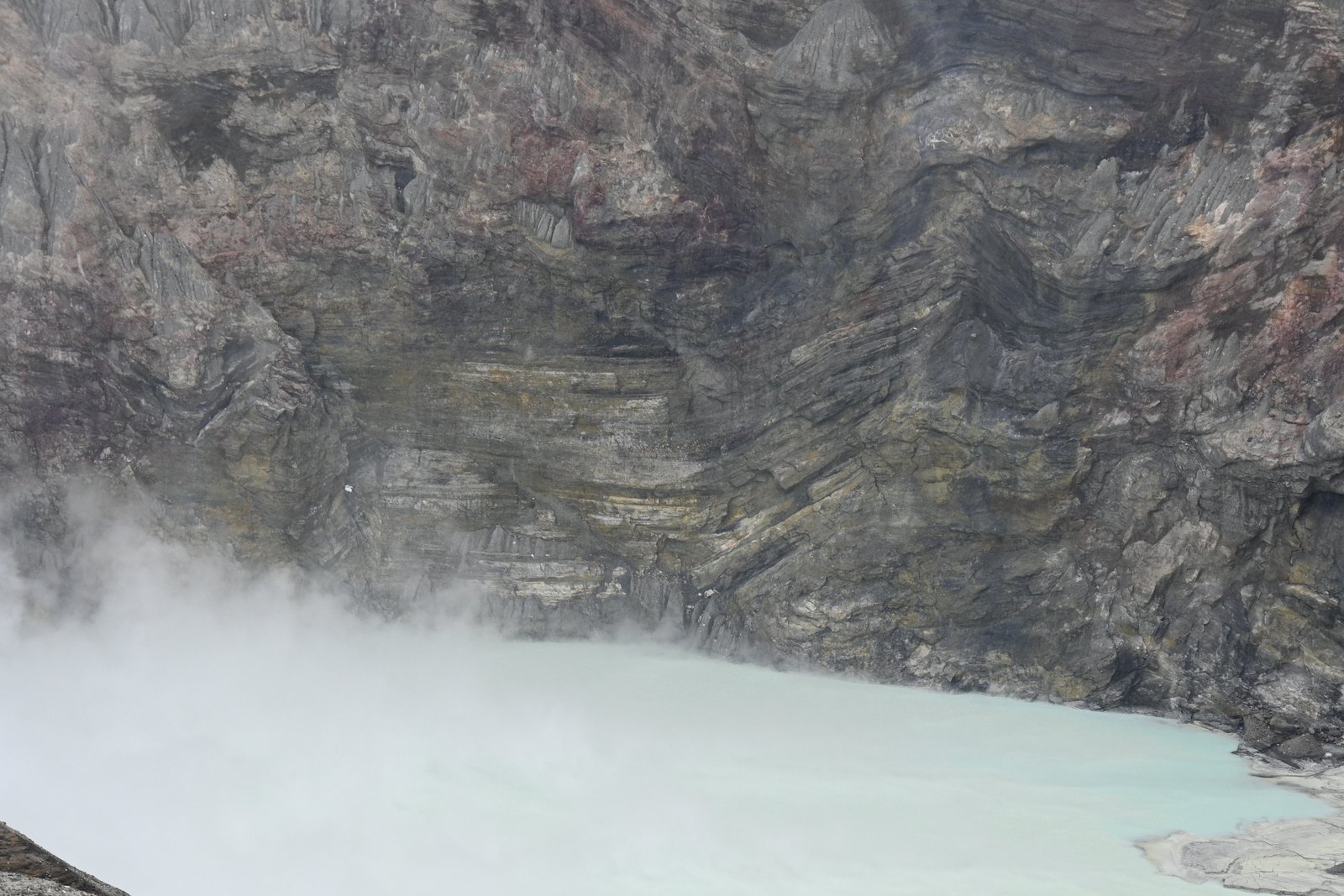
Is the Aso crater lake acidic or alkaline?
Strongly acidic, around pH 1. In the podcast I guessed it was alkaline, and I was wrong; the video has a fact-check card for it. The rotten-egg smell is hydrogen sulphide, and the sharp, choking smell is sulphur dioxide. I had read about volcanoes in geography class, but I never knew a volcano smelt like this until I stood there.
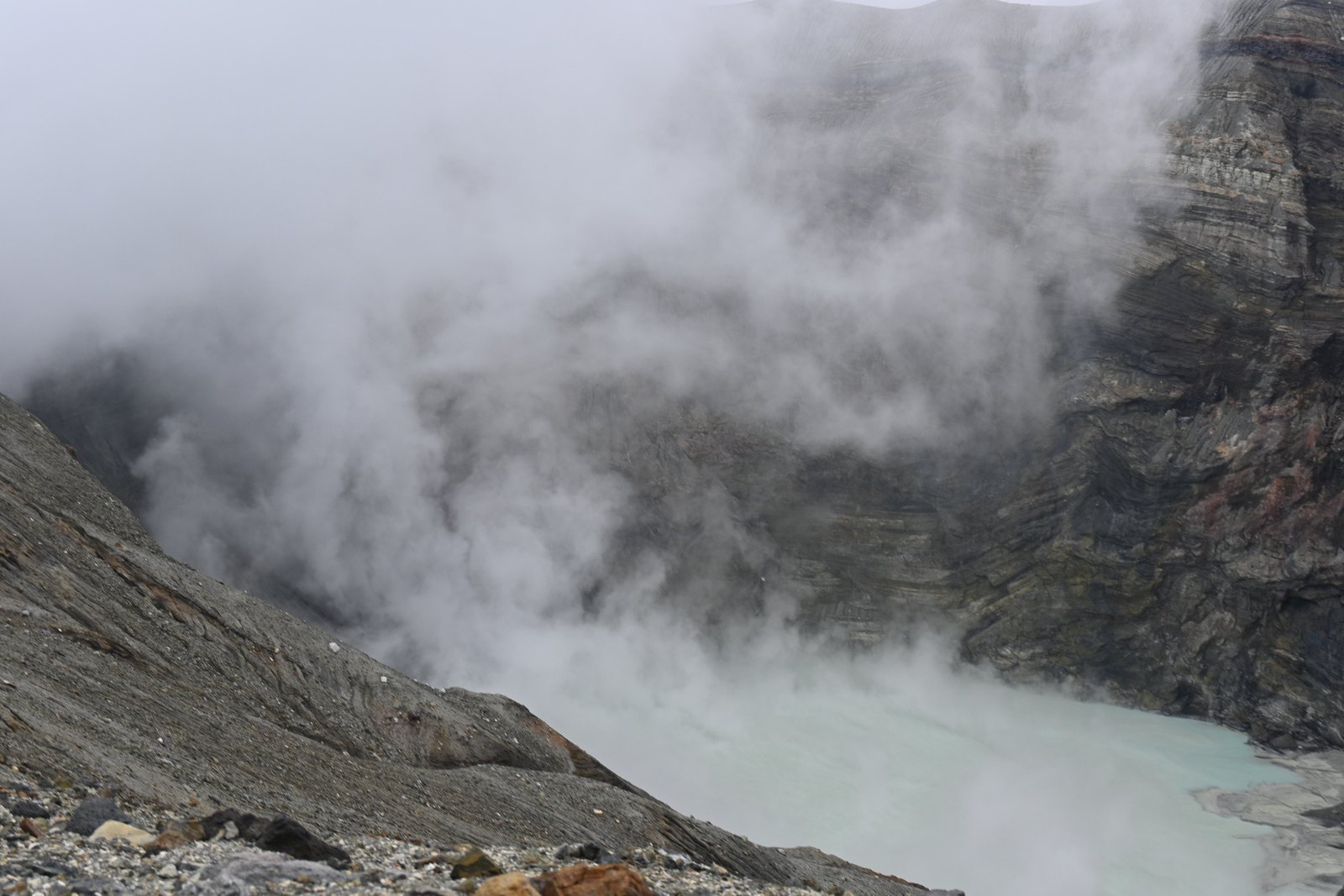
Is it safe to visit the Mount Aso crater?
For most healthy visitors, yes, but take the gas seriously. Before you go up there's a warning sign in Chinese, Japanese and English. If you have asthma, bronchitis, or heart or breathing problems, don't go near the crater. In the podcast I said to wear a mask; that helps with ash and dust, but a normal mask won't filter out volcanic gas, so if the smell starts to bother you, leave. I won't tell anyone to push through it. It really can be dangerous.
Along the rim you'll see a row of small concrete huts. They look like something from a theme park, but they're eruption shelters. If the volcano suddenly erupts, everyone goes inside. They're built solidly, but I honestly don't know how much they could take.
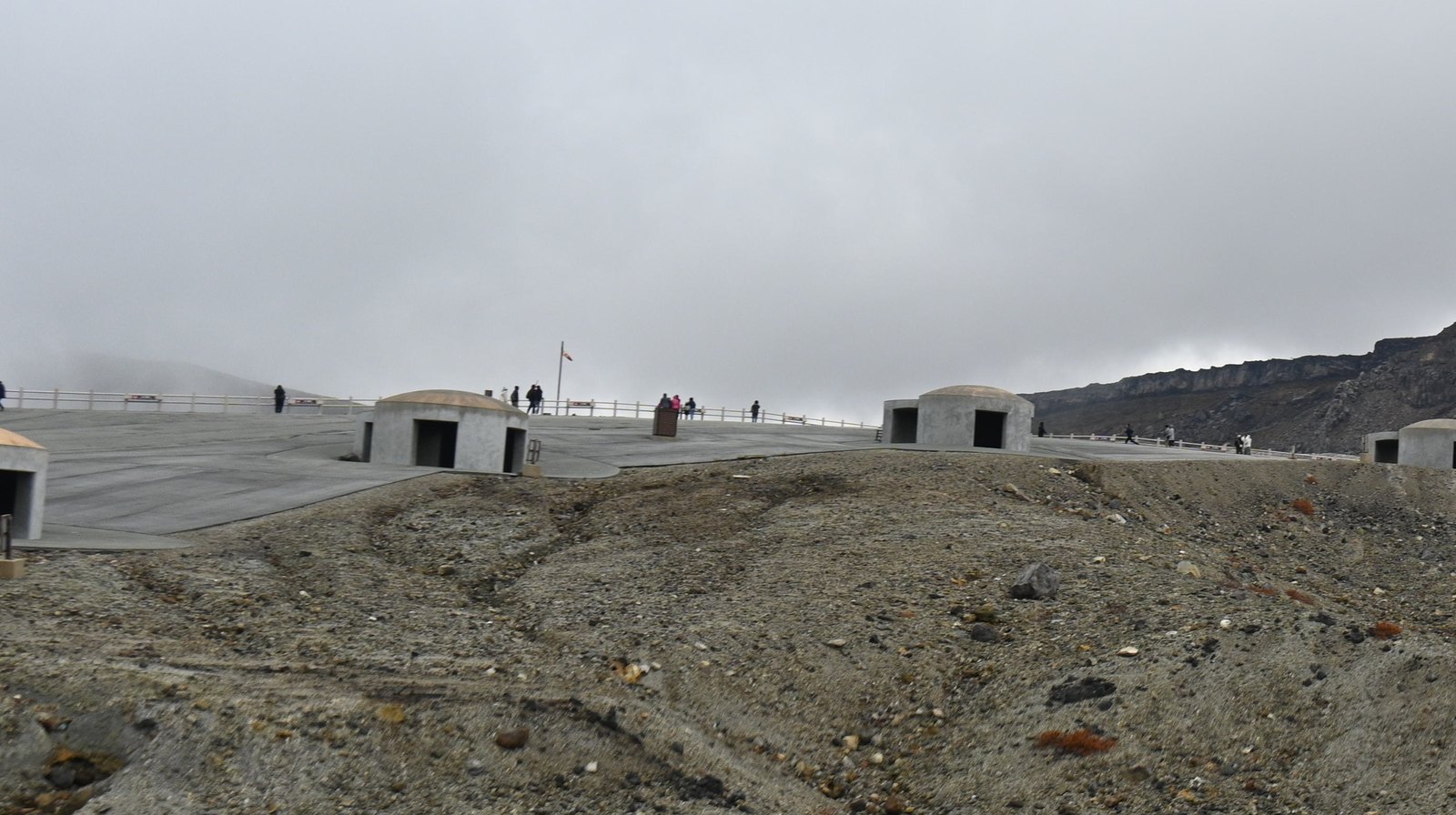
Is the Mount Aso crater always open?
No. When the volcano is too active, or the gas is too strong, the crater area closes and you can't go up. When Japan's volcanic alert level is 2 or higher, the area around the crater is off limits. Check the official volcano information on the morning you go. We were lucky that day.
Tips for visiting Mount Aso
- Check the crater status first. Look at the official volcano information on the day; it can close at short notice.
- Know your health. Asthma, bronchitis, heart or breathing problems: stay away from the crater rim.
- Pack a folding umbrella. The weather on the mountain can turn fast.
- Try the Aso milk. Milk, chocolate, and the ice cream at Daikanbo.
Seeing an active volcano is something to do once in your life. I only did it in my forties, and I'm glad I finally did.
This is part of my Japan travel series. For a very different side of Japan in winter, read my first snow in Hokkaido, and for food tips see eating in Japan without queuing. For more Japan photos, see my Shinjuku Gyoen at night gallery. Have you ever stood at the edge of a volcano? Which one? I'd love to hear.
All photos are my own, taken at Mount Aso, Kumamoto, in December 2025, and cropped to leave out people. Facts checked 20 November 2026: caldera size, Nakadake and Daikanbo heights and the caldera population from Wikipedia and Aso City; crater gas warnings and closures from the Aso Volcano Disaster Prevention Council; volcanic alert levels from the Japan Meteorological Agency. AI helped me edit the English.