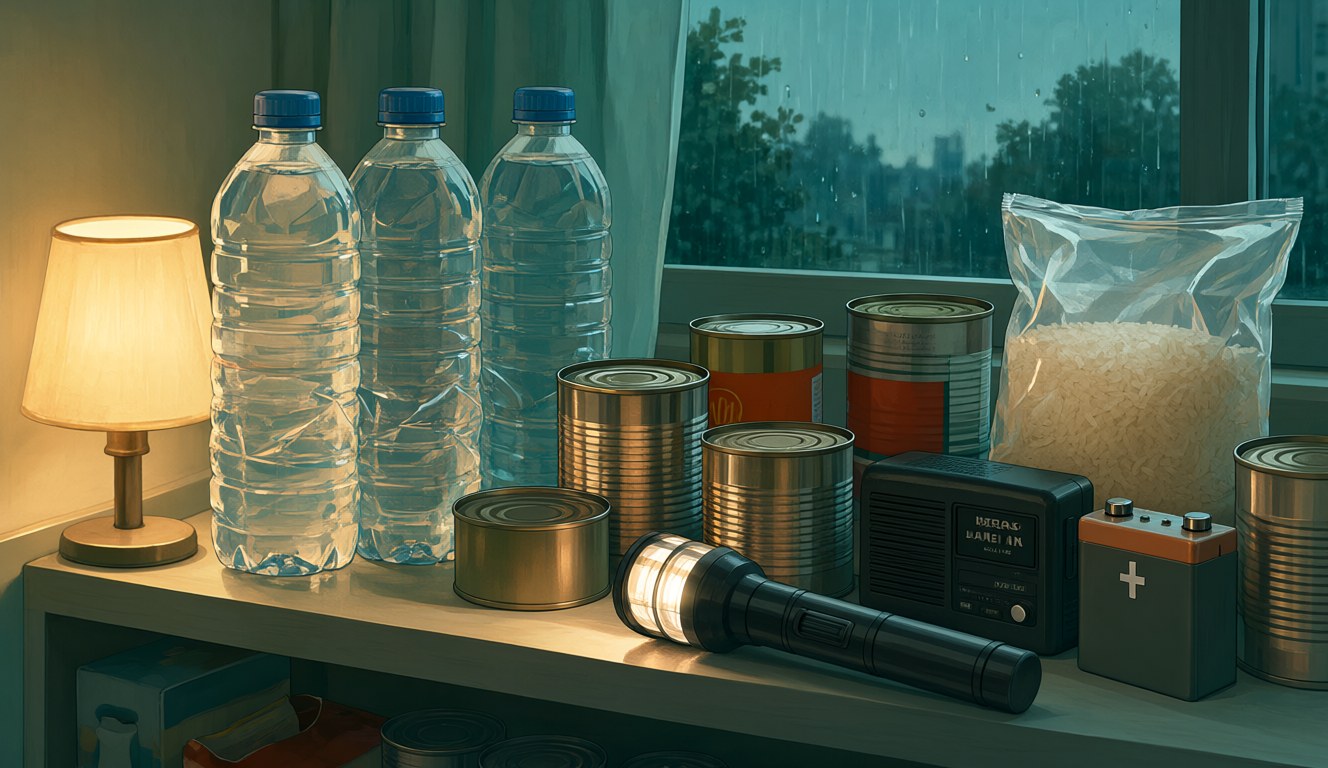
Should you stockpile food? My answer is yes, a little: about three days of food, water and some cash. That's what the UK and Japan are telling households now, and it's what Queensland has been telling us for years. But I don't see a reason to panic. When I went shopping in Brisbane this week, the shelves were full.
I first talked about this on my Cantonese podcast, Brisbane真好. The video has English subtitles. Here's the same story in writing, with the facts checked.
Why is everyone talking about stockpiling food?
Because governments have started saying it out loud. It isn't only a stir in our Cantonese-speaking circles online. Last Friday a colleague told me their relatives in London are feeling it too: people there are stocking up, and there's a bit of pressure to do the same. I didn't get any details. It was just a passing remark.
In Hong Kong the pressure seems even bigger, and it's hotly debated online. Still, I haven't heard of people actually emptying the shelves there.
What struck me is how many countries are saying the same thing. This isn't clickbait. The UK and Japan have both asked households to keep three days of supplies, and the UK defence secretary has said he started stockpiling weeks ago. Keeping some cash on hand is part of the same advice.
To me, that makes sense. I don't know what intelligence these governments have. Maybe they've seen a risk, and this is risk management. That's normal.
Can hackers really spoil a supermarket's food?
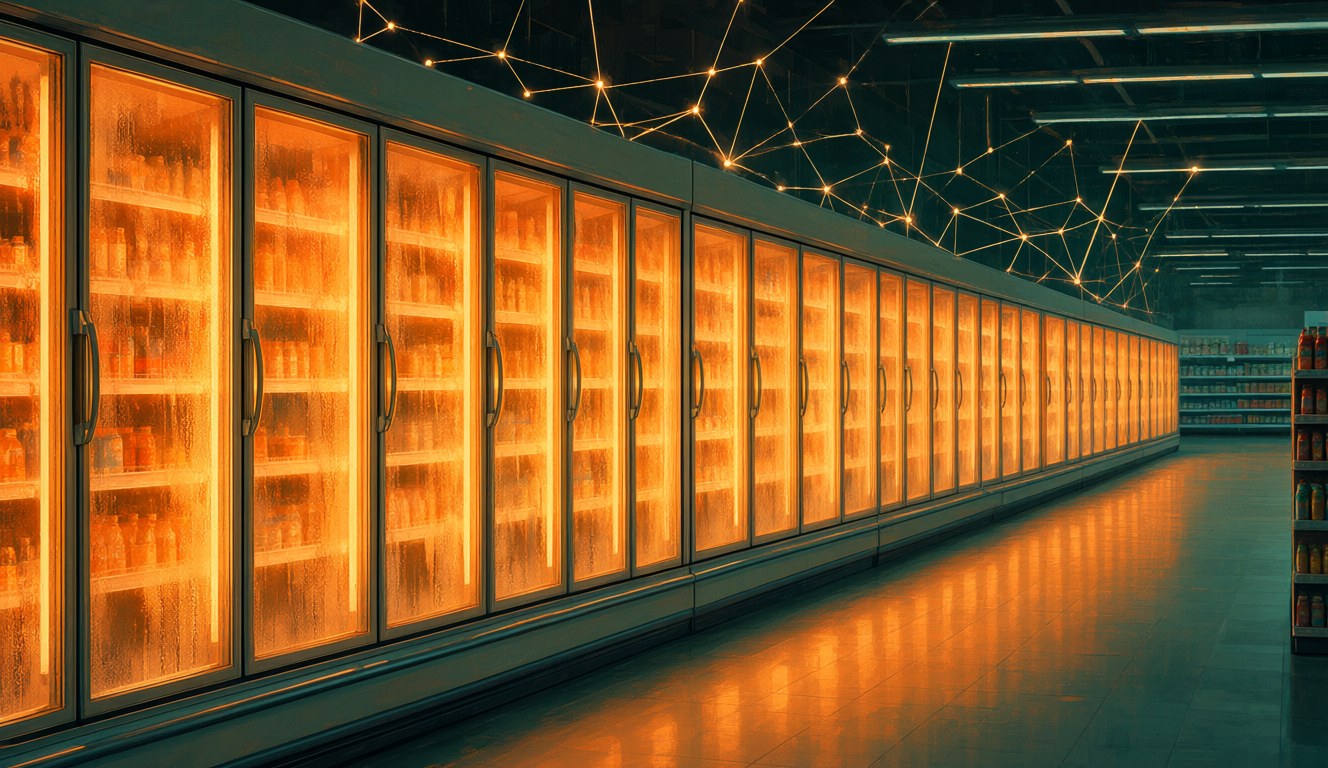
Yes. It happened in France last month. On 11 and 12 October 2026, attackers got into the refrigeration controls of hundreds of French supermarkets and heated fridges and freezers to about 50°C. Food was lost, and some stores reported fires.
In my podcast I said the fridges went up to "twenty-something degrees". I was wrong there: the reports say about 50°C, which is far worse.
The reason it was possible is the same reason it's convenient. Supermarket fridges are now online. There's a web portal, so nobody needs to stand in the store and set the temperature. Head office can control and watch every fridge centrally. That saves money, and it also means anyone who breaks into the system can change every fridge at once. France's cyber agency warned against putting these controls straight onto the internet.
I've written before about why the rules have to come first with cheap AI and client data. It's the same lesson: if you make something convenient, you have to lock it properly too.
Why do governments want households to keep three days of supplies?
So that a big problem doesn't turn into a panic. If something happens on a large scale, food can suddenly get tight. If households already have a few days of food at home, they can cope, and the damage is smaller.
This is what defence looks like now. Nobody needs guns and cannons. Someone can just mess with your systems, and the whole society takes a big hit.
How does being prepared make an attack less useful?
It tells the attacker that all their effort won't achieve much. That's a strategy in itself.
Say they attack the supermarket fridges again. If people already have food at home, the shops lose some stock and that's the end of it. Society keeps going. If instead they attack the apps we rely on and nobody is prepared, people are stuck and you get chaos.
The line I keep coming back to: if we're ready, an attack on the fridges costs us some milk. If we're not, it costs us our calm.
What does this mean for people living in Australia?
We should look at Australia, not only at Hong Kong. I say this a lot, and I'm guilty of it myself. I came here in my late teens, nearly twenty. By then my logic and my picture of life were already set, and so much of what I know is based on Hong Kong. I can't help that, but I try to pan the camera back to where I actually live.
And in Australia, this advice is nothing new. Queensland has run Get Ready for years. Last year I went to an Emergency Expo, and there was a stall telling people exactly this: get ready, keep some water, keep some food.
The official Get Ready Queensland emergency kit asks for three days of supplies: at least 10 litres of drinking water per person, non-perishable food, and spare cash in case payment systems are down. So storing food and cash is already a habit here.
We've also had practice. Banks have gone down before. Mobile networks have gone down too. Maybe those outages were a rehearsal for us.
How long can a power outage last in Brisbane?
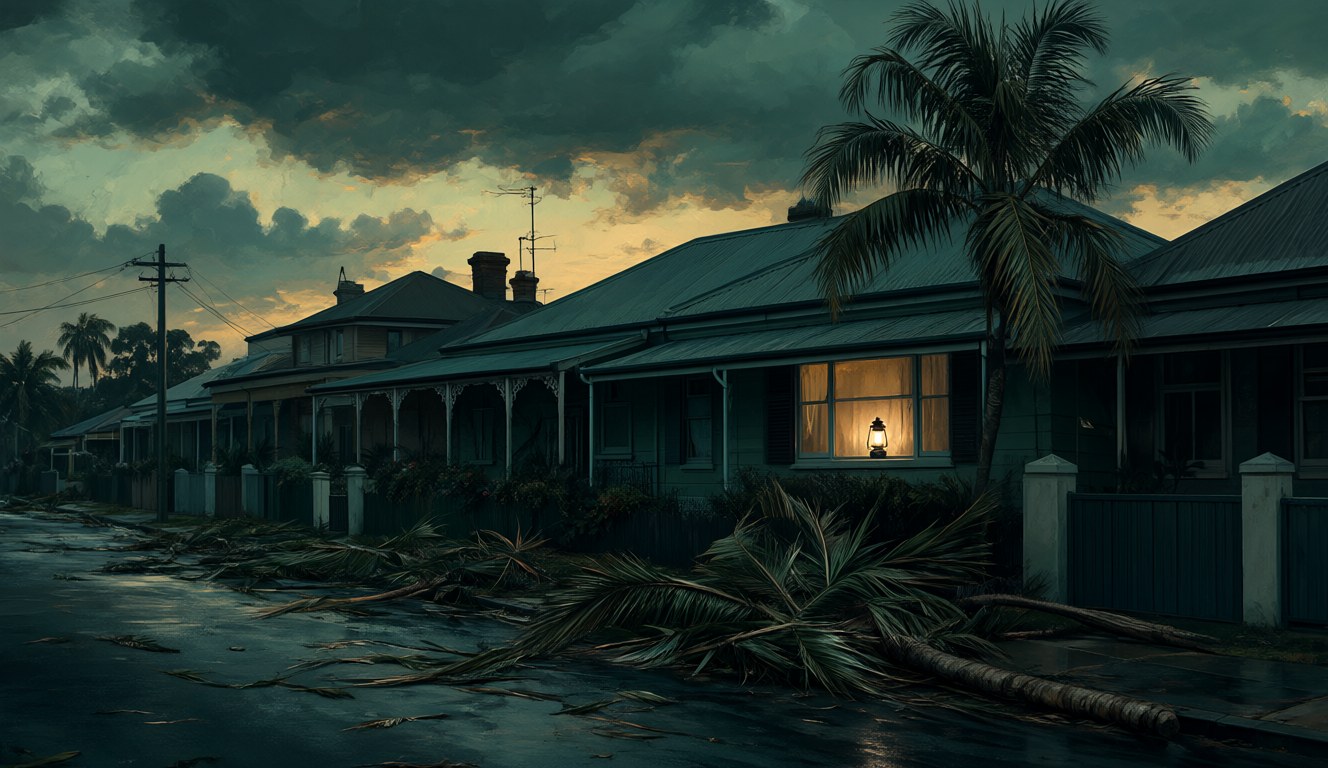
Long enough to matter. When Cyclone Alfred came through in March 2025, a friend of mine lost power for a week. Energex said about 346,000 customers in South East Queensland were off supply at the peak, and it took until 15 March to restore more than 98% of them.
If you don't have dry food at home in a week like that, life gets hard. You have to go somewhere else to find food. And it can be large-scale: a whole suburb without power, so you end up driving into the city to eat, which is a hassle and expensive. Having something at home makes it a bit easier.
The good news is that a blackout hurts less than it used to. Many people now have home batteries, and some electric cars can supply power to plug in a lamp or a kettle. On that front we're more resilient than before. (I wrote about Brisbane storm days in No Signal 8, So Who Decides?)
Is it normal to want a little extra at home?
Yes. Storing some food is a very ordinary thing to do. We all lived through Covid, when everyone was grabbing things and buying a bit extra. Having a little at home gives you peace of mind. That's a psychological thing, and it's fine.
So I don't think this is that serious, though honestly, who knows. I'm telling you not to panic, but if something really did happen, I'd worry too.
Are Brisbane supermarkets running out?
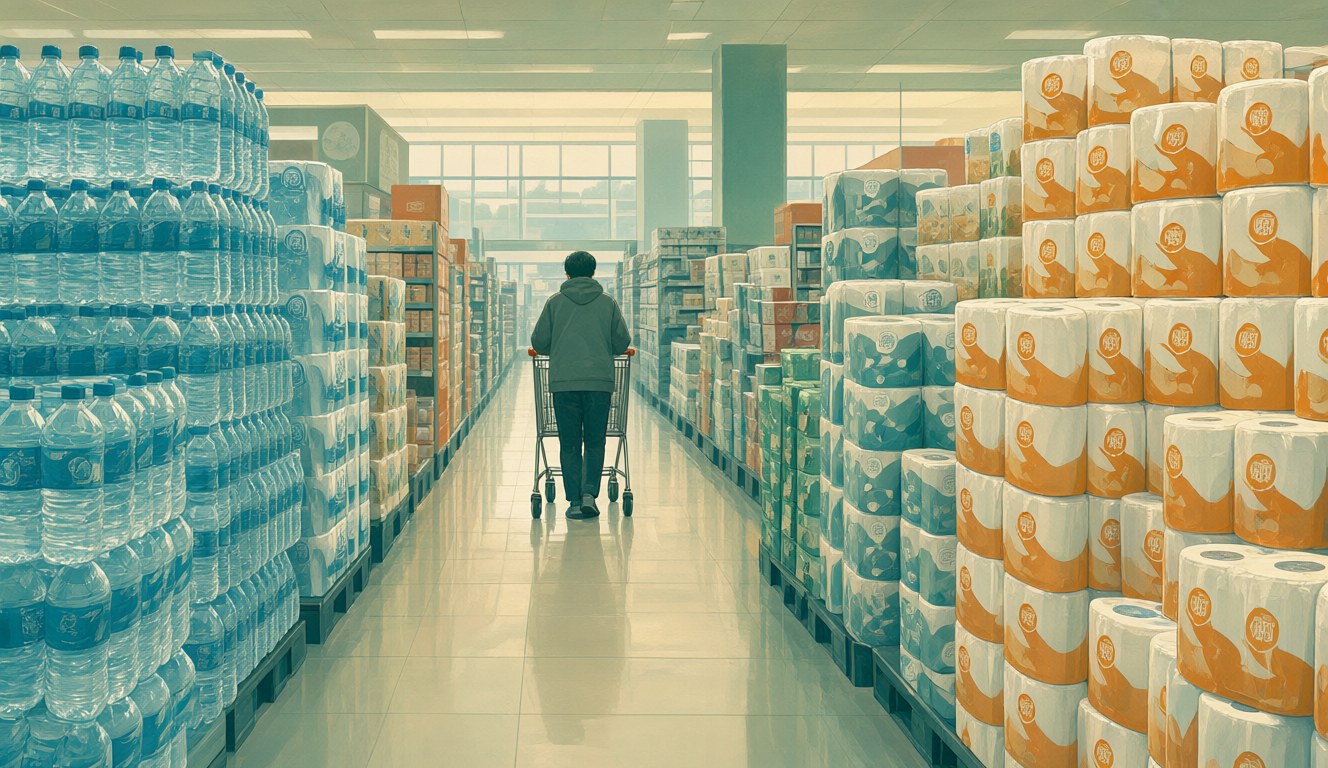
Not that I've seen. Today in Sunnybank the shelves were well stocked. Nobody was rushing. There was water and distilled water, and there was toilet paper. On Saturday at Costco they'd restocked lots of toilet paper and distilled water.
For now, I don't sense any big panic. Keep three days of supplies like Get Ready Queensland says, check them now and then, and carry on with your week.
Do you keep an emergency kit at home? What's in it? I'd like to hear from you on the contact page.
Sources
- France 24: cyberattack on French supermarket refrigeration (12 Oct 2026)
- CNN: hackers heat French supermarket fridges
- Seoul Economic Daily: UK and Japan urge 3-day supplies (1 Nov 2026)
- Get Ready Queensland: emergency kit
- Energex: Ex-Tropical Cyclone Alfred update, 15 March 2025
Sources checked 3 November 2026. This is a personal reflection. The images were made locally with Qwen Image 2.1, and AI helped me edit the English and check the facts.