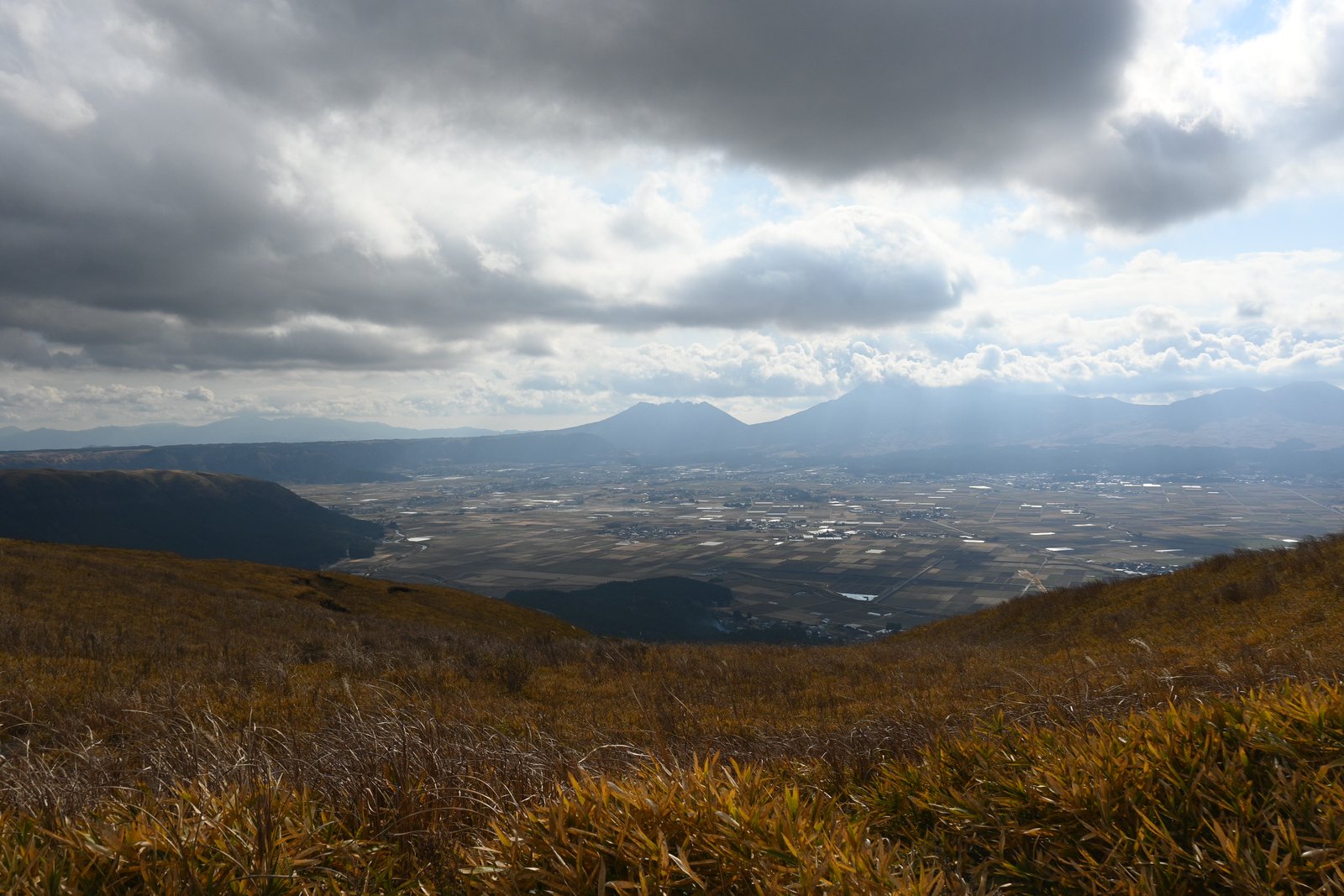
Is the Daikanbo lookout worth the drive? Yes. From 936 metres on the rim of the Aso caldera you look down into a huge volcanic crater where about 50,000 people live, work and farm, with the five peaks of Aso across from you. In December it's cold and very windy up there, so bring gloves and a scarf.
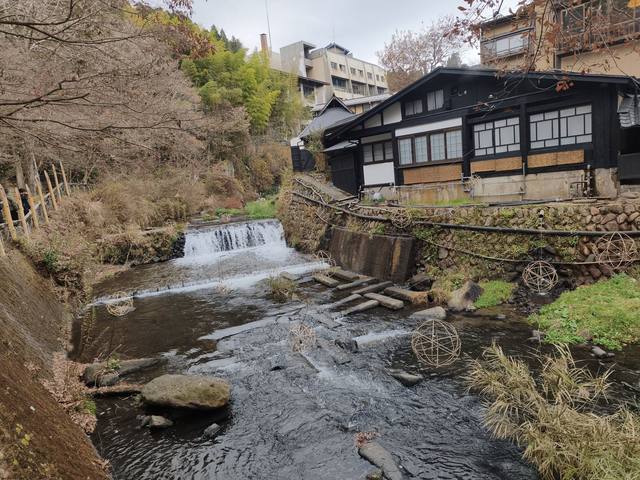
We went on 11 December 2025, on our Kyushu trip. That morning we had a quick walk around Kurokawa Onsen, then drove up to Daikanbo before lunch. Every photo here is my own.
I talk through the visit in Cantonese on my podcast, in my own voice, with English subtitles on screen.
What is Daikanbo?
Daikanbo is a lookout on the northern rim of the Aso caldera in Kumamoto. The rim is called the outer ring of mountains, and Daikanbo is usually described as its highest point, at 936 metres.
In the podcast I called it a dead volcano. That isn't quite right. Daikanbo isn't a volcano of its own; it's part of the wall left around the caldera after huge eruptions long ago. The flat land in the middle is the caldera floor, about 18 km east to west and 25 km north to south.
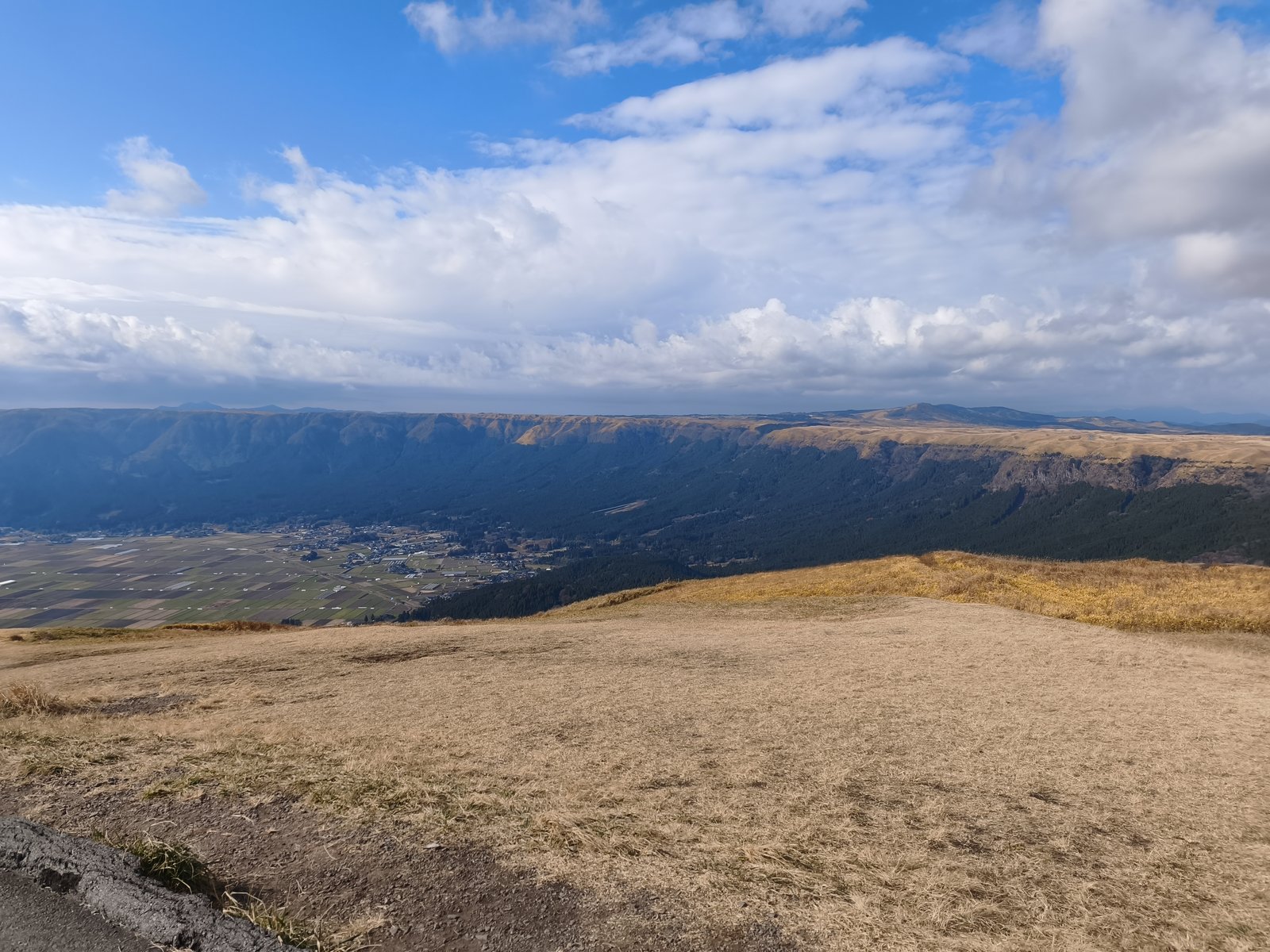
Is Mount Aso still active?
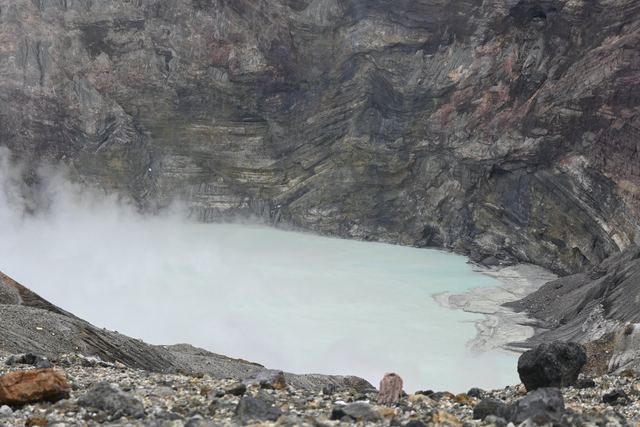
Yes. Nakadake, one of the five peaks in the middle of the caldera, is still an active volcano. I wrote about walking up to its steaming crater in my first active volcano. If you want to go to the crater as well, check on the day whether it's open, because it closes when the alert level goes up.
Why do the mountains look like a reclining Buddha?
From Daikanbo the five peaks of Aso line up like a Buddha lying on its back. The usual description is that Nekodake is the head, Takadake the chest and Nakadake the belly.
In the video I linked the name Daikanbo to this Buddha shape, but that's my mix-up. The name came from a writer. The spot used to be called Tomigahana, and the writer Tokutomi Soho renamed it Daikanbo in 1922. Roughly, the name means "the peak with the great view", which fits.
The Buddha shape got me thinking about something I like to call the wider Chinese cultural sphere. Japan shares a lot with the rest of East Asia: Buddhism, Confucian ideas, and the habit of mixing different teachings together. That's just my own take, not a history lesson, but standing there it felt familiar.
How do you get to the top, and is it cold?
We drove up and parked in the car park, then walked a short path to the top. In December it was pretty cold and very windy.
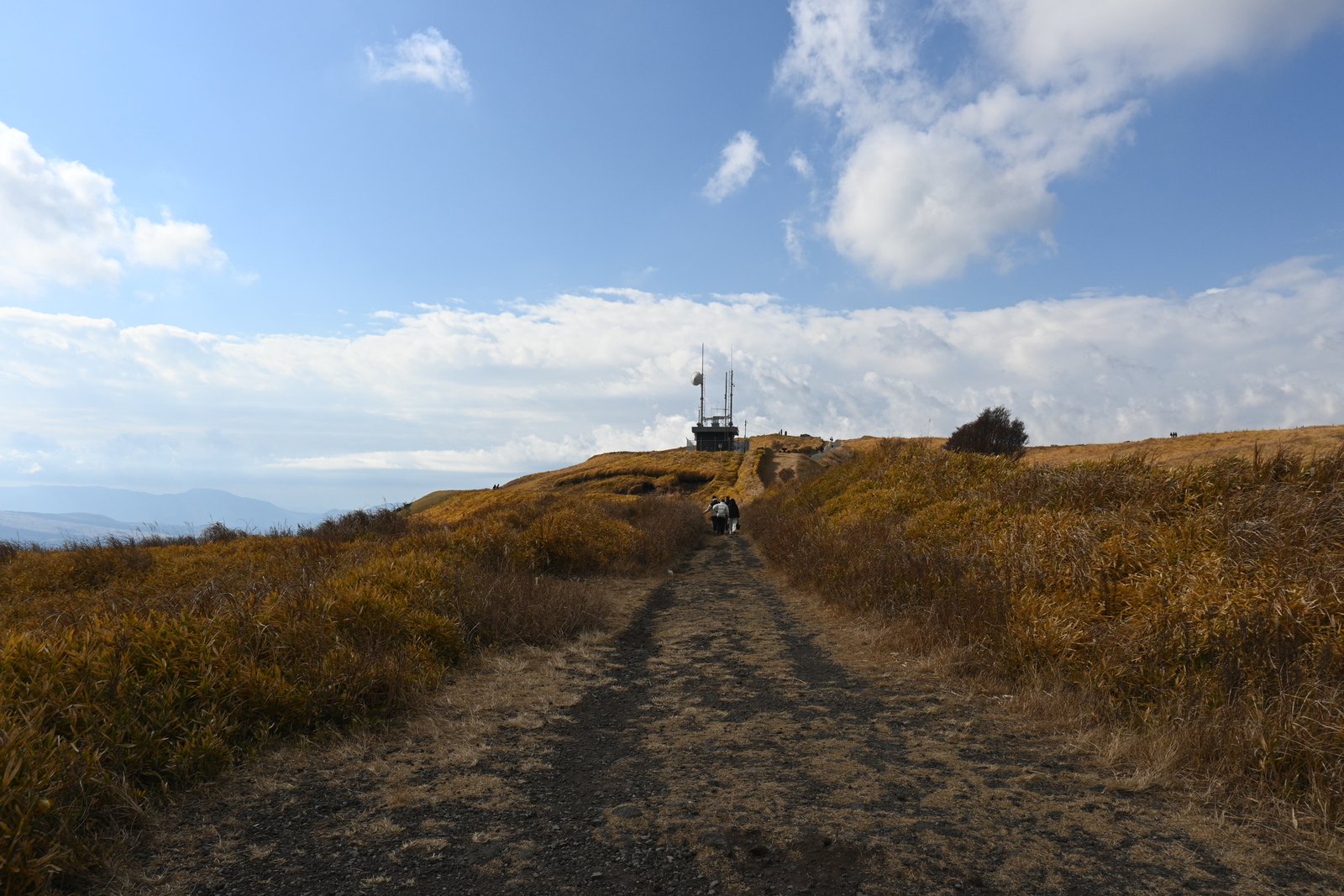
It was already winter, so the whole mountain had turned gold. The grass on the slopes around the lookout was dry and yellow, and it looked great against the blue sky.
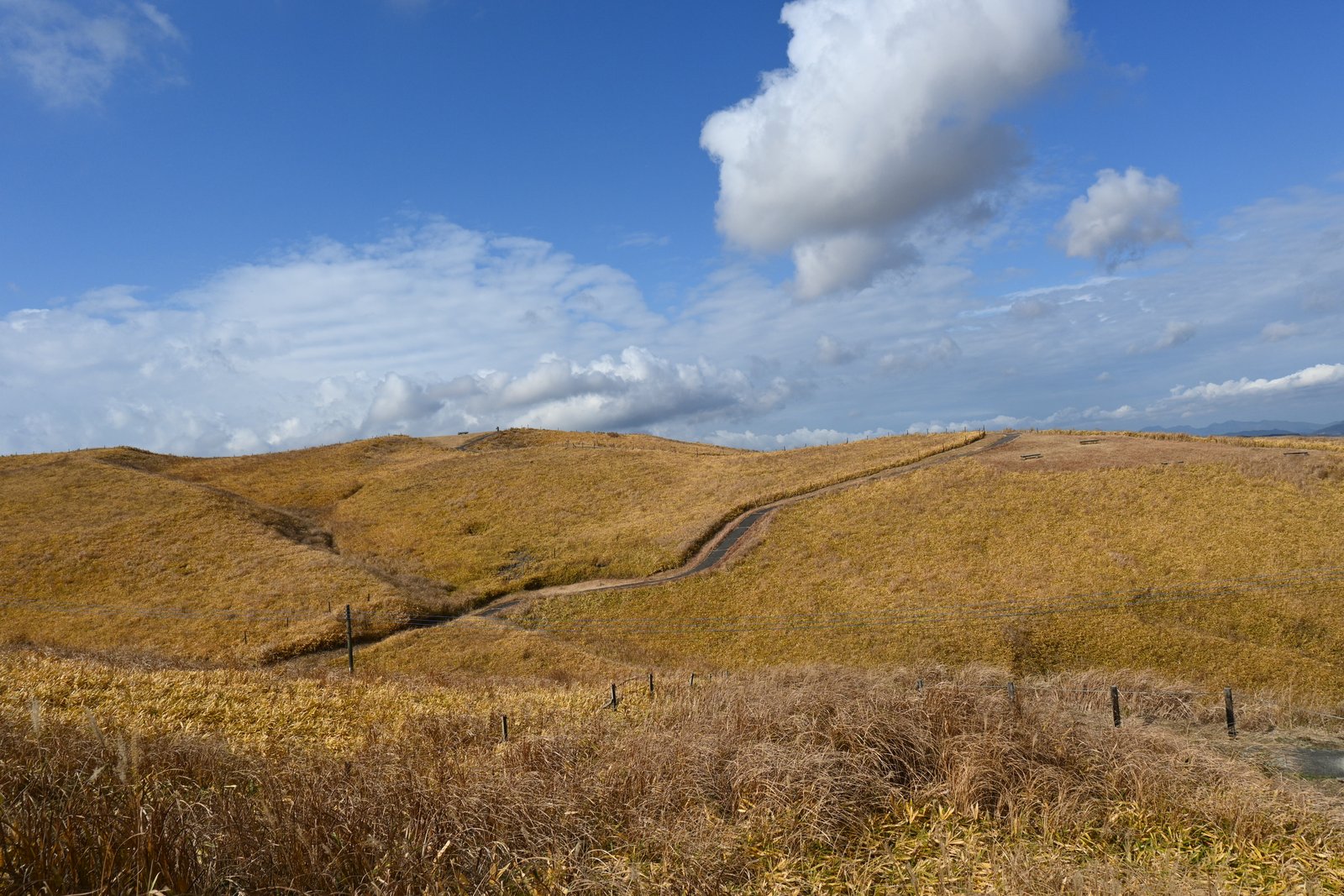
What can you see from Daikanbo?
From the top you look straight down into the caldera. Tens of thousands of people live down there and go to work, go to school and farm. The fields are cut into little squares, which I found quite cute from that height.
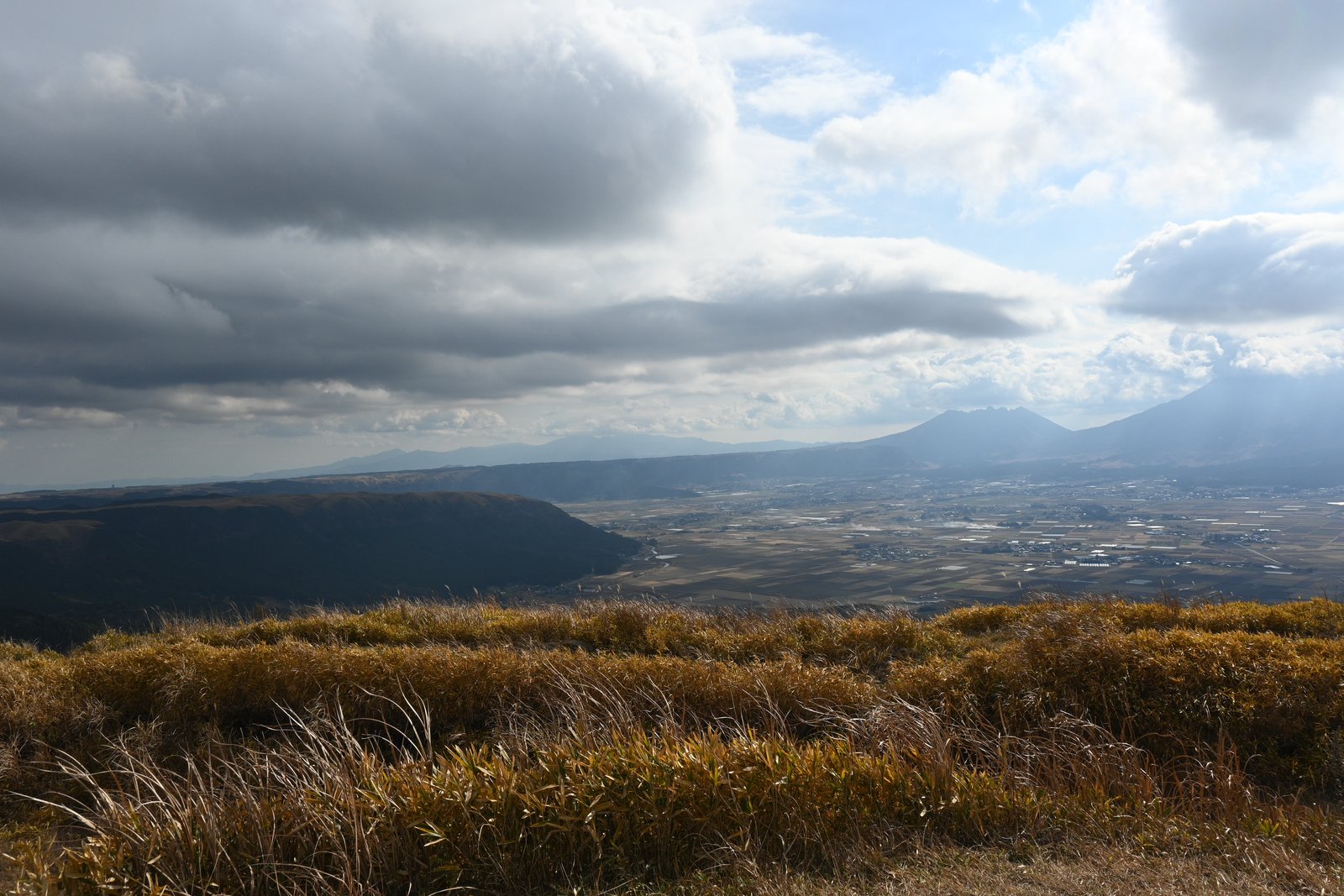
You see farmland in Australia too, of course. Here in Queensland it's mostly huge open paddocks, and big views are pretty common. Seeing small fields and whole towns sitting inside a volcanic crater is a different kind of view. I wrote more about how Australian travel compares in Is Australia worth visiting? Nature wins.
What's at the summit?
Right at the top there's a tall stone with the name Daikanbo carved into it, the spot everyone takes a photo of.
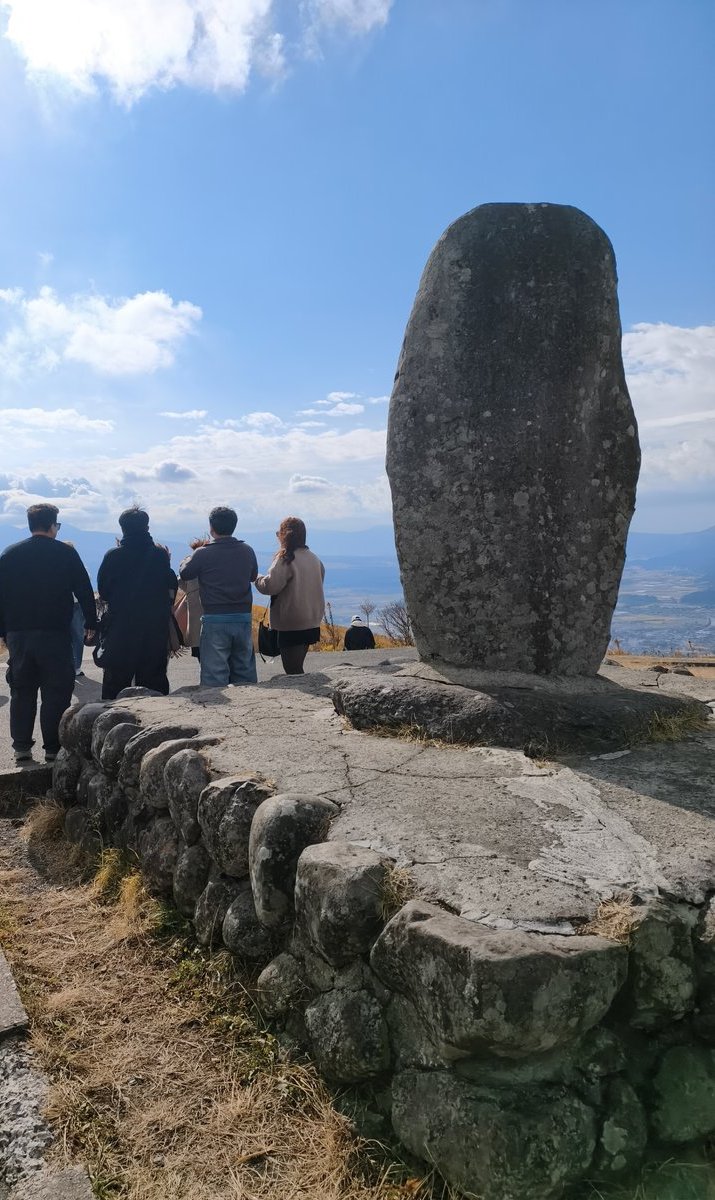
There's also a coin-operated telescope. Put in a coin and you can look across the caldera to the peaks.
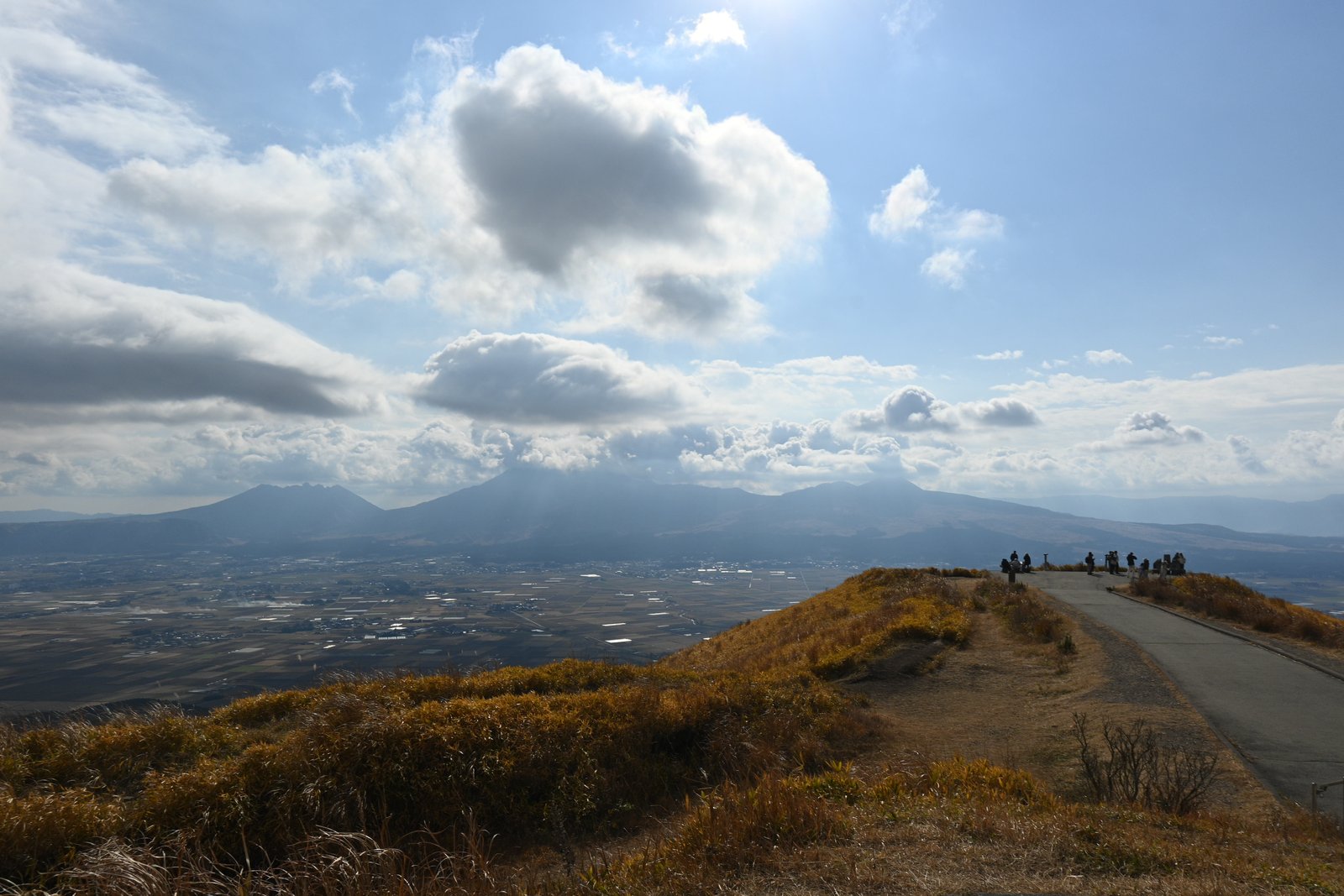
Is there food at Daikanbo?
Yes. There's a rest house and visitor centre near the car park with souvenirs and some food. We didn't have lunch there. I think we just had ice cream before driving on to our next stop.
Tips for visiting Daikanbo
- Bring gloves and a scarf in winter. The wind at the top is strong.
- Go on a clear day if you can. The view across the caldera is the whole point.
- Combine it with Kurokawa Onsen. We came from there in the morning; see our Kurokawa ryokan stay.
- Check the Nakadake crater status on the day if you also plan to visit the active crater.
- Bring a coin for the telescope.
This is part of my Japan travel series. For where we ate on the trip, read eating in Japan without queuing, and for our first winter trip, see first snow in Hokkaido. For more Japan photos, see my Shinjuku Gyoen at night gallery. Have you been somewhere that made you feel small? Tell me in the comments or through the contact page.
All photos are my own, taken at Daikanbo, Aso, Kumamoto, on 11 December 2025, cropped to leave out faces. Facts checked 26 November 2026: elevation, the 1922 renaming by Tokutomi Soho and the reclining Buddha description from tabi-mag and rurubu; caldera size and population from Japan's Ministry of the Environment and the Japan Tourism Agency. The cultural sphere comment is my personal view. AI helped me edit the English.