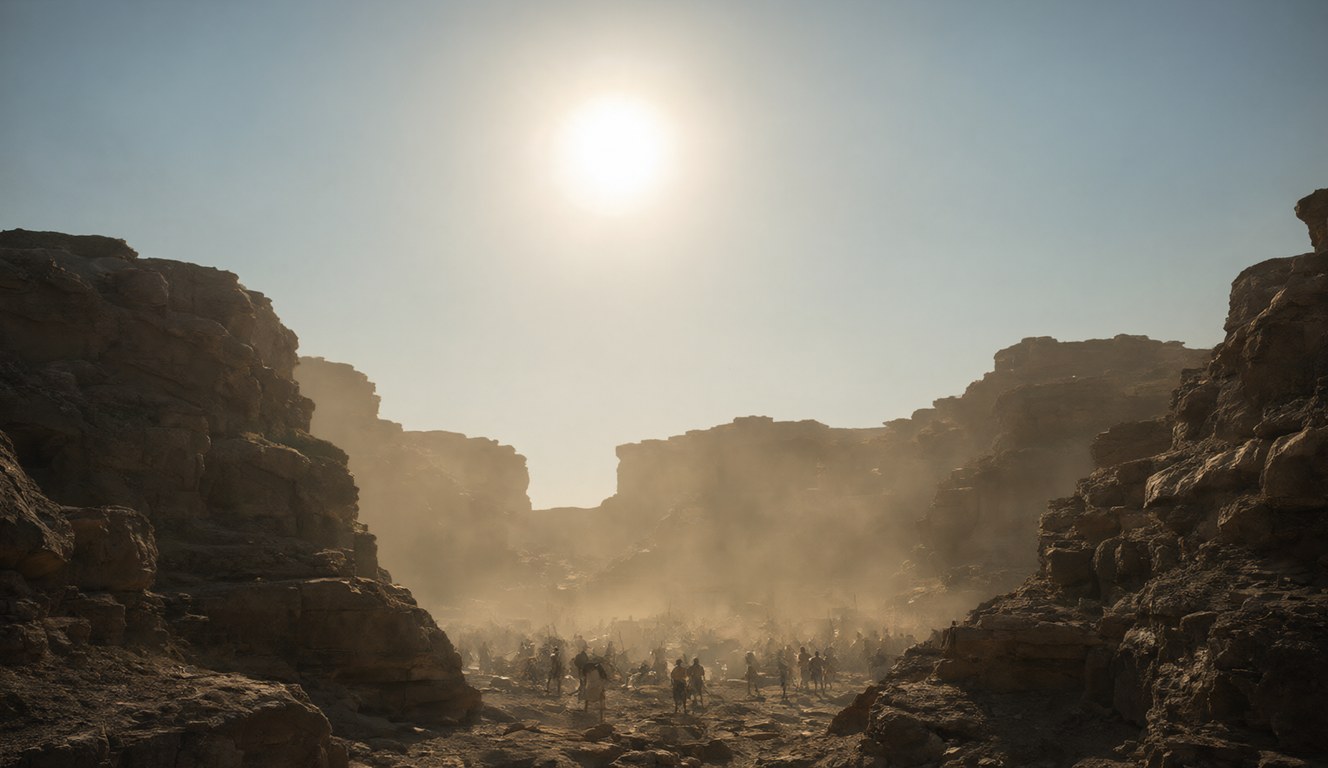
Did the sun really stand still in Joshua 10? I believe it did. Some pastors now read the passage as a figure of speech rather than a miracle, and I understand why. I still take it as what happened, because that's how the text reads, and because I don't know where "it's only a figure of speech" would stop.
This came up at our Bible study group. I talk it through in Cantonese on my podcast, with English subtitles and the verses on screen.
First, a disclaimer. This is my personal view and I don't speak for any church. I go to church and I join its Bible study group. Sometimes you need to think outside the box, but studying with other people is the fun part. You see things you would miss on your own.
What does Joshua 10 actually say?
It says the sun stopped in the sky for about a whole day while Israel fought. Five Amorite kings had attacked the town of Gibeon, and Joshua marched all night to help. Then he prayed:
"Sun, stand thou still upon Gibeon; and thou, Moon, in the valley of Ajalon. And the sun stood still, and the moon stayed, until the people had avenged themselves upon their enemies. Is not this written in the book of Jasher? So the sun stood still in the midst of heaven, and hasted not to go down about a whole day." (Joshua 10:12-13, KJV)
The next verse adds that there was no day like it, before or after, "for the LORD fought for Israel" (Joshua 10:14).
When I was growing up in church in Hong Kong, this was taught simply as a miracle. The sun really stopped for about a day.
Is the sun standing still a figure of speech?
Some pastors say it is. Our study leader shared the view of a pastor whose theology is close to theirs. That pastor reads the passage as literary language, not an astronomical event. The main reason is that verse 13 quotes the Book of Jasher.
The Book of Jasher is a lost collection of ancient songs and poems. The Bible quotes it in one other place, for David's lament over Saul and Jonathan (2 Samuel 1:18). So the argument goes: this part is borrowed from a poem, and poems exaggerate.
I don't think that settles it. We believe that what Scripture records is fact. The text doesn't present this as one book's claim that you can take or leave. It quotes the source, then states plainly that the sun stood still. Even if the words came from a poem, nothing in the text marks them off as "only poetry". So I believe it, and I always have.
"All scripture is given by inspiration of God, and is profitable for doctrine, for reproof, for correction, for instruction in righteousness." (2 Timothy 3:16, KJV)
When I told the group this, the leader said believing it that way is fine too. They have their view and I have mine. We didn't fall out over it.
Did the Red Sea really part?
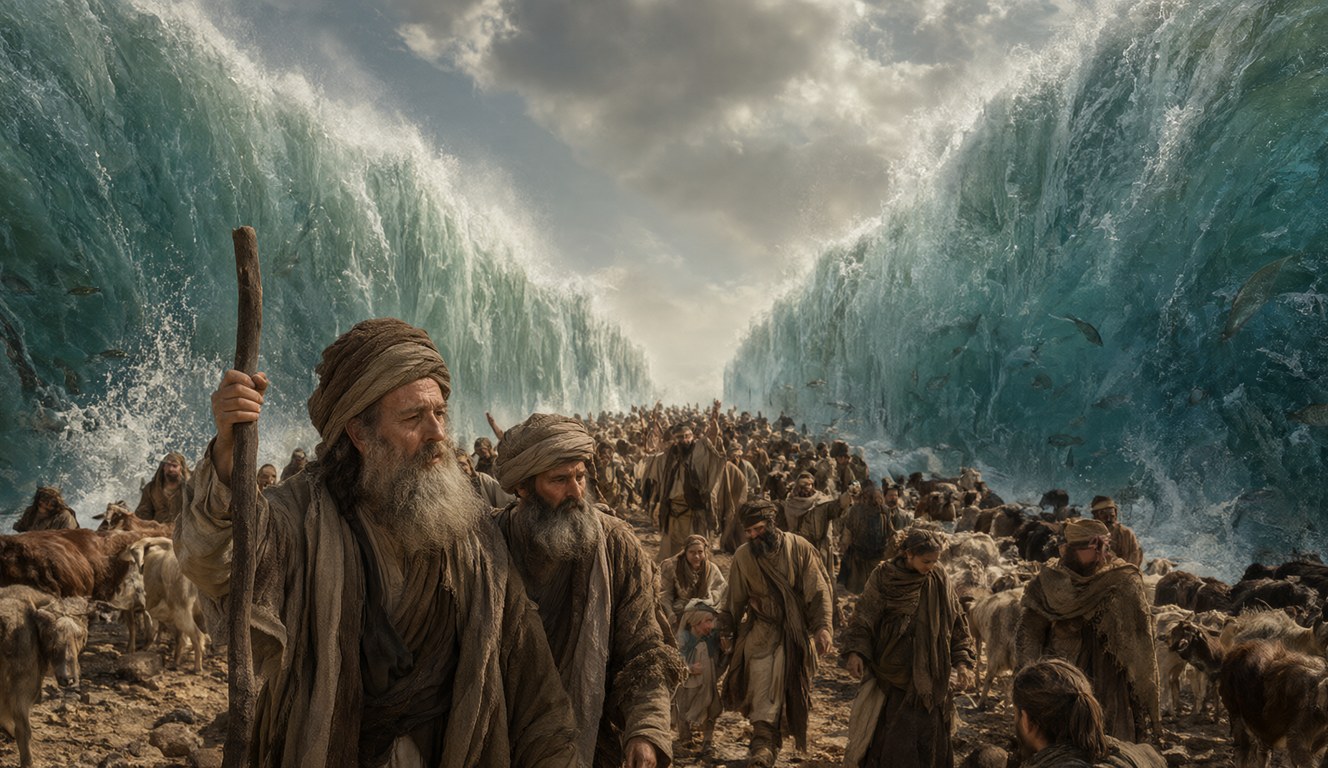
I believe it did. When I searched online afterwards, I found the literary reading goes much further than Joshua. Maybe my old church was just old-fashioned. Many people now say the Red Sea never split in two. They say the Israelites crossed somewhere shallow, the tide went out, and the story was later told in grand, poetic language.
Part of that comes from the Hebrew. The name usually translated "Red Sea" is yam suph, which literally means "Sea of Reeds", and where exactly the crossing happened is still debated. Here is what the text says:
"And Moses stretched out his hand over the sea; and the LORD caused the sea to go back by a strong east wind all that night, and made the sea dry land, and the waters were divided. And the children of Israel went into the midst of the sea upon the dry ground: and the waters were a wall unto them on their right hand, and on their left." (Exodus 14:21-22, KJV)
It mentions a natural means, the east wind, and walls of water. To me, calling it a low tide makes it sound as if the event didn't really happen.
Why was there light before the sun in Genesis?

Because God doesn't need the sun to make light. In Genesis 1, light comes on the first day, and the sun, moon and stars on the fourth (Genesis 1:14-16). Some people read that order as a sign the whole seven days is a literary framework rather than a record. Many pastors say this. Maybe they cite each other, or trained at the same places. I don't know.
I can't quite accept it. I believe God governs the laws and the science of this world. He said, and it was:
"And God said, Let there be light: and there was light." (Genesis 1:3, KJV)
The Bible describes light without the sun at the other end too, in the new Jerusalem:
"And the city had no need of the sun, neither of the moon, to shine in it: for the glory of God did lighten it, and the Lamb is the light thereof." (Revelation 21:23, KJV)
If miracles are metaphors, what about the resurrection?
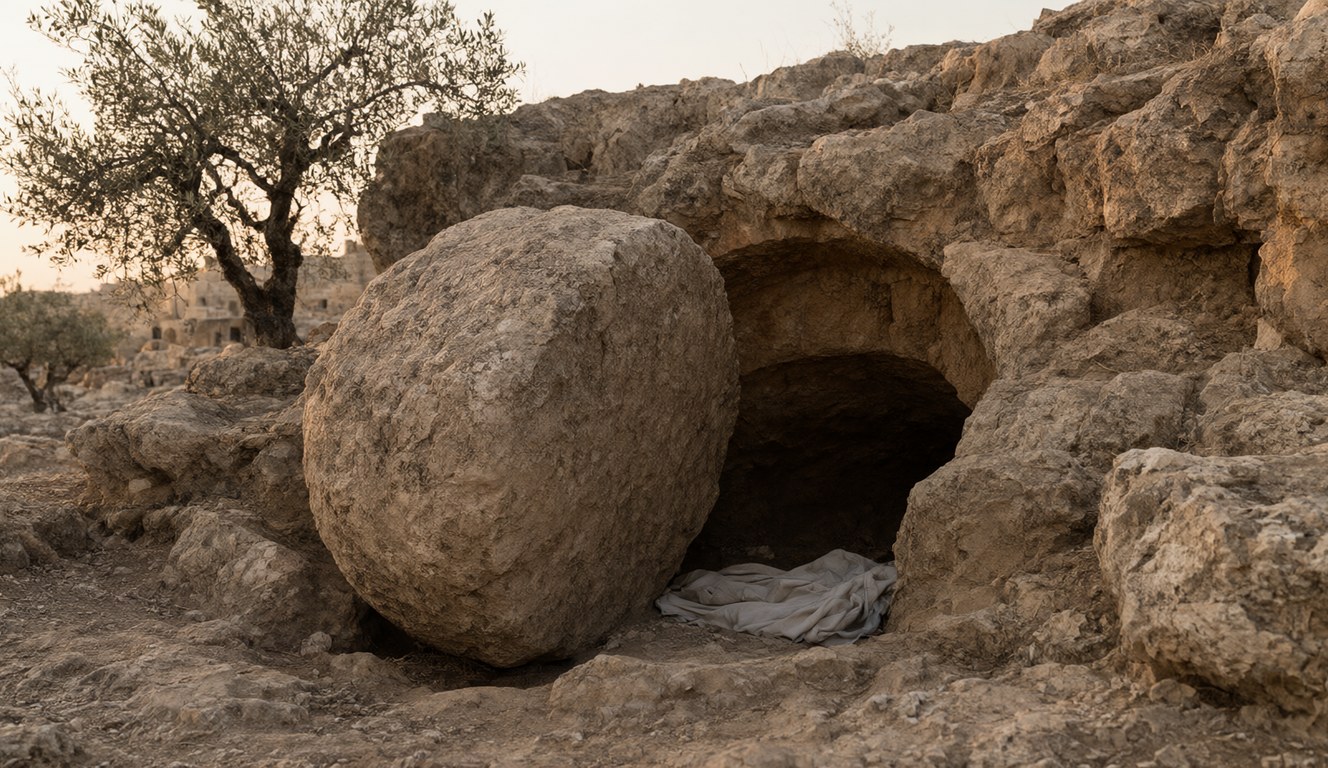
This is my real worry. If the sun standing still is a figure of speech, and the Red Sea is a figure of speech, and the seven days are a figure of speech, then when we get to Jesus rising from the dead, is that a figure of speech too? And the ascension?
If we go that way, you needn't believe the Bible at all. You could read it like a novel, or like mythology. That's a long way from what I believe. Paul put the stakes plainly:
"And if Christ be not risen, then is our preaching vain, and your faith is also vain." (1 Corinthians 15:14, KJV)
I believe the Bible means what it says.
Were the days of creation 24 hours?

Maybe not, and here I can accept a different reading. The Hebrew word for day, yom, can mean a 24-hour day, the daylight hours, or a longer period, as in "the day of the LORD". My old church said reading it as an age was fine too. Then creation could have taken a very long time, even billions of years, and it still works.
"But, beloved, be not ignorant of this one thing, that one day is with the Lord as a thousand years, and a thousand years as one day." (2 Peter 3:8, KJV)
That is a question of what a word means. Saying the events never happened is a different thing.
Is the Bible a science book?
Some say "the Bible isn't a science book". I'd say the Bible goes beyond a science book. It doesn't only explain the science of the material world.
"Through faith we understand that the worlds were framed by the word of God, so that things which are seen were not made of things which do appear." (Hebrews 11:3, KJV)
So there are many things I simply call miracles. What science can't explain, some read as literature. I read it as a miracle. The people who see it the other way aren't my enemies. We're just on different wavelengths.
How do you read these stories: as literature, or as miracles? Tell me.
For more from the same Bible study and podcast, read why Jesus said salt, not sugar and what the word "church" really means. If you have kids, try Noah — The Ark Experience, a free interactive Bible scene in the browser.
Sources (checked 21 Nov 2026)
- Bible quotations: King James Version (public domain). The video shows the Chinese Union Version (和合本).
- Book of Jasher: Joshua 10:13; 2 Samuel 1:18.
- yam suph ("Sea of Reeds") and yom ("day", "daytime", "a period"): standard Hebrew lexicons (Brown-Driver-Briggs).
- The "framework view" of Genesis 1 is a real, widely held reading; I've kept it general and named no one.
This is a personal reflection, not a sermon. All people in the images and video are AI-generated: the images are stills I made locally with Qwen Image 2.1 for the video, and AI helped me edit the English.