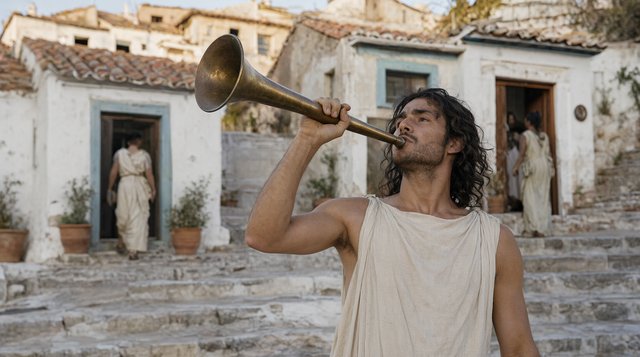
Why did Jesus call Christians "the salt of the earth" and not the sugar? My short answer: in His day there was probably no sugar as we know it. Crystal sugar came centuries later, while salt was cheap and in every kitchen in the land.
My wife asked me this after a sermon last week. The pastor had spent a while on what salt does, and she wanted to know why Jesus didn't pick something sweeter, like sugar. I told her straight away that there may not have been any sugar to pick. Then I went and checked.
I talk it through in Cantonese on my podcast, with English subtitles and animated maps and timelines on screen.
A quick disclaimer first. I'm not a pastor and I have no Bible training. I go to church and listen, but I'm not a member of any church right now; the church where I was baptised lists me as inactive. I used AI to help me find material, then checked it against published sources. This is my own reading of the history, nothing more.
What does "salt of the earth" mean in Matthew 5:13?
It comes from the Sermon on the Mount, where Jesus gives His listeners two pictures, salt and light:
"Ye are the salt of the earth: but if the salt have lost his savour, wherewith shall it be salted? it is thenceforth good for nothing, but to be cast out, and to be trodden under foot of men." (Matthew 5:13, KJV)
Preachers usually talk about what salt does: it flavours, it preserves, it makes you thirsty. All true. My question was simpler. Why salt, out of all the things in a kitchen?
Do you need history to understand the Bible?
Not everyone thinks so, and I don't think they're wrong. Some brothers and sisters say the Bible speaks to people today, so you shouldn't need a pile of historical background. If we really needed it, God would have given us a history book alongside the Bible. Scripture is the part that is inspired, and that is enough:
"All scripture is given by inspiration of God, and is profitable for doctrine, for reproof, for correction, for instruction in righteousness." (2 Timothy 3:16, KJV)
I still like history, and I use it the way I use a dictionary. When I don't understand a word, I look it up. History books are just a bigger dictionary.
It helps with translation too. The Chinese Union Version that most Cantonese churches read came out in 1919, in early written vernacular Chinese, and some of it reads strangely now. Newer versions such as the Chinese New Version use modern Chinese. Translators have to choose between vivid and precise, and they can't always have both.
Why was salt so common in Bible lands?
Because it was all around them. The Dead Sea sits at the bottom of the Jordan Valley, and it is really a salt lake. Millions of years ago seawater flowed into the rift, was cut off by movements in the earth, and dried out in the heat, leaving thick beds of salt behind.
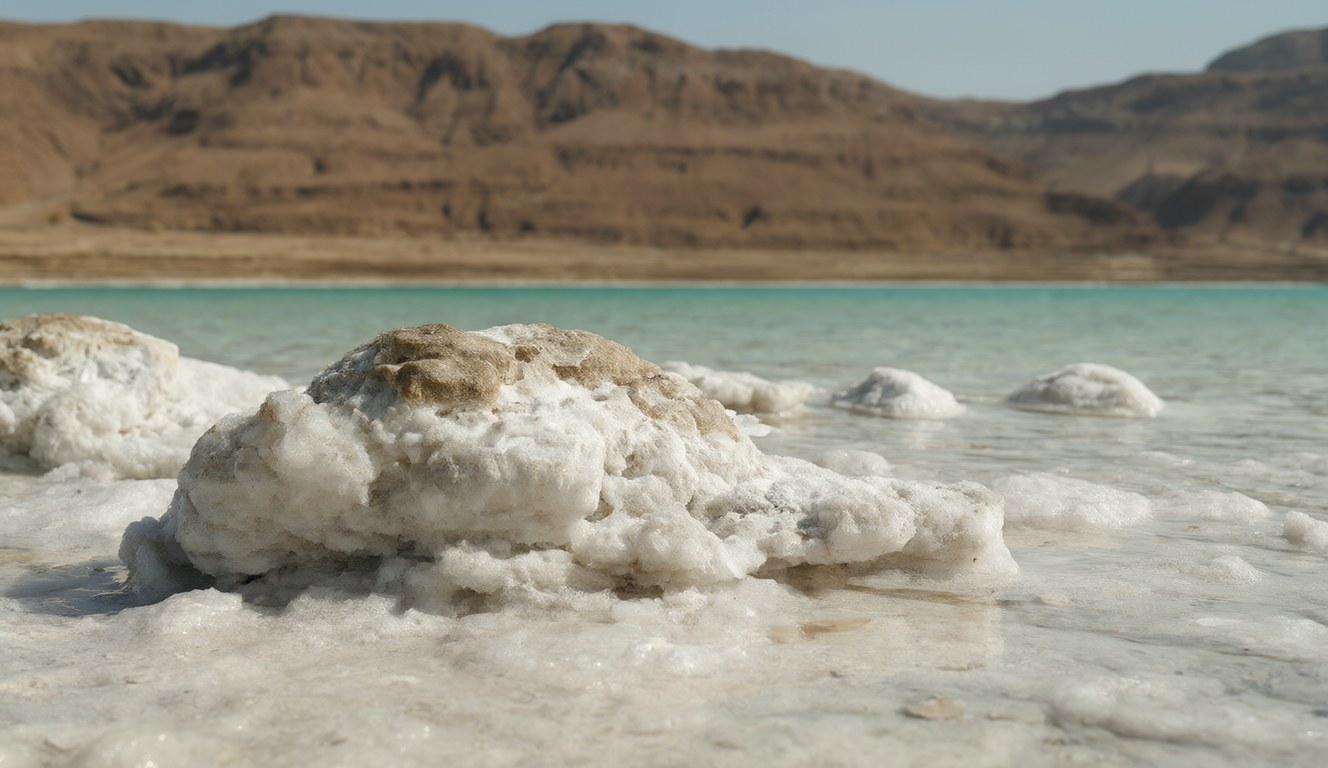
At the south end stands Mount Sodom, a ridge about 8 to 11 km long (sources differ) made almost entirely of rock salt, with salt caves running through it. One weathered salt pillar there is nicknamed "Lot's Wife", after the story in Genesis:
"But his wife looked back from behind him, and she became a pillar of salt." (Genesis 19:26, KJV)
Add sea salt from the coast, and salt was something ordinary people could get easily. The Bible was written for ordinary people. Jesus picked the thing every kitchen had.
When was crystal sugar invented?
Long after Jesus. The usual date for turning sugarcane juice into crystals is around AD 350 in India, during the Gupta period, though some historians argue it started earlier there. The know-how then spread to Persia and through the Arab world from the 7th century. White refined sugar, the kind in our cupboards, came much later again.
So in first-century Galilee, crystal sugar wasn't something people kept at home. That's the answer I gave my wife before I'd looked anything up, and the dates back it up.
What did people use for sweetness in Bible times?
Dates, fruit and honey. Dates and other sweet fruit were boiled down into thick syrups and jams. None of it was crystal, and none of it sprinkled.
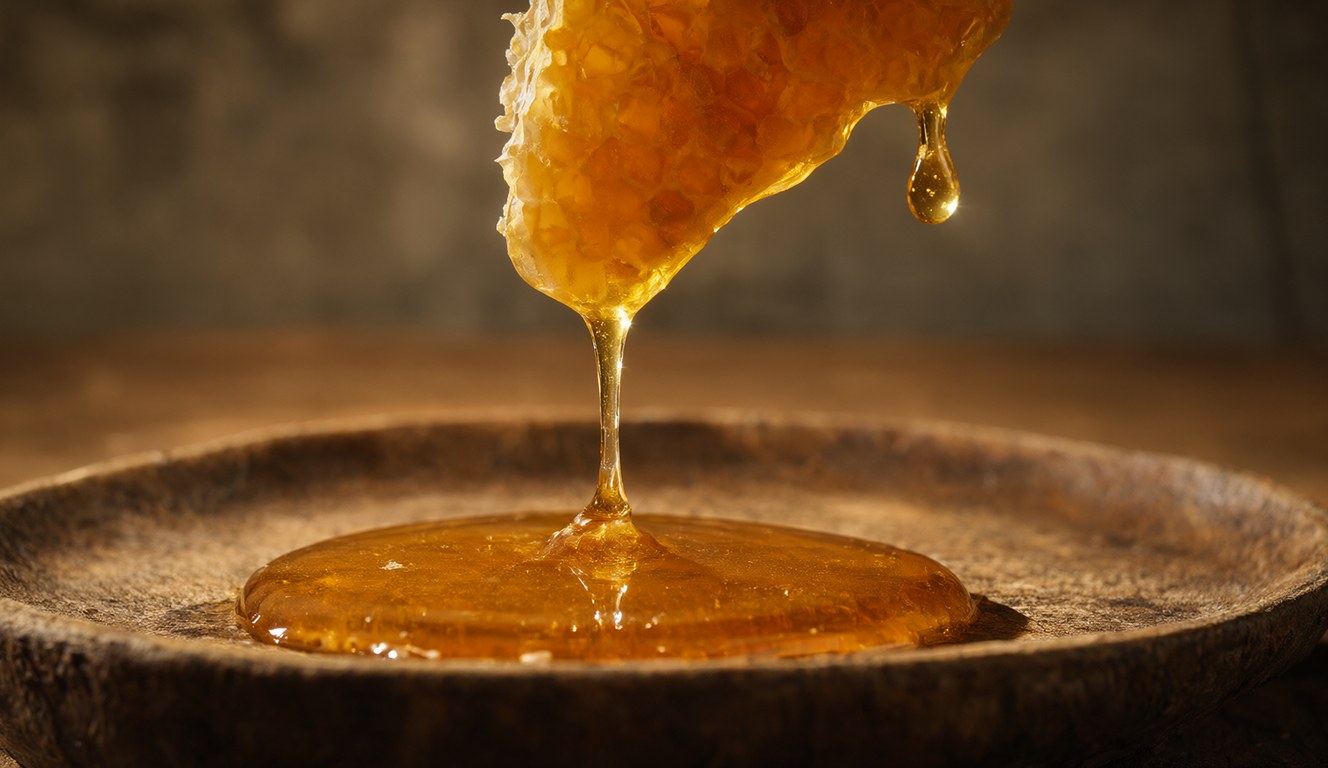
The sweetest thing was bee honey, and it was valuable. The promised land is "a land flowing with milk and honey" (Exodus 3:8), which tells you honey stood for plenty. Archaeologists found an apiary at Tel Rehov in northern Israel from the late 10th or early 9th century BC, around the time of Solomon. They excavated about 30 hives made of unfired clay and straw, and estimate the site once held somewhere between 75 and 200.
That was impressive for its day, but bees and beekeeping were limited and honey wasn't cheap. Honey was among the firstfruits people brought in (2 Chronicles 31:5), though the law didn't allow it to be burnt on the altar (Leviticus 2:11). Either way, honey was something you treasured. Salt you could shake over a fish. Honey and fruit syrup are hard to season with.
How can salt lose its saltiness?
Pure salt can't. Sodium chloride is stable. But ancient salt wasn't pure. Salt scraped from the Dead Sea shore or dried from seawater was mixed with other minerals and dirt.
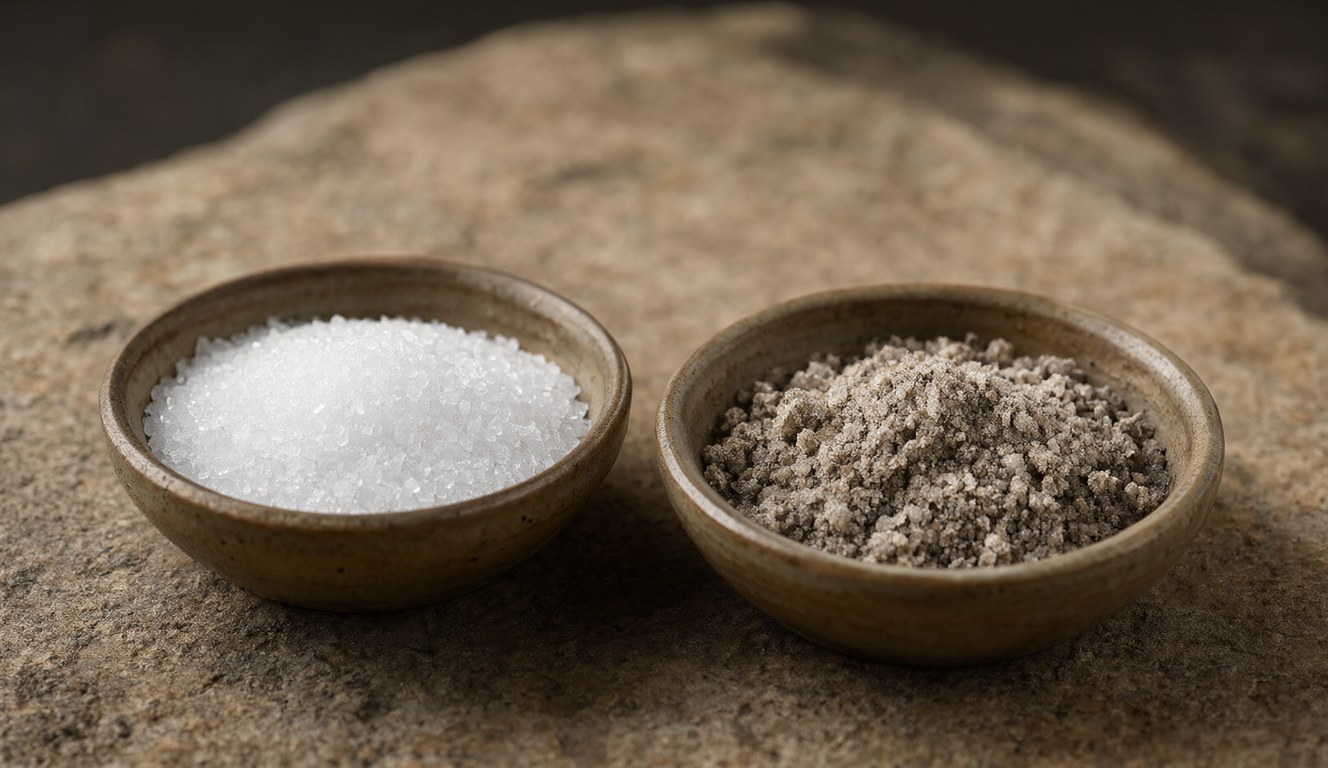
Salt dissolves in water very easily. If the salt was stored damp, or wasn't dried properly in the first place, the real salt could slowly leach out. Even in a dry climate there is moisture in the air. What was left looked like salt but was mostly grit with no taste. That residue was good for nothing except to be thrown on the path and walked over, exactly as Matthew 5:13 says.
So when Jesus talked about salt losing its savour, His listeners weren't hearing a riddle. They had seen it happen.
So which way should you read it?
I'm not criticising any pastor, and I'm not saying anyone who reads the Bible without history is wrong. I'm only talking about my own faith. I don't like the "you're wrong, I'm right" kind of argument, and everyone can hold their own view. Mark has Jesus using the same picture, and He ends it on peace:
"Salt is good: but if the salt have lost his saltness, wherewith will ye season it? Have salt in yourselves, and have peace one with another." (Mark 9:50, KJV)
For me, the history makes the verse easier to picture. Do you read the background when you read the Bible, or do you prefer to take it straight? Tell me or leave a comment under the video.
If you enjoyed this kind of story, try the tale of the lion, the magic bowl and the plate a wise old man told me over yum cha, or my essay on why the same culture doesn't make you friends.
Sources (checked 18 Nov 2026)
- Bible quotations: King James Version (public domain). The video shows the Chinese Union Version.
- Sugar: Wikipedia, "History of sugar" (crystallisation around AD 350 in India; earlier dates are debated).
- Tel Rehov apiary: A. Mazar, N. Panitz-Cohen and G. Bloch, "The Apiary at Tel Rehov: an update" (2022), Hebrew University; ScienceDaily (4 Sep 2007).
- Mount Sodom: Wikipedia, "Mount Sodom"; Showcaves.com, "Sedom".
- Salt losing its savour: Wikipedia, "Matthew 5:13".
This is a personal reflection. The images are stills I made locally with Qwen Image 2.1 for the video, and AI helped me research and edit the English.