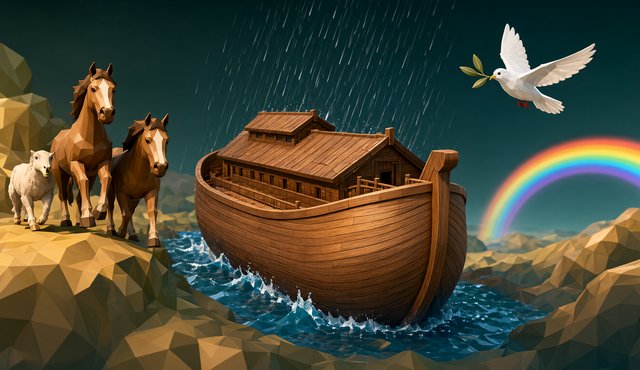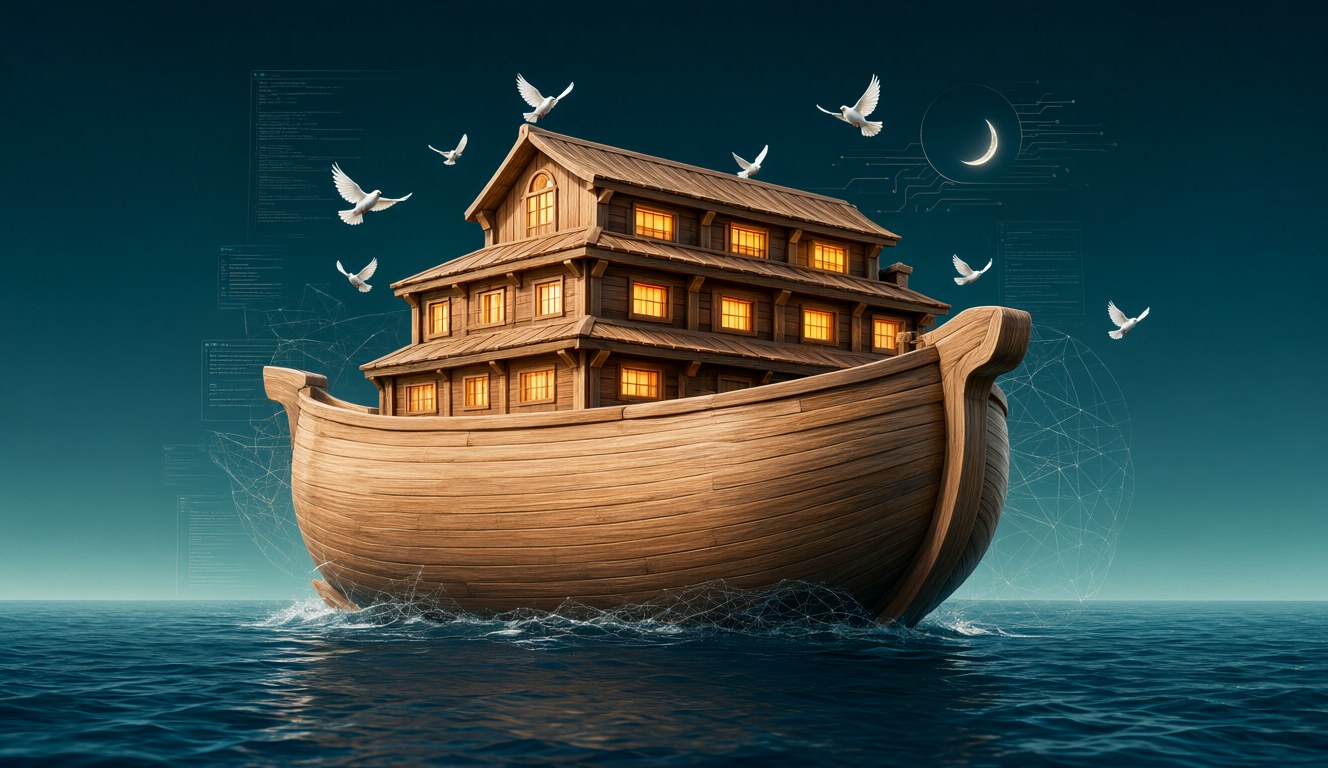
Kimi K3.1 Pro built a working interactive 3D Noah's Ark for me in OpenCode. It did not feel slow, and the finished demo has camera tours, clickable hotspots, boarding animals, rain and a night mode. It still did not give me a "wow" moment. After yesterday's benchmark tables, this hands-on test makes K3.1 Pro feel more like a 0.1 upgrade than a big step from K3.
You can try the 3D Noah's Ark demo here. It runs in one HTML page and loads Three.js from a CDN.
What did Kimi K3.1 Pro build in OpenCode?
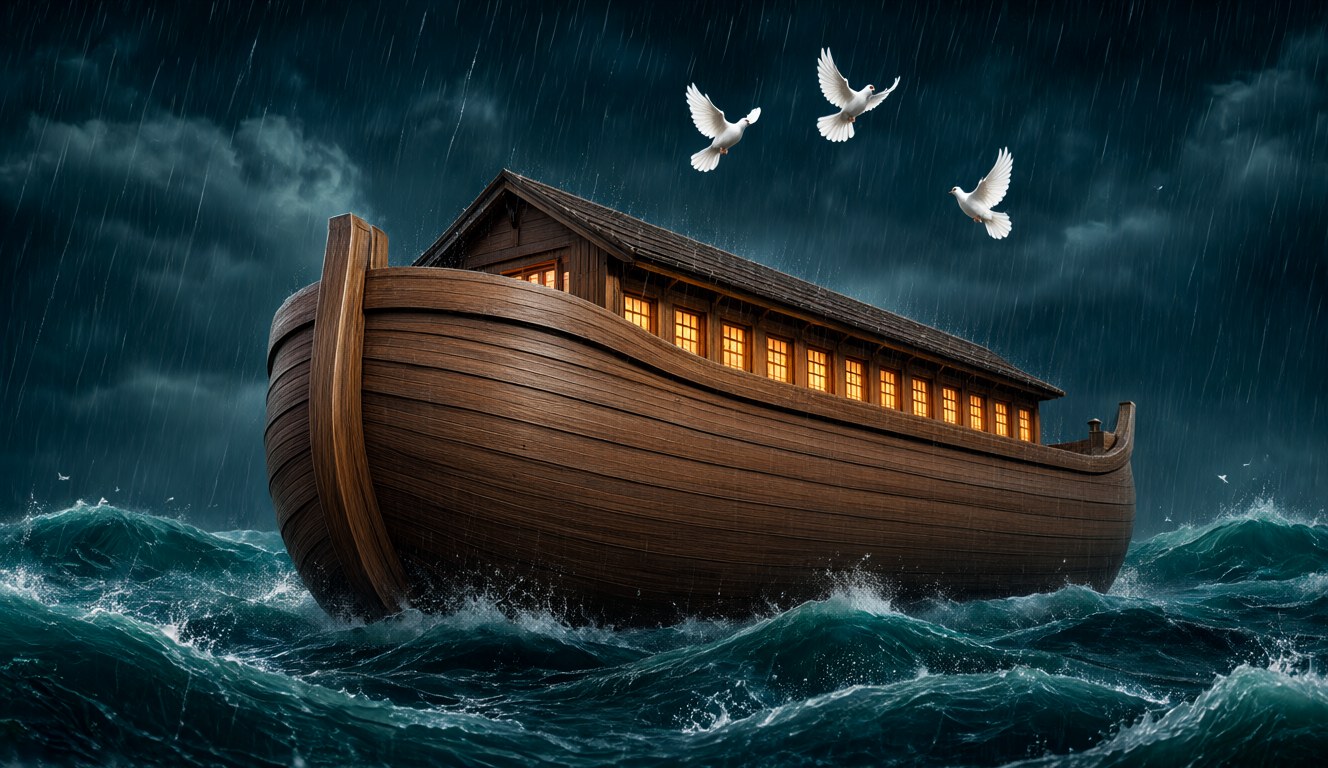
It built a complete browser scene rather than downloading a finished ark model. The hull, timber decks, cabins, windows, ocean, clouds and animals are all generated with Three.js geometry.
The first version already let me orbit and zoom around the ark. I then asked for more interaction and animation. The revised version added a guided camera tour, exterior and deck views, hotspots, a lowering ramp, an opening door, paired elephants and giraffes, and doves flying overhead. A storm button adds rain and stronger waves. Night mode darkens the scene and brings up the cabin lights and stars.
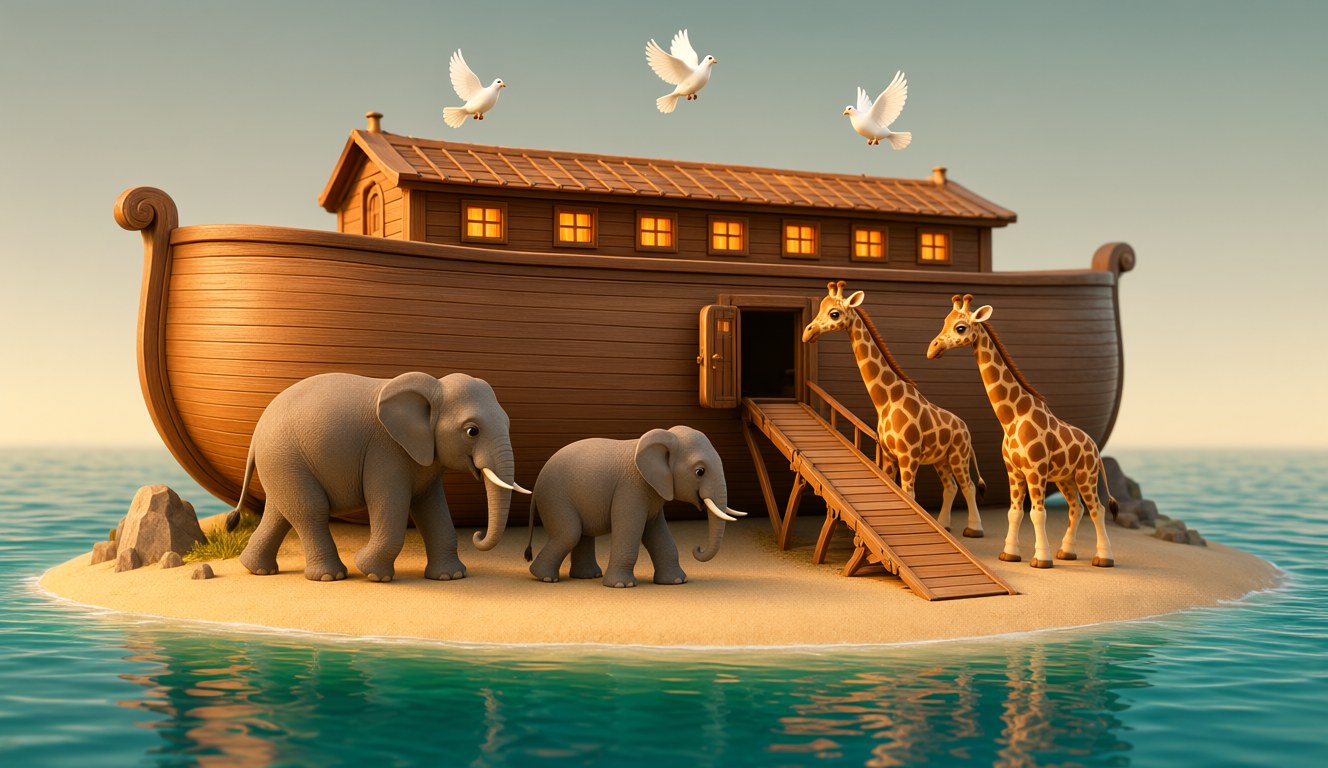
This is the part I like about coding agents. I could ask for a working page, look at it, point at a problem and keep the same project moving. There was no modelling package to learn and no asset folder to manage. The whole demo is still one HTML file.
Was the 3D demo slow?
No, not in this test. I did not feel that I was waiting on a sluggish scene, and the model did not turn a small browser demo into a complicated build system.
That is my observation, not a speed benchmark. I did not record the generation time, frames per second or a comparable K3 run, so I cannot claim that K3.1 Pro is faster than K3 from this alone. The page also needs internet access for Three.js because I chose the CDN version rather than embedding the library.
The browser checks were more concrete. The finished page loaded without console errors or failed requests. Its controls worked, and the layout was checked at desktop size and at 320 and 390 pixels wide. The animated ocean does more work than a static model, so phones and older computers may not behave exactly like my test browser.
Did the model need help with the 3D geometry?
Yes. The most obvious problem was the front of the ark. It looked open because the hull's end ring had no cap. I showed the problem in a screenshot, and the next pass closed both ends. It also closed the triangular gaps under the roof.
The first mobile view cropped the vessel too tightly. That was fixed by moving the camera farther away on narrow screens. These are ordinary programming mistakes, but they matter in a 3D test. A benchmark score cannot tell you whether the bow has a hole in it.
I am glad the agent could correct the geometry, but I still had to inspect the result and ask for the correction. The work got done, and I still had to look carefully. That is useful progress. It is not a "wow" upgrade.
What did the swarm test tell me?
This run used OpenCode's swarm mode, but it was not a controlled comparison against a single agent. I did not measure agent counts, token consumption or the time spent on each part.
The useful result is the working demo and the record of what needed fixing. Tomorrow I want to run a broader swarm test on more demanding work. One small ark can answer whether the model can produce an interactive scene. It cannot settle how well the swarm handles a large repository or a long coding task.
For a different comparison, my DeepSeek V4.1 Flash-1017 test produced a playable 3D game and recorded its time, tool calls and cost. I have not collected equivalent measurements for this Kimi run, so I am not putting a made-up price or stopwatch figure beside it.
What is Kimi doing about the quota problems?
Kimi has apologised for rate limits and unnecessary quota consumption on the K3.1 Pro subscription plan. In the notice supplied to me, the company said these were its own issues and that it should have fixed them sooner.
Every subscriber on every plan is getting a one-time usage reset that restores 25% of the monthly quota, described as one week of usage. Accounts below 25% usage reset to zero. Kimi says usage bars will reflect the adjustment by the end of the day in Pacific time.
The plan parameters are also being adjusted to reduce unnecessary subagent calls and shorten output. That may make the same subscription last longer. A quota reset is separate from model quality, though, and it does not change my mixed view of the ark test.
Is Kimi K3.1 Pro worth trying for 3D work?
Yes, if you want to turn a small visual idea into a working browser demo. It produced a useful scene, responded to follow-up requests and gave me something I could publish without rebuilding it myself.
I am still not blown away. This does not feel like a large leap beyond K3, and the open bow is a good reminder to inspect visual work instead of trusting a successful run message. For the launch prices and vendor benchmarks, read my Kimi K3.1 Pro benchmarks and price article. For my own opinion, the demo is the fairest evidence: open the ark and try the controls.
Sources
- Michael Leung: Interactive 3D Noah's Ark demo, built with Kimi K3.1 Pro in OpenCode and tested on 26 October 2026.
- Kimi K3.1 Pro: Benchmarks, Price and Open Weights, including links to Moonshot AI's announcement, API pricing and model documentation.
- Kimi K3.1 Pro subscriber notice about rate limits, the one-time 25% monthly quota reset and plan parameter changes, supplied on 26 October 2026.
Checked 26 October 2026. This is one hands-on test, not a controlled benchmark. AI wrote and tested the demo code with my follow-up requests, and helped edit this article. The three article images were made locally with Qwen Image 2.1.