Recursive says its new model Flint is good at code, and the benchmarks on its model card agree. So I gave it the same kind of test I gave DeepSeek V4.1 Flash-1017 last week: one prompt, build me a 3D game. It is not as good as DeepSeek. It is free, though: Apache 2.0 weights you can download and run at home. Both things are true at once.
What is Recursive Flint?
Flint is a coding model from Recursive (Recursive Superintelligence, Inc.) on Hugging Face, released under the Apache 2.0 licence. It is a decoder-only mixture-of-experts model: 39.8 billion parameters in total, about 2.5 billion active per token. It is built for the boring half of a coder's week: reading codebases, fixing bugs and writing tests.
Recursive reports 54.9% on Terminal-Bench 2.1, 89.7% on SWE-bench Pro v2 and 74.2% on SWE-bench Verified. The card says these are its own measurements and that setups vary. The model wants one B300 or H200 GPU in BF16 (about an 80GB download), and there are quantized builds elsewhere on Hugging Face.
On OpenRouter it is free as recursive/flint-v1.0:free, 262K context, served by Recursive themselves. That is what I tested.
What did Flint build in my test?
One prompt: create a simple standalone 3D HTML game, a car racing on a road, keyboard controls, speed display, a start screen, three.js. The same task that gave DeepSeek its Neon Runner.
My first run used the OpenRouter default of 8,000 output tokens. Flint spent all of them thinking: 29,619 characters of reasoning and zero lines of code. Fifty-six seconds of nothing. The model card does warn that hard problems want at least 32,768 output tokens including reasoning, but an empty answer at the default settings is still a bad first hour with a model.
So I gave it 32,000. It wrote the game in 2 minutes 26 seconds: 305 lines of HTML and JavaScript, after 61,317 characters of thinking. That is more than five characters of reasoning for every character of code. Time to first token was 1.3 seconds in both runs, so the wait is the thinking, not the network.
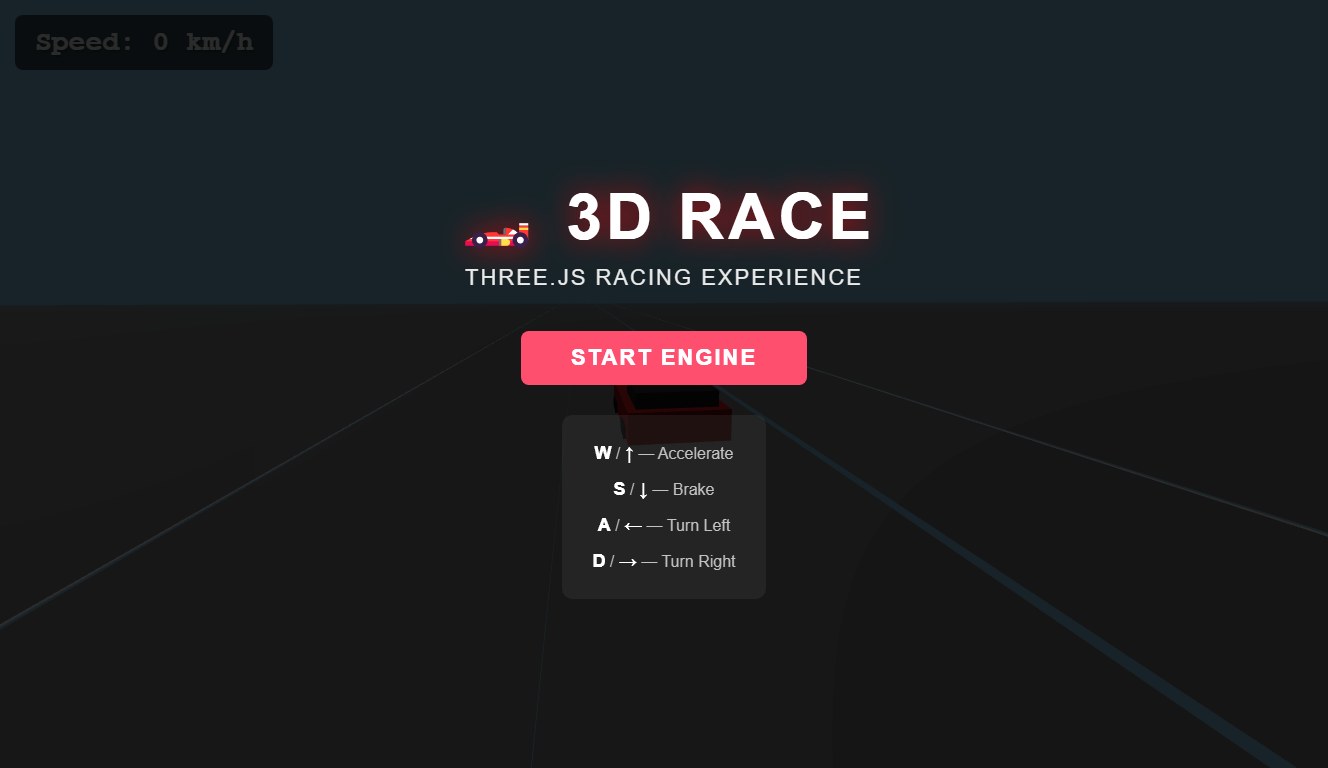
The game runs. I loaded it in headless Chromium and got no JavaScript errors. It is just not much of a game. The car is two boxes, the road has no markings and no edges, the camera sits low and strange behind the car, and the sky is flat. It also ignored half the brief: the file loads three.js r128, a 2021 build, from a CDN, so the "standalone" game needs the internet to start.
How does it compare with DeepSeek V4.1 Flash-1017?
Badly, on this task. DeepSeek V4.1 Flash-1017 got one similar prompt in DeepSeek Harness and built Neon Runner in 4 minutes 20 seconds: a glowing runner across three lanes, magenta walls, gold orbs, sounds, a best score that sticks. About 2.5 million tokens changed hands and the bill came to roughly 5 US cents. Then it tested its own game in a browser and fixed two visual bugs before reporting back. Flint did none of that.
| Flint (free on OpenRouter) | DeepSeek V4.1 Flash-1017 | |
|---|---|---|
| Result | 305 lines, two boxes for a car, three.js from a CDN | About 750 lines, glow, sounds, best score, three.js inside the file |
| Time | 2 min 26 s | 4 min 20 s (26 tool calls) |
| Tested its own game | No | Yes, fixed 2 visual bugs |
| Cost | Free | About US$0.05 |
| Weights | Apache 2.0, quantized builds from 11.35GB | MIT, but 763B parameters, too big for home hardware |
In fairness, the two runs were not the same shape. DeepSeek ran as an agent with tools in its own harness; my Flint runs were plain chat completions through the OpenRouter API. That is what a reader clicking the free tier actually gets, which is why I am keeping the comparison. It is not a verdict on what Flint can do in a proper agent stack.
Can I play the games?
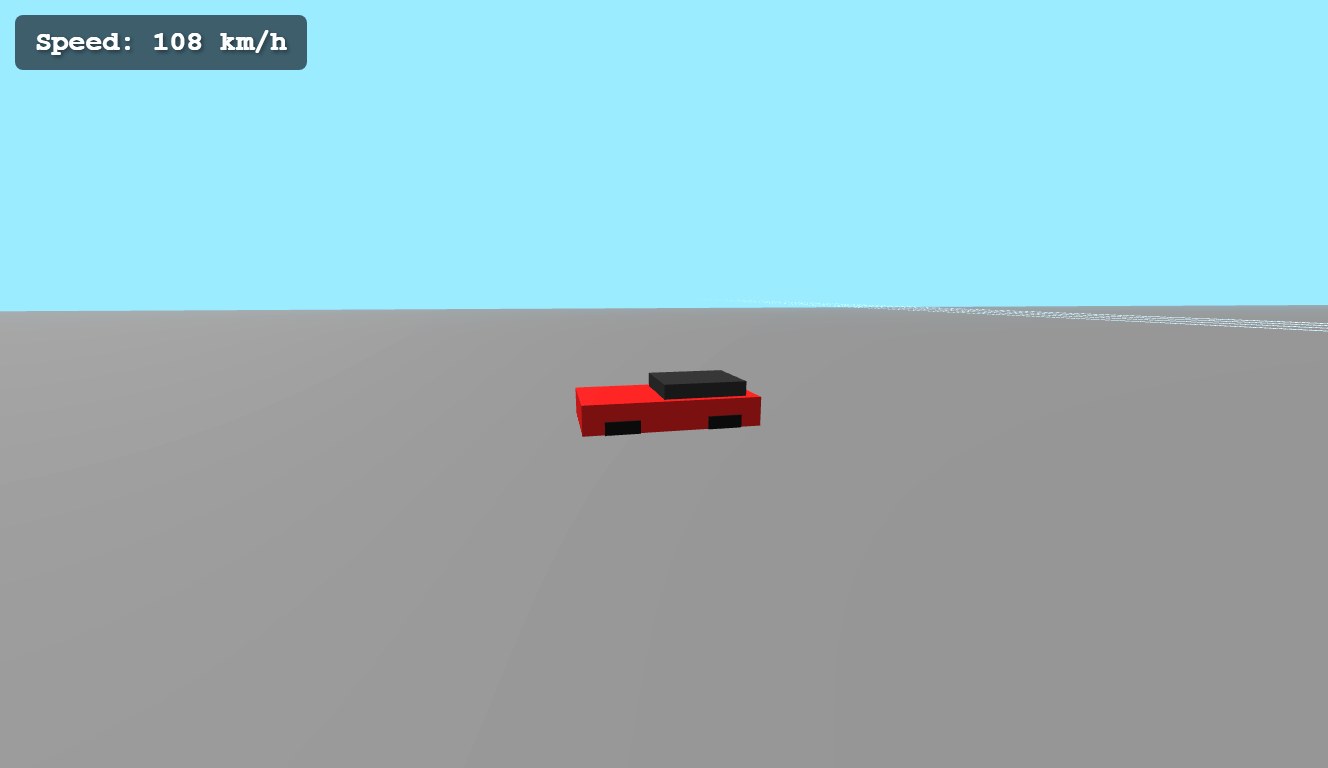
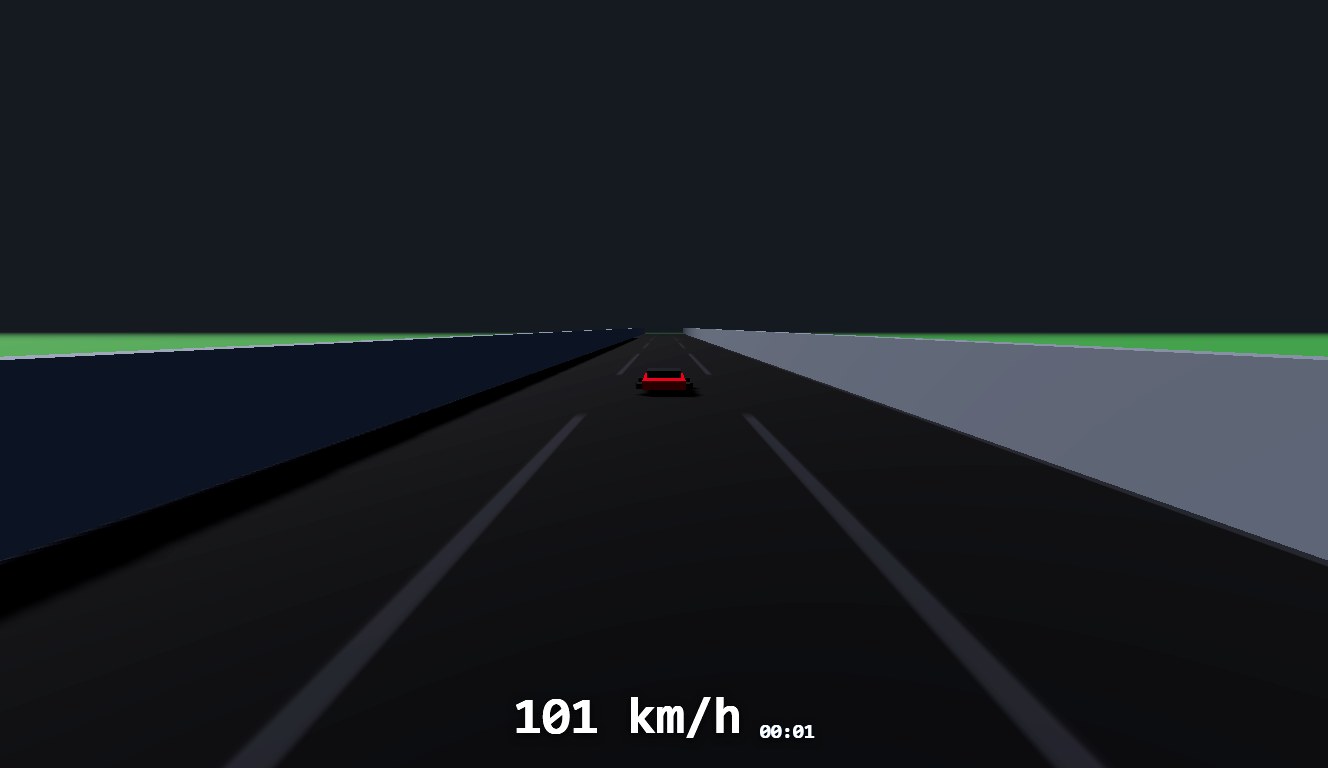
Flint's game is a test artifact and I have not published it. DeepSeek's is live at Neon Runner. And the car racing game above is mine, the one I built with AI assistance: a chase camera behind a red car, lane markings, barriers, nitro, a timer, and a reset when you hit the wall. One HTML file and a local copy of three.js, so it works with the internet off.
If your kids like 3D games, there is more on the free games page, including Block Drop 3D.
Is Flint still worth it?
Yes, if you want a model you can keep. The OpenRouter build is limited and its game is not as good as DeepSeek's, but the weights are free and yours to run. For local hardware there is one catch: the smallest quantized file I could find is 11.35GB, so it will not fit an 8GB card like my RTX 4060 Ti. It wants a 24GB GPU or 32GB of RAM.
The bigger lesson is the gap between a benchmark and a Tuesday night. 89.7% on SWE-bench Pro v2 and a box car on a grey plane are both facts about the same model. Only one of them tells you what the first hour feels like.
For cheap agent work today my pick is still DeepSeek V4.1 Flash-1017 — see the game test and the 1017 update. For a free model you can hold on to and watch improve, Flint is worth the download.
Sources
Checked 24 October 2026. Specs, benchmarks and licence from the Recursive Flint model card; OpenRouter listing recursive/flint-v1.0:free; quantized sizes from unsloth/flint-GGUF. DeepSeek figures from my 21 October test. My Flint numbers come from two chat completions through the OpenRouter API on 24 October 2026 (8,000 and 32,000 token output budgets); both games were checked in headless Chromium. The car racing game was built with AI assistance. Testing and write-up done with AI assistance.