I gave DeepSeek V4.1 Flash-1017 one prompt, "create a simple standalone 3D HTML game for me", and it built a working 3D endless runner in 4 minutes 20 seconds. It used 2.5 million tokens, and DeepSeek's usage page charged me about US$0.05. The game runs from a single file with no install, and you can play it here. For a cheap model, that is a very good result.
What Did DeepSeek V4.1 Flash-1017 Build?
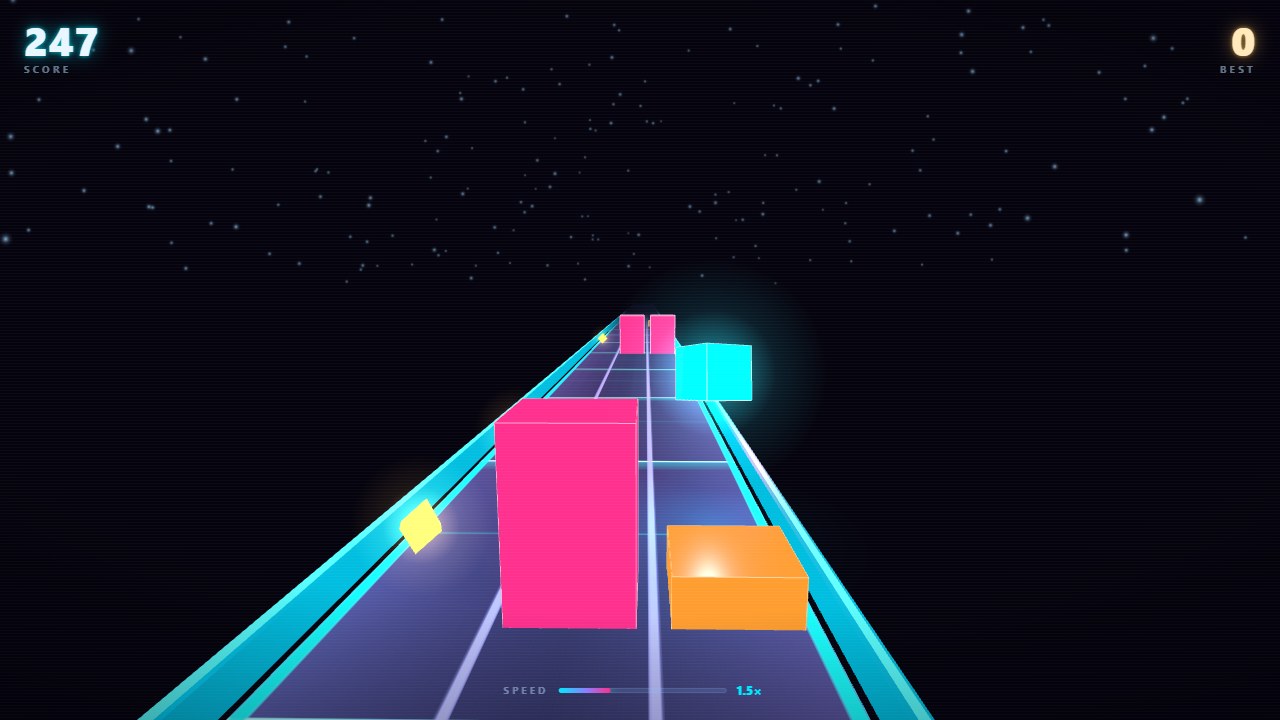
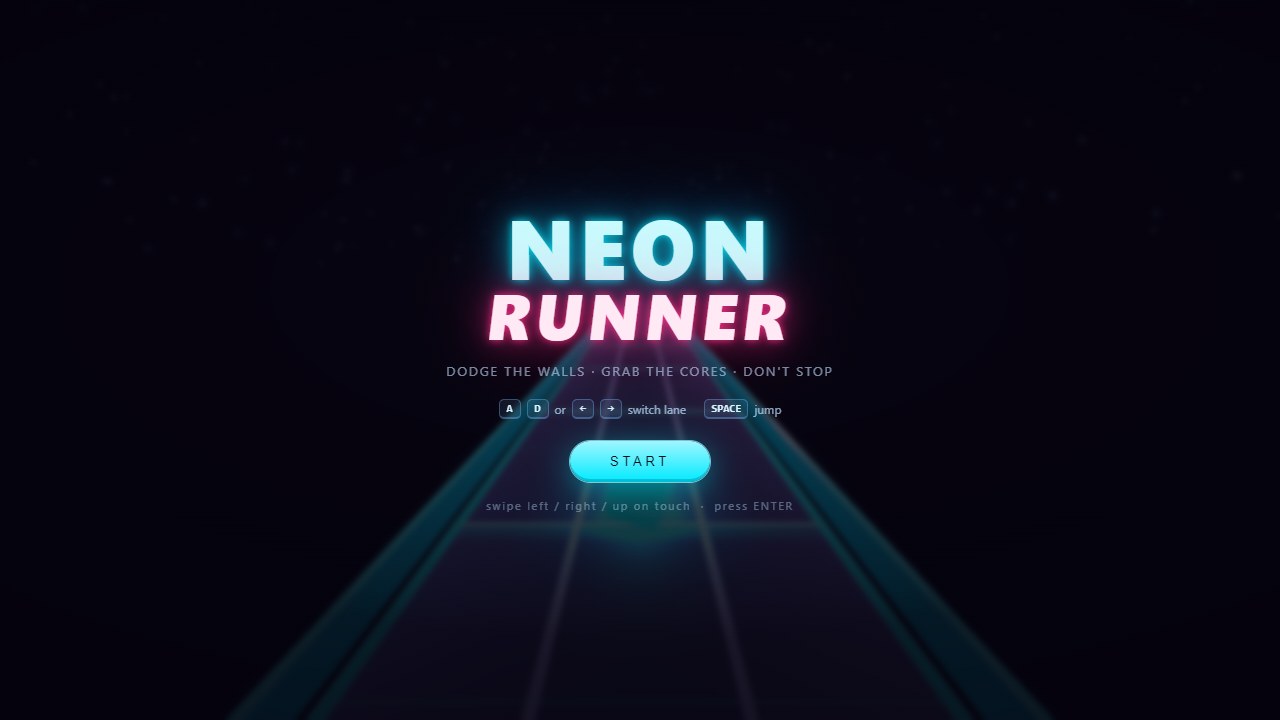
It built Neon Runner, a 3D endless runner. A glowing cube slides between three lanes on a neon track. You dodge the tall magenta walls, jump the orange low walls and pick up gold orbs, and the speed keeps rising until you crash.
Everything the model listed when it finished:
- One self-contained HTML file of 665 KB. Most of that is the three.js r157 library, which the model put inside the file so the game works offline and straight from a double-click.
- About 750 lines of its own JavaScript, plus the HTML and CSS for the menus and score display.
- Keyboard controls (A/D or the arrow keys to change lanes, Space to jump, Enter to restart) and swipe controls on a phone.
- A best score that stays in the browser, and simple sound effects made in code.
- Tuning values at the top of the script, such as starting speed, top speed and jump height, so you can change the difficulty.
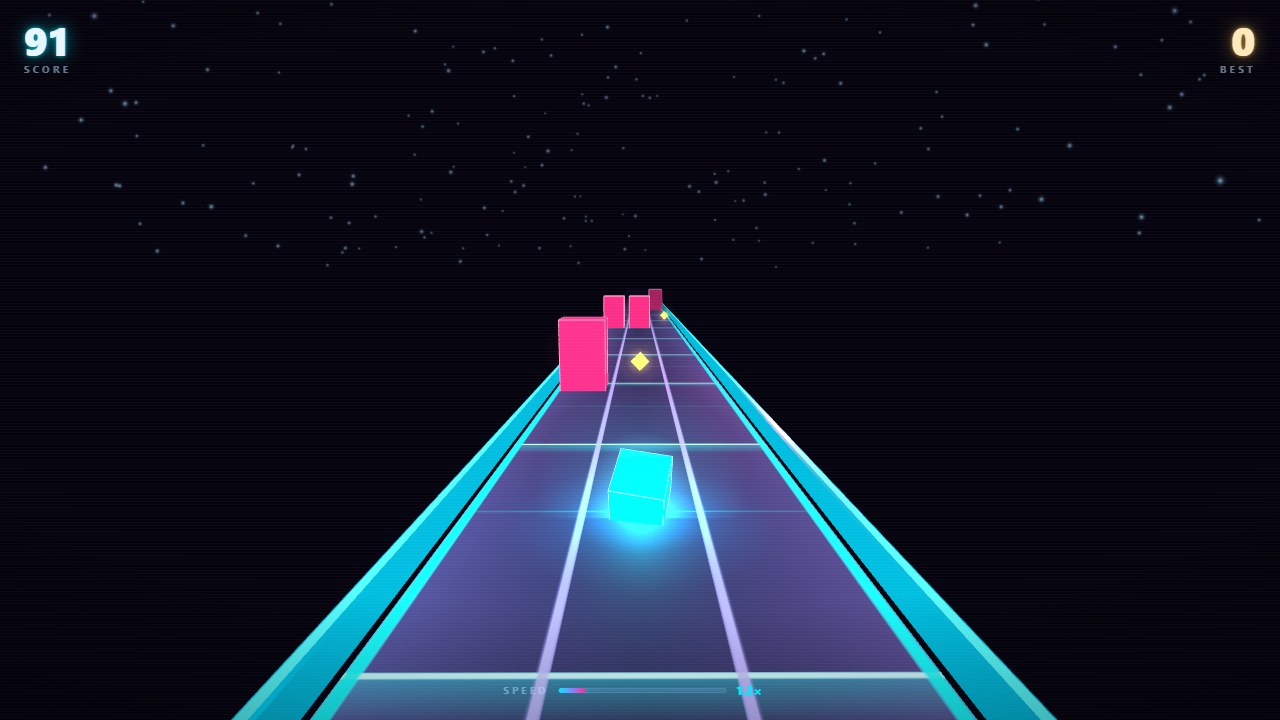
It looks like a finished game. The glow, the stars and the speed bar were all in the version it handed over.
Did the Game Actually Work?
Yes. The model tested the game itself before it said it was done, and my own check found no problems.
Inside DeepSeek Harness, it opened the game in headless Chrome and wrote a small script that played the game. Its report listed eight checks that passed: the scene and score display render, orb pickups count, a low wall kills you if you don't jump, a jump clears it, a tall wall still kills you at the top of a jump, lane changes stop at the edges, and the crash, retry and best-score flow works with no errors.
It also fixed two things it found in its own screenshots. The road lines were thinner than a pixel, so you couldn't feel the speed, and the stars showed as hard squares. Both now look soft.
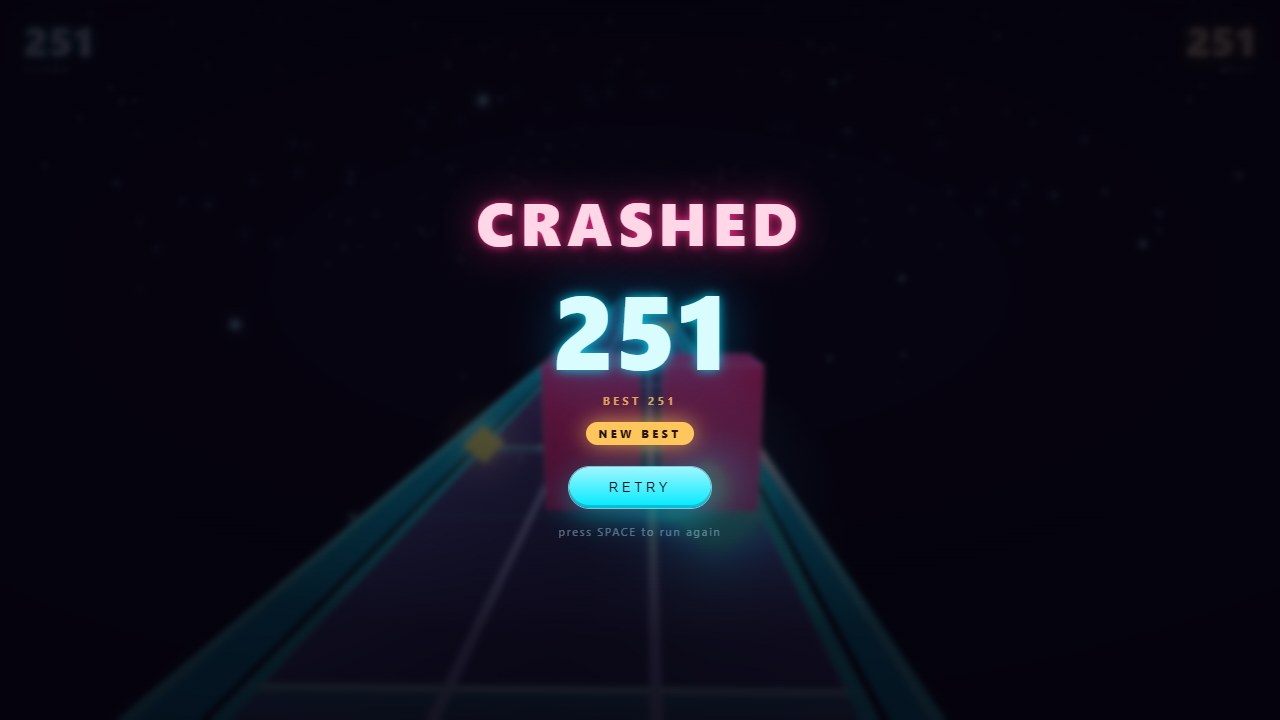
On 21 October I ran the file again in headless Chromium with my own simple bot. It played for about 20 seconds, scored 251 and crashed into a wall when I switched the bot off, which is what should happen. The browser reported no JavaScript errors. The screenshots in this article come from that run.
One small thing it left in: a window.NEON debug handle it used for its tests. It told me about it and said it is safe to delete. I like that it was open about it.
How Can 2.5 Million Tokens Cost Only 5 Cents?
Most of those tokens were cached input, which DeepSeek charges at almost nothing. A coding agent sends the whole conversation, including the files it has read, back to the model at every step. Across 26 tool calls that adds up to millions of tokens, but most of it is the same text each time, so it hits DeepSeek's cache.
DeepSeek's prices for deepseek-flash, per million tokens:
| US$ per 1M tokens | Peak | Off-peak |
|---|---|---|
| Input, cache hit | $0.006 | $0.003 |
| Input, cache miss | $0.30 | $0.15 |
| Output | $1.20 | $0.60 |
I ran the test at 9am on Tuesday 20 October, Brisbane time. That is 23:00 UTC on Monday, which is off-peak, so I paid the half price. Two simple sums show where 5 cents sits:
- If all 2.5 million tokens had been charged as cache hits, the bill would be about US$0.0075.
- If all of them had been charged as new, uncached input, it would be about US$0.38.
My real bill of about US$0.05 is much closer to the cache-hit end. The output tokens, the code it actually wrote, are the expensive part, and a 750-line game is not many of them. In Australian dollars it is under 10 cents.
If you run the same job between 11am and 2pm or 4pm and 8pm on a weekday in Brisbane, you pay the peak price, so roughly double. Still about 10 US cents.
Is DeepSeek V4.1 Flash-1017 Good Enough for Coding Agents?
For a small, complete project like this, yes. What surprised me most was the testing. The model checked its own game in a browser, spotted visual bugs in its screenshots and fixed them before it reported back.
This is the kind of work DeepSeek said the 1017 update was trained for: building whole projects from scratch, with a web racing game among its own examples. It is also tuned for DeepSeek Harness, which is what I used. I covered DeepSeek's benchmark numbers in DeepSeek V4.1 Flash-1017: Same Price, Big Coding Gains. At the time I said I hadn't tested it myself. Now I have, and the result matches the claims for this kind of task.
It is also fast. In my MiniMax M3.1 Flash speed test, Flash-1017 wrote 248 to 306 tokens per second through OpenRouter, the fastest of the three models I tried.
One game from one prompt is a small test. A large project with an existing codebase is harder, and I'd still use a stronger model to plan big changes. That is how I built the games in Google Playground Isn't in Australia, So I Use Claude. For an earlier cheap agent run, see One Night of Agentic Coding for Under $1.
Can I Play the Game?
Yes, Neon Runner is here. It works on a computer with the keyboard, and on a phone by swiping. I added only a Google tag and a link back to this article. The rest is the file DeepSeek made.
If your kids like 3D games, my own Block Drop 3D and the rest of the free games are on this site too.
Have you tried DeepSeek Flash in a coding agent? I'd like to know what it built for you and what it cost. Send me a note on the contact page.
Sources
- DeepSeek: DeepSeek-V4.1-Flash-1017: Wish-Driven Programming Made Real (17 Oct 2026): project-building examples and the DeepSeek Harness recommendation.
- DeepSeek API: Models & Pricing: deepseek-flash prices and peak hours.
- DeepSeek API: Change Log: the 17 Oct 2026 update to deepseek-flash.
- My own test in DeepSeek Harness on 20 Oct 2026 (one prompt, 26 tool calls, 2.5M tokens, 4 min 20 s), the cost from my DeepSeek platform usage page, and my headless Chromium check on 21 Oct 2026.
Checked 21 October 2026. Prices are in US dollars. All images are screenshots of the game DeepSeek made. AI helped me edit this article.