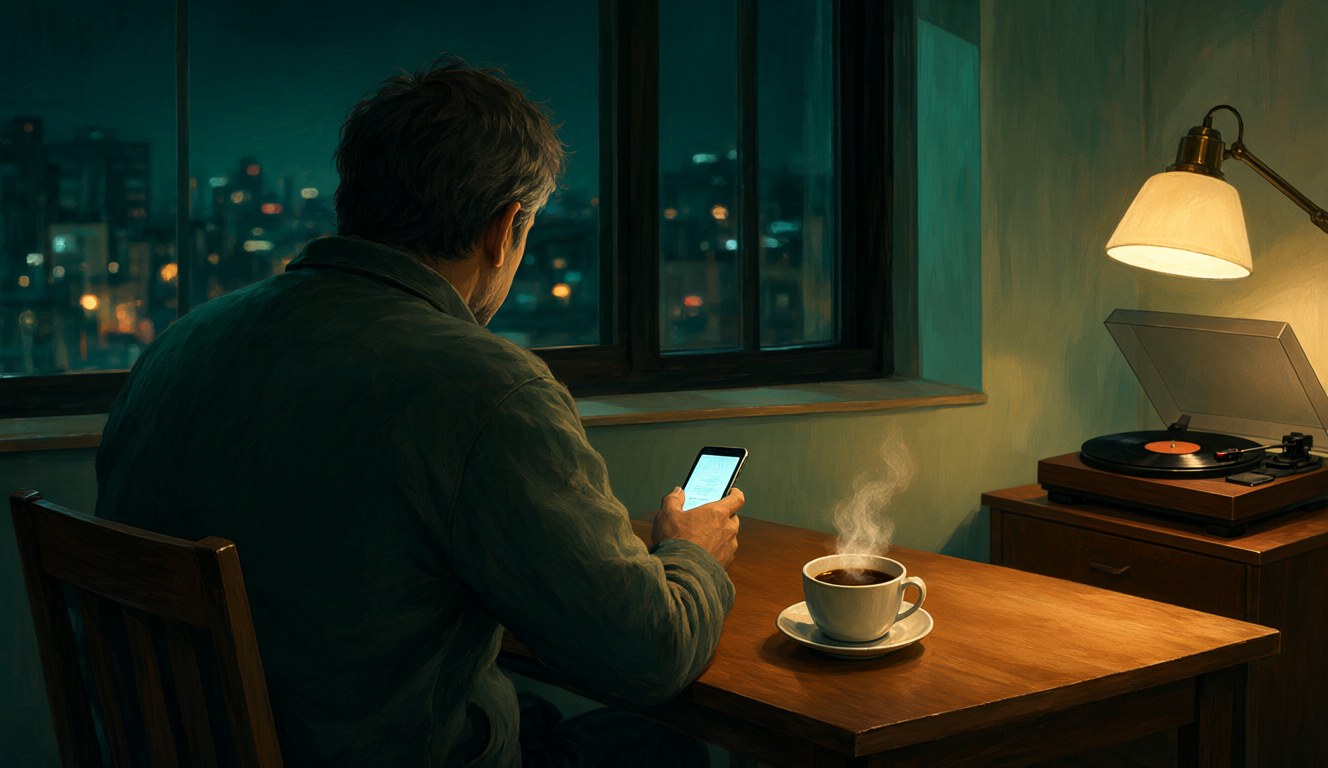
Most middle-aged men carry the same few things, and almost none of us talk about them. A phone number we never call but can't delete. A friend we once thought we knew, who would now walk past us in the street. Something we tried to leave behind that came along anyway. I used to think I was the only one. At this age, I think we are all much the same.
Why Do Middle-Aged Men Go Quiet at Night?
Because night is the only time nobody needs anything from us. The day belongs to work, family and the people who rely on us. Late at night, with one last cup and the house asleep, a man finally has a few minutes to talk to himself.
That is where my song starts. In Cantonese it opens with 夜深人靜,飲啖嘢,同自己傾下計: late at night, have a sip, have a chat with yourself. 其實去到呢個年紀,大家都差唔多啫. Once you reach this age, we are all about the same.
I like that line because it isn't sad and it isn't wise. It is just honest. Nobody's life turned out exactly as planned, and most of us made our peace with that quietly, without telling anyone.
I wrote about the value of that kind of quiet time in An Hour Alone in a Busy Café. Late at night is the same hour, just darker.
Why Keep a Phone Number You Will Never Call?
Because deleting it would mean admitting that part of your life is over. You scroll through your contacts and there it is, always in the same place. They will never call you. You will never call them. But your thumb stops above the Delete button and you can't press it.
In the song I call it a memorial without a headstone. The number doesn't do anything. It just sits there and reminds you that, for a certain stretch of years, a certain person was part of your life.
I don't think keeping it is weakness, and I don't think deleting it is strength. Some people need a clean break. Others need a small marker. Both are fine. The only thing I would say is: if you keep the number, keep it kindly. It is a memory, not an unfinished argument.
What Happens to the Friends You Thought You Knew?
Many of them simply drift away, and sometimes you find out you never really knew them. Most of us had someone like this when we were young: a person we talked with all night and felt we had seen right through to the heart. Years later we realise it was a beautiful misunderstanding.
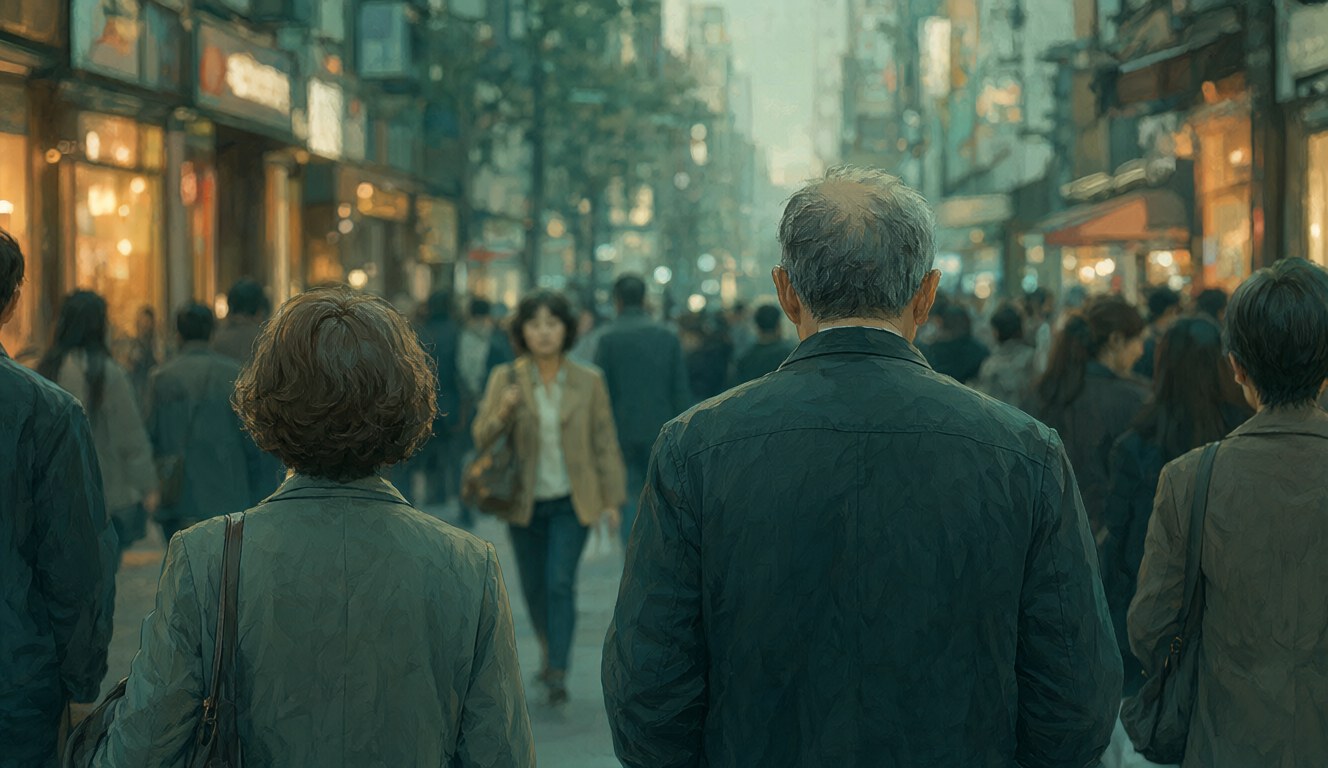
The line that hurts most in the song is the simplest one. Today, if we walked straight into each other on the street, we might not even recognise each other, or bother to say hello.
Nobody has to be the villain here. People change, cities change, and what felt like understanding at twenty is often just two young people hoping to be understood. I wrote about a similar idea in Why the Same Culture Doesn't Make You Friends: being close for a season is not the same as being alike for life.
Is Anyone Really as Carefree as They Look?
No. Everyone has a few names they no longer mention. We just get better at hiding them.
The chorus of the song says it in four lines:
其實大家都係一樣 邊有邊個特別瀟灑
邊個心入面 冇幾個唔再提起嘅名吖
學識將啲嘆息 變做飯局上面嘅笑話
中年嘅老男人 咪又係咁上下
We're really all the same. Who's ever truly carefree?
Whose heart doesn't hold a few names he never says again?
We learn to turn our sighs into jokes at the dinner table.
Middle-aged old men, that's just how it goes.
That third line is the one I see most often. At a dinner with old friends, the heaviest stories come out as jokes. Everyone laughs, and everyone knows. It is not dishonest. It is how men of a certain age give each other permission to say something true without making it a big moment.
Can You Leave Your Worries Behind by Moving Overseas?
Not really. You can leave the place, but the thing you were running from travels in your luggage.
The second verse of the song is about that. There is always something in your heart you want to avoid, so you pack everything and fly halfway around the world. From the northern hemisphere to the southern one, even the seasons and the time zones are reversed. You think a different sky will let your heart put things down.

Then you land, feel the wind of a new country, and find that some things can't be avoided, because they were packed in a corner of your heart all along. The line I am proudest of is this one:
空間可以拉開 但係記憶唔識得時差
Distance can stretch the space between us, but memory doesn't know jet lag.
I am not saying moving was a mistake. A new place can give you a new life, and I am grateful for mine. I wrote about that side in Raising Kids in Brisbane as First-Generation Migrants. But a new place can't do the work of putting something down. However far you go, your shadow walks with you.
What Is the Standard Kit of a Middle-Aged Man?
The unmade call, the old friend you wouldn't recognise, and the worry you can't escape. That is the bridge of the song, and it is where the title comes from: 中年男人標準配備, the standard kit of a middle-aged man.
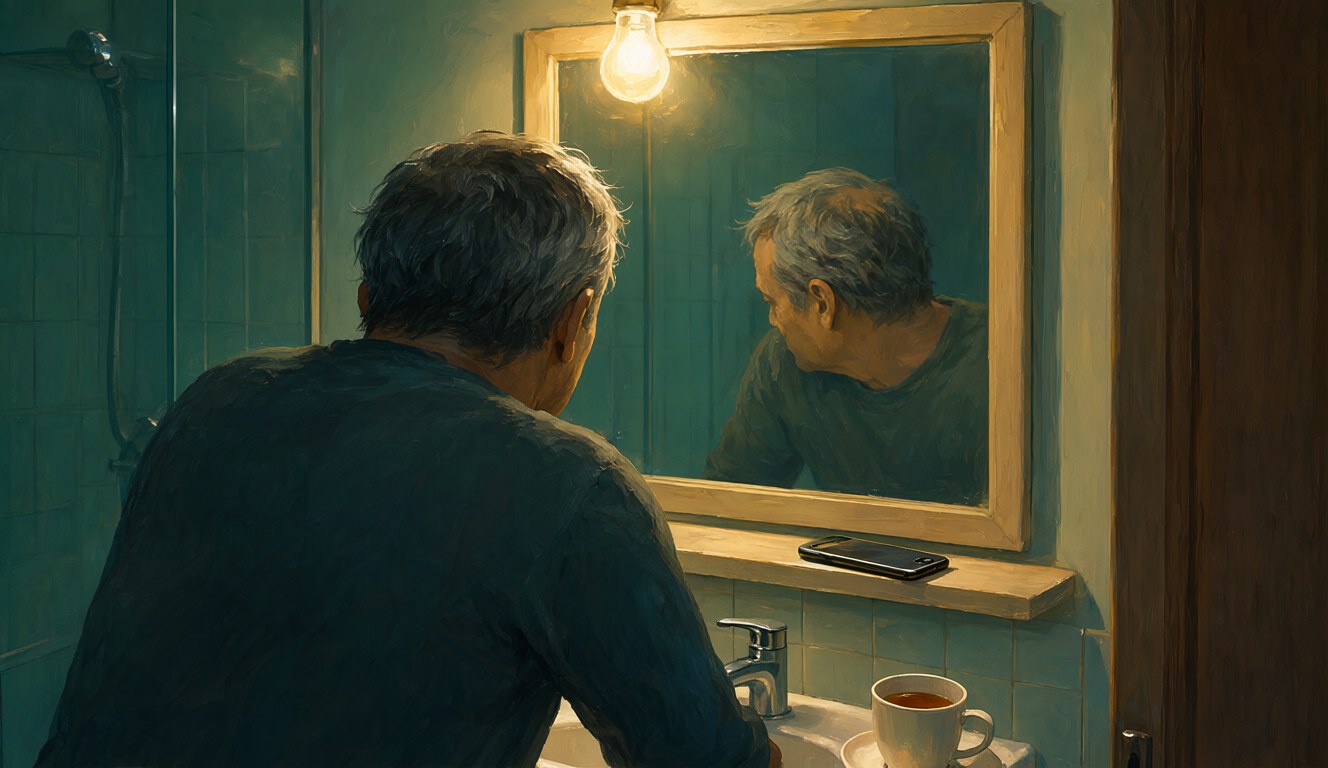
You look in the mirror and see grey hair starting at both temples. The rights and wrongs you once fought so hard about now look a bit childish. I don't mean they didn't matter. I mean the person who argued about them was younger and more certain than I am now. I explored that change in Right and Wrong Isn't 0 or 1.
Calling it "standard equipment" is a small joke, and that is the point. If everyone has the same kit, then nobody needs to feel ashamed of carrying it.
So What Actually Helps?
Not fixing it. Just carrying it more lightly. This is what I would say to another man my age:
- You are not the only one. The quiet man across the dinner table probably has his own number he never calls.
- Keep the memory, drop the argument. A number in your phone can be a marker of a good season, not a case you are still trying to win.
- Don't expect a plane ticket to do the healing. A new place helps you start again, but the heavy thing needs to be faced wherever you are.
- Let the joke at dinner be a door. If a friend turns a sigh into a joke, laugh, and later ask him how he really is.
- Go to bed. The song ends with 飲埋呢杯,早啲抖喇: finish this cup and get some rest. Some nights, that is the wisest advice there is.
The Two Songs I Made About This Feeling
I couldn't fit this feeling into an essay alone, so I made two songs about it.
The first is 中年的老男人,都是這樣 (Middle-Aged Old Men Are All Like This), on Spotify. The title says the same thing the chorus says: nobody is special in this, and that is strangely comforting.
🎧 Listen to 中年的老男人,都是這樣 on Spotify
The second is 中年男人標準配備 (The Standard Kit of a Middle-Aged Man), a Cantonese chill-hop song with a music video on YouTube. It sits on a laid-back 82 BPM boom-bap beat with warm vinyl crackle, jazzy Rhodes piano and a mellow jazz guitar solo. The verses are light, unhurried Cantonese rap, and the chorus turns into a soft, sung Cantopop melody. In the bridge the beat drops out, leaving just piano and upright bass, before the groove comes back for the last chorus.
It ends the way a late night should, with a small, wry laugh:
大家都係一樣啫…… 唔打嘅電話,繼續留喺度啦。飲埋呢杯,早啲抖喇。
We're all the same, really… The number you never call, just leave it there. Finish this cup, and get some rest.
What is in your standard kit? I would like to hear from other people who recognise this feeling, men or not. You can reach me on the contact page, and if the songs speak to you, please save them on Spotify or subscribe on YouTube.
This is a personal reflection. The images were made locally with Qwen Image 2.1, and AI helped me edit the English.