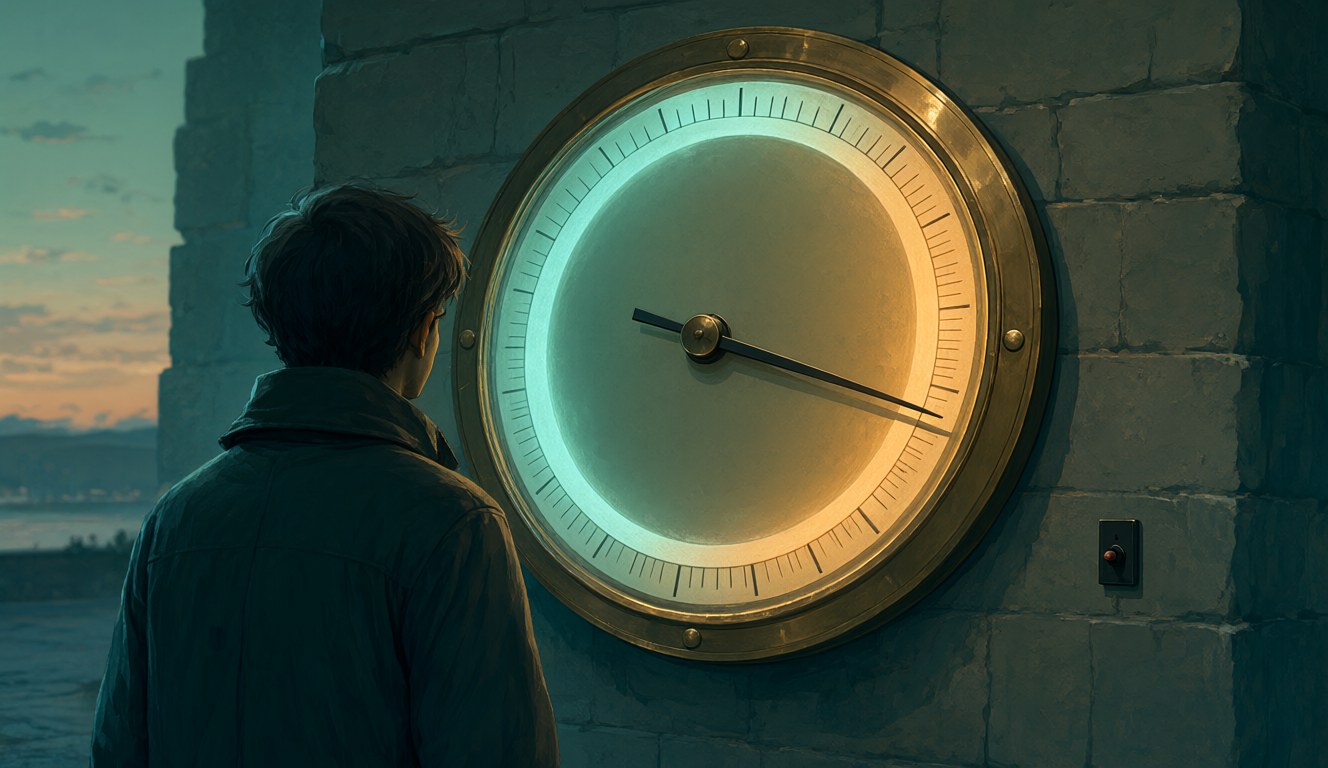
Right and wrong is not 0 or 1. How much someone got wrong should decide how hard we respond. Lately I've been stuck in the middle of a falling-out in my friend circle. My friends are not wrong that the person did something wrong. I think so too. What I can't accept is the jump from "they did something wrong" to "so anything we do to them is fine".
This is just something from my own small circle, not a big social study. I don't know if it's an age thing, or because I spend so much time online and playing with AI. But I've seen it more than once, so I wanted to write it down.
What happens when a friend group cuts someone off?
It usually starts with something small. In this case, nothing illegal happened. What the person did was within the law and, on paper, reasonable. It just wasn't OK by the unwritten rules of how people treat each other. I didn't like it either.
But the reaction was: cut them off. Never speak to them again, as if they were an enemy.
So I asked my friend, "Why do we have to treat them like this? What did they actually do?" We talked it through. I agreed there was a problem with what they did. My friend's answer was, "Right. There's a problem, so we can treat them this way."
Then I went a level deeper: "Is the punishment the right size for what they did?" And my friend kept coming back to the same question: "You agree they were wrong, don't you? So I'm allowed to do this."
That's where we got stuck. My friend was asking whether it was wrong. I was asking how wrong it was.
Why is "how wrong" a different question from "is it wrong"?
Because once you agree something is wrong, you still have to decide how bad it is, and people answer that very differently. To my friend, the person was very, very bad, bad enough for distance, coldness and being treated like an enemy. To me, it was a fair thing to criticise, but nowhere near that.
That part is subjective, and we can talk about it. Something that's legal but socially hard to accept is not the same thing as a real crime or real cruelty. Putting both in the same box is where things go wrong.
When I talk about this with a few friends, some of them don't see the difference. For them, right and wrong is 0 or 1, with nothing in between. Wrong means punishment, and there's no question of how much.
Does being wrong justify any punishment?
No. Being wrong means there's a consequence. It doesn't mean every consequence is fair.
Think of a child who is late for school. Saying "no TV tonight" seems completely reasonable. They did something wrong, they take a small consequence, and it's proportionate.

Now imagine the same child gets no TV for a whole year, and is never allowed to go to a theme park again, all for being late once. Being late is still wrong. But nobody would say the punishment fits. In real life, if a parent punished a child like that, someone from a government department might come around to ask questions, and maybe step in.
So we already understand this with children. Being in the wrong doesn't give anyone a licence to do anything they like in return. The size of the response has to match the size of the mistake.
It feels like this online generation (and I spend a lot of time online myself) argues about everything as if it's 0 or 1: right or wrong, with us or against us. There's no dial, only a switch.
Can you disagree with someone and still wish them well?
Yes, and I think most of us do, even if we don't say it.
Recently I heard that someone I strongly disagree with had been unwell. Our relationship had broken down, so I couldn't ask them directly. I asked around through a few friends instead. It turned out to be a minor problem, nothing serious, and I was relieved.

I disagree with that person on a lot. But that doesn't mean I'd be happy to hear they were suffering. I'm not at that point, and I don't want to get there. Disagreeing with someone and wanting them to suffer are very different things. We should be clear in our own heads which one we're doing.
Do we have to treat someone like a criminal forever?
Back to the first case. Everyone in my friend circle disagrees with what this person did. I do too, honestly. I have plenty of opinions about how they behave.
But do we have to go all the way to cutting them off? To treating them as if they had committed some unforgivable crime that will never be forgotten? Can we really not even share a meal at the same table? Does everyone in the group have to keep their distance, to show which side they're on?

I don't think so. And standing in the middle, I can see that the cost isn't only on the person who's cut off. Everyone else has to pick a side, watch what they say and avoid certain dinners. A small wrong ends up costing the whole circle.
Why I think in analog, not digital
I like to explain it this way: how we treat someone should be analog, not digital. It's a magnitude, a dial you turn up or down, not a switch that's either on or off.
And most things are relative. In Christian belief, everyone is a sinner, including me and the person judging. So it's worth asking: is this person really that bad? And am I so good that I get to pass moral judgement that heavily on someone else?
Right and wrong is a dial, not a switch. You can say "that was wrong" and still turn the dial only as far as it deserves.
If you've ever been the one in the middle of a falling-out, I'd like to hear how you handled it. You can reach me on the contact page. My earlier essay, Why the Same Culture Doesn't Make You Friends, looks at a related idea: some groups only accept you if you agree with them on everything. And if you have kids, balance is something they can practise early; the see-saw puzzles in Pattern Detective are about weighing both sides.
This is a personal reflection, written from a voice note I recorded on a Friday night. The images were made locally with Qwen Image 2.1, and AI helped me edit the English.