
In October 2026 there are four current Claude models: Haiku 5.5, Sonnet 5.5, Opus 5.5 and Fable 5.1. Per million tokens they cost $0.10, $2, $4 and $10 for input, and $0.50, $10, $20 and $50 for output. The surprise in Anthropic's own numbers is that the most expensive model is not the top scorer. Opus 5.5 beats Fable 5.1 on every test in its launch table, and Sonnet 5.5 has the best agentic coding score of the four. If you don't know where to start, start with Opus 5.5. That is also what Anthropic's documentation recommends.
Yesterday I wrote about Claude Haiku 5.5. With it, every Claude line except Fable is now on version 5.5, so this is a good moment to put the whole family side by side: what each model is for, what it costs, and how it performs. Every figure below comes from Anthropic's pricing page, its model documentation, or its launch posts.
Which Claude Models Are Current in October 2026?
Anthropic lists four current models. All four have a 1 million token context window, up to 128,000 output tokens, image input, tool use, and a knowledge cutoff of June 2026.
| Model | Released | Anthropic says it is for | Speed | Default effort |
|---|---|---|---|---|
| Haiku 5.5 | 7 Oct 2026 | High-volume, latency-sensitive tasks such as classification, extraction and routing | Fastest | medium |
| Sonnet 5.5 | 28 Sep 2026 | The best combination of speed and intelligence | Fast | high |
| Opus 5.5 | 22 Sep 2026 | Long-running agentic coding and knowledge work | Moderate | medium |
| Fable 5.1 | 1 Sep 2026 | Demanding reasoning and long-horizon agentic work | Slower | high |
"Effort" is how hard the model thinks before it answers, from Low up to Max. Opus 5.5 and Haiku 5.5 default to medium, one step lower than the others, so if you move code from an older model you may want to set it yourself. A fifth model, Mythos 5.1, is the same model as Fable 5.1 with looser safeguards. It is only available to organisations verified through Anthropic's cyber and life sciences programs, so I have left it out of the comparison.
How Much Does Each Claude Model Cost?
From cheapest to dearest, each step up the family costs between two and twenty times more per token. Haiku 5.5 is 20 times cheaper than Sonnet 5.5, Sonnet is half the price of Opus, and Fable costs two and a half times as much as Opus.
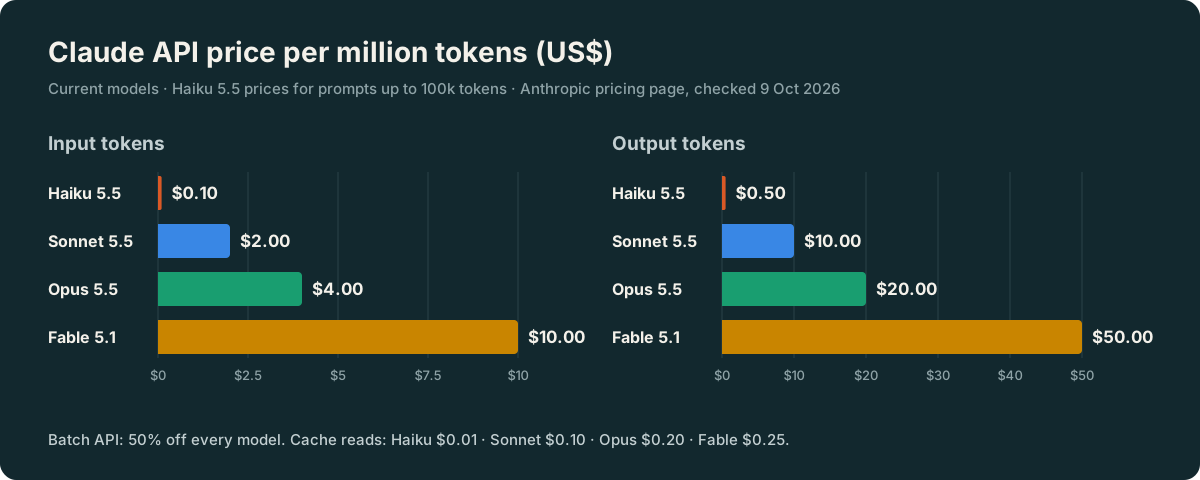
| Price per 1M tokens (US$) | Haiku 5.5* | Sonnet 5.5 | Opus 5.5 | Fable 5.1 |
|---|---|---|---|---|
| Input | $0.10 | $2 | $4 | $10 |
| Output | $0.50 | $10 | $20 | $50 |
| Cache reads | $0.01 | $0.10 | $0.20 | $0.25 |
| Cache writes (5 min) | $0.125 | $2.50 | $5 | $12.50 |
| Batch API (input / output) | $0.05 / $0.25 | $1 / $5 | $2 / $10 | $5 / $25 |
| Fast mode (input / output) | n/a | n/a | $8 / $40 | n/a |
* Haiku 5.5 prices are for prompts up to 100,000 tokens. Above that, it costs $0.50 input and $2.50 output, five times more.
A few details matter more than the headline prices:
- Haiku is the only model priced by prompt length. The other three charge the same rate across the whole 1 million token window, so a 900,000-token request costs the same per token as a 9,000-token one.
- Cache reads have become very cheap. Re-reading a cached prompt costs 5% of the input price on Opus and Sonnet, and only 2.5% on Fable. For agents that send the same long context again and again, that is often where most of the saving is.
- The Batch API halves everything if you can wait for the answer, which suits overnight jobs.
- Fast mode (research preview, Claude API only) runs Opus 5.5 up to 2.5 times faster at double the price.
- US-only processing through the
inference_geosetting adds 10% to every price.

What Does the Same Job Cost on Each Model?
Prices per million tokens are hard to picture, so here is one job: summarising 1,000 documents of about 5,000 tokens each, with a 500-token summary for each. That is 5 million input tokens and half a million output tokens.
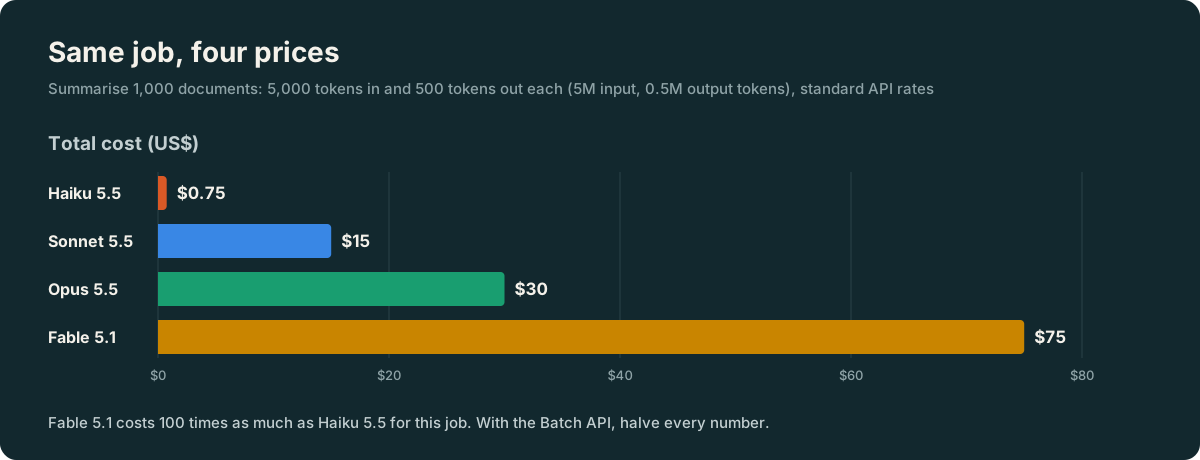
The job costs $0.75 on Haiku 5.5, $15 on Sonnet 5.5, $30 on Opus 5.5 and $75 on Fable 5.1. Fable costs 100 times as much as Haiku for the same work. This is a simple estimate at standard rates, and real costs also depend on how much the model thinks, since thinking tokens are billed as output. For a summary job that difference hardly matters, but for a long coding task the bigger models often finish in fewer steps, which closes part of the gap.
Which Claude Model Performs Best?
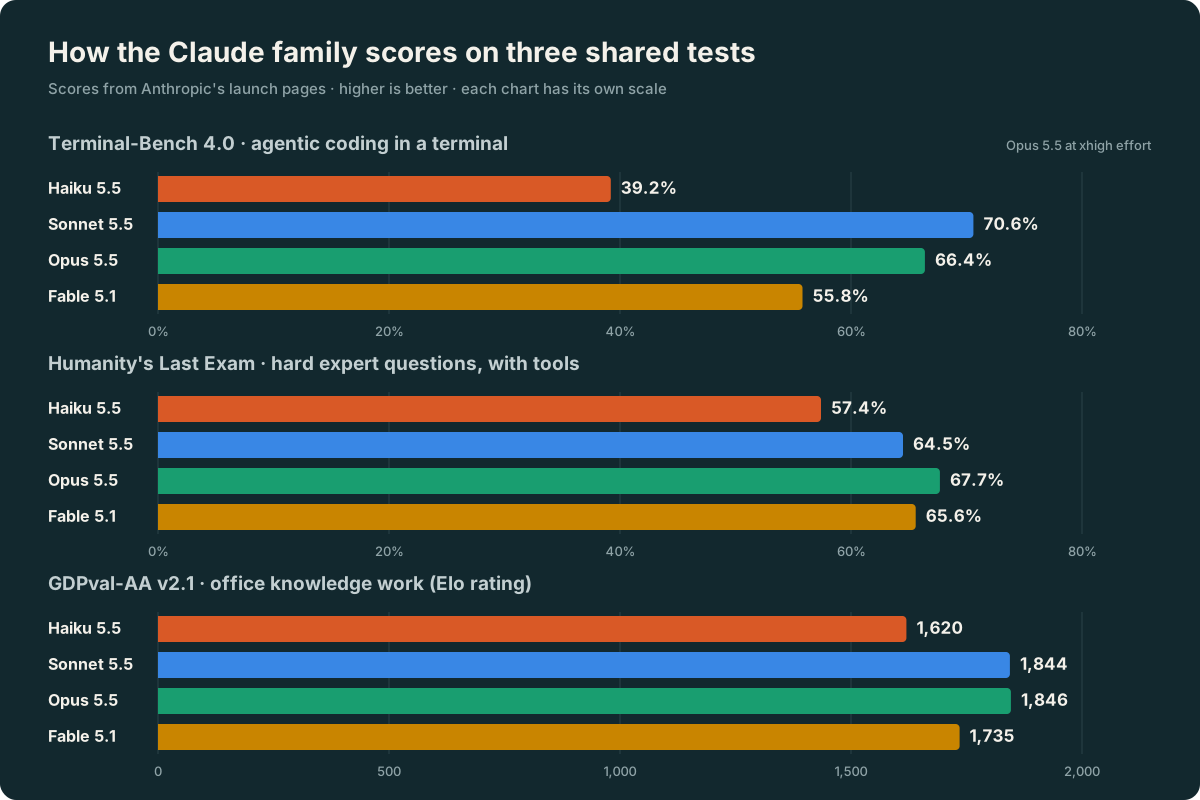
It depends on the job, and the answer is not simply "the most expensive one". The chart shows the three tests reported for all four models; the table adds one more coding test that Haiku's page does not include:
| Benchmark | Haiku 5.5 | Sonnet 5.5 | Opus 5.5 | Fable 5.1 |
|---|---|---|---|---|
| Terminal-Bench 4.0 (agentic coding) | 39.2% | 70.6% | 66.4% | 55.8% |
| Humanity's Last Exam (with tools) | 57.4% | 64.5% | 67.7% | 65.6% |
| GDPval-AA v2.1 (office work, Elo) | 1620 | 1844 | 1846 | 1735 |
| CursorBench 4.0 (agentic coding) | not reported | 55.5% | 57.8% | 51.8% |
Three things stand out:
- Sonnet 5.5 is the best of the four at agentic coding in a terminal. Its 70.6% on Terminal-Bench 4.0 beats Opus 5.5 (66.4%) and Fable 5.1 (55.8%), and it costs half as much as Opus.
- Opus 5.5 beats Fable 5.1 on every test in its launch table, nine out of nine, at 40% of the price. Anthropic says Opus 5.5 "performs at the level of Claude Fable 5.1 on most work".
- Haiku 5.5 is closer than its price suggests on knowledge tests, at 57.4% on Humanity's Last Exam against Sonnet's 64.5%. On Terminal-Bench it is far behind (39.2%), which fits my experience that small models struggle with real coding work.

A fair warning about these numbers: they are Anthropic's own results, taken from four different launch pages, and the settings differ. Opus 5.5 ran at max effort on most tests (xhigh on Terminal-Bench). Anthropic gives margins of error of about 2 to 5 points, so a 2-point gap means very little. It also notes that safety filters sometimes stepped in during tests and counted those tasks as failures, which may pull down the scores of Fable and Opus in particular. Treat the table as a rough map, not a final ranking, and test on your own work before you switch.
Why Pay More for Fable 5.1 if Opus 5.5 Scores Higher?
For most people, you shouldn't. Fable 5.1 came out three weeks before Opus 5.5, and the newer, cheaper model has caught up with it on most tests. Anthropic's documentation now says to start with Opus 5.5 for most workloads, and to use Fable 5.1 "for demanding reasoning and long-horizon agentic work, or when your evals on Claude Opus 5.5 at higher effort still fall short".
In other words, Fable is the model you try when Opus at a high effort setting has already failed. Fable is also the slowest of the four. Its launch post did show impressive research work, such as GPU code that sped up seven open-source models by up to 2.5 times. That is the kind of long, hard, unusual job where it may still earn its price. I expect a Fable 5.5 will change this picture when it arrives.
Which Claude Model Should I Use?
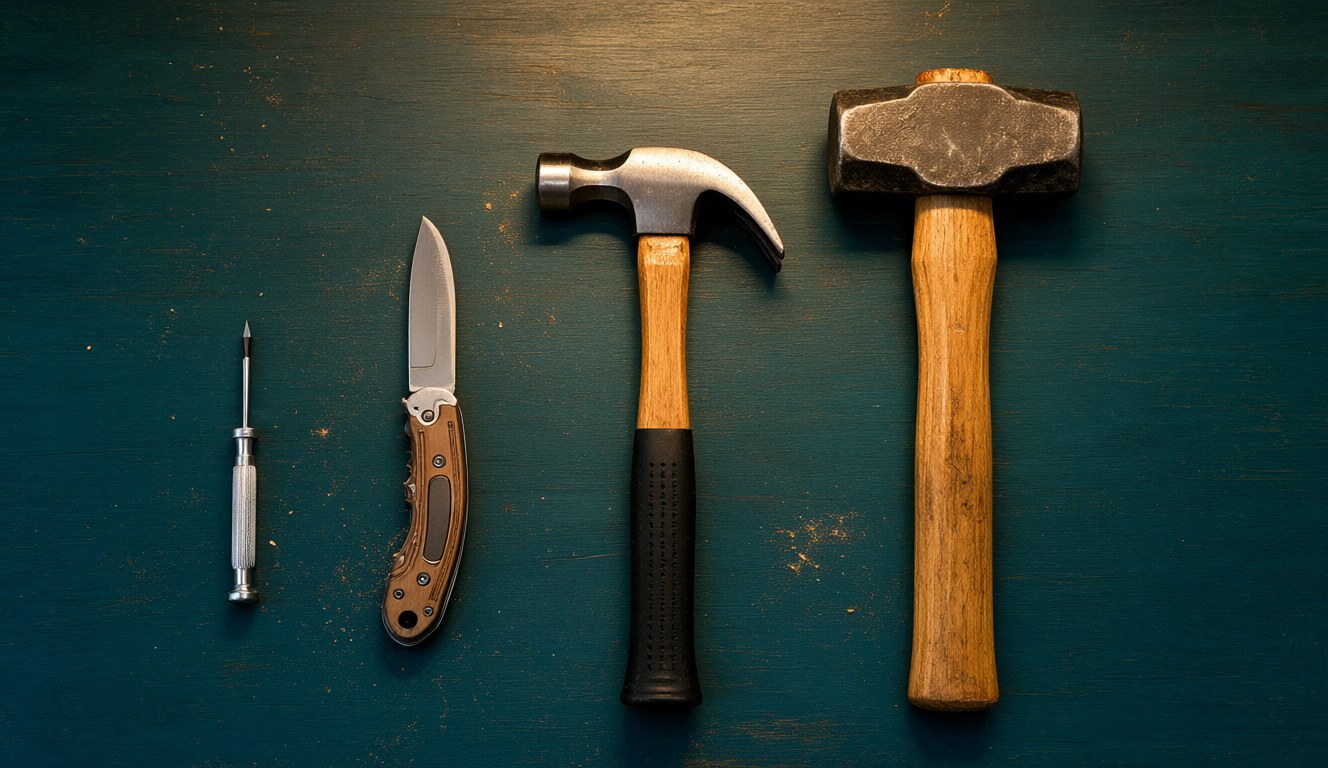
Think of the family as a toolbox. You would not use a sledgehammer to fix a pair of glasses.
- Haiku 5.5: sorting, extracting data, short summaries, chat routing, and subagents that do one small job thousands of times a day.
- Sonnet 5.5: everyday coding and agent work with a clear, well-defined task. This is the best value in the family.
- Opus 5.5: the default. Use it for planning, large changes across many files, and long tasks where a mistake is expensive.
- Fable 5.1: only for the hardest problems, after Opus at high effort has fallen short.
My own setup has not changed since my Sonnet 5.5 post: I plan with Opus 5.5 and build with Sonnet 5.5. The benchmark numbers back that up. Opus is strongest at the broad thinking, and Sonnet beats it on Terminal-Bench and comes within about 2 points on CursorBench, for half the price. I don't reach for Fable for normal development work, and I use Haiku behind the scenes rather than for code. If you are weighing these prices against running a model on your own computer, my local hardware vs cloud API guide runs those numbers.
What About the Older Claude Models?
Older models are still available as "legacy" models, including Fable 5, Opus 5, Opus 4.8, Sonnet 5, Sonnet 4.6 and Haiku 4.5. In most cases the 5.5 version is both better and the same price or cheaper:
- Opus 5 → Opus 5.5: $5/$25 down to $4/$20, and Anthropic says about 40% cheaper to run on typical work.
- Sonnet 4.6 → Sonnet 5.5: $3/$15 down to $2/$10. Sonnet 5 already costs $2/$10.
- Haiku 4.5 → Haiku 5.5: $1/$5 down to $0.10/$0.50.
- Fable 5 → Fable 5.1: same $10/$50, but cache reads drop from $1 to $0.25.
One catch when you move from Sonnet 4.6 or older: the newer models use a tokenizer that produces about 30% more tokens for the same text, so part of the price cut goes back into extra tokens. Anthropic also promises that none of the four current models will be retired before September or October 2027.
Related reading: Claude Haiku 5.5: cheaper, faster, and where it fits · Claude Opus 5.5 explained · Claude Sonnet 5.5 · Why you should avoid annual AI subscriptions in 2026
Sources
- Anthropic, "Pricing", platform.claude.com/docs/en/about-claude/pricing: all prices, cache, batch, fast mode, long context, data residency and tokenizer notes.
- Anthropic, "Models overview", platform.claude.com/docs/en/about-claude/models/overview: descriptions, speed, default effort, context, cutoffs, retirement dates, and the "start with Opus 5.5" advice.
- Anthropic, "Claude Haiku 5.5", anthropic.com/claude-haiku-5-5 (7 October 2026): Haiku 5.5 scores.
- Anthropic, "Claude Sonnet 5.5", anthropic.com/claude-sonnet-5-5 (28 September 2026): Sonnet 5.5 scores.
- Anthropic, "Claude Opus 5.5", anthropic.com/claude-opus-5-5 (22 September 2026): Opus 5.5 and Fable 5.1 scores, the 40% running-cost claim.
- Anthropic, "Claude Fable 5.1 and Mythos 5.1", anthropic.com/claude-fable-and-mythos-5-1 (1 September 2026): Fable 5.1 pricing, availability and research results.
Figures checked on 9 October 2026. Each model's scores come from its own launch page; Fable 5.1's come from the Opus 5.5 page, which uses the same test versions. The Haiku and Sonnet pages give Sonnet 5.5 slightly different GDPval scores (1840 and 1844); I used Sonnet's own page. The cost example is my own arithmetic at standard rates. This article was researched and drafted with AI assistance and reviewed by me. The images were made locally with Qwen Image 2.1 on an 8 GB RTX 4060 Ti, and the charts were drawn from Anthropic's published numbers.