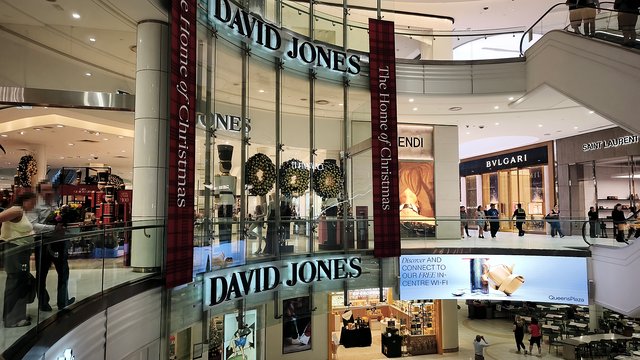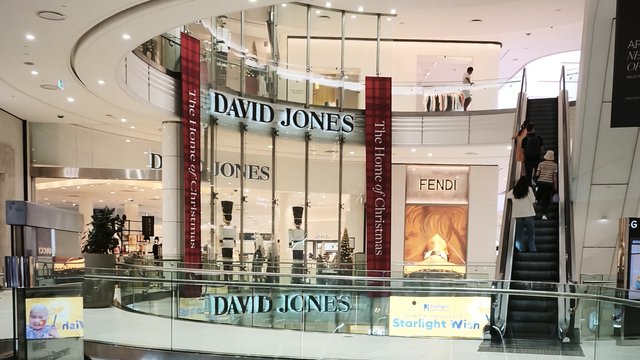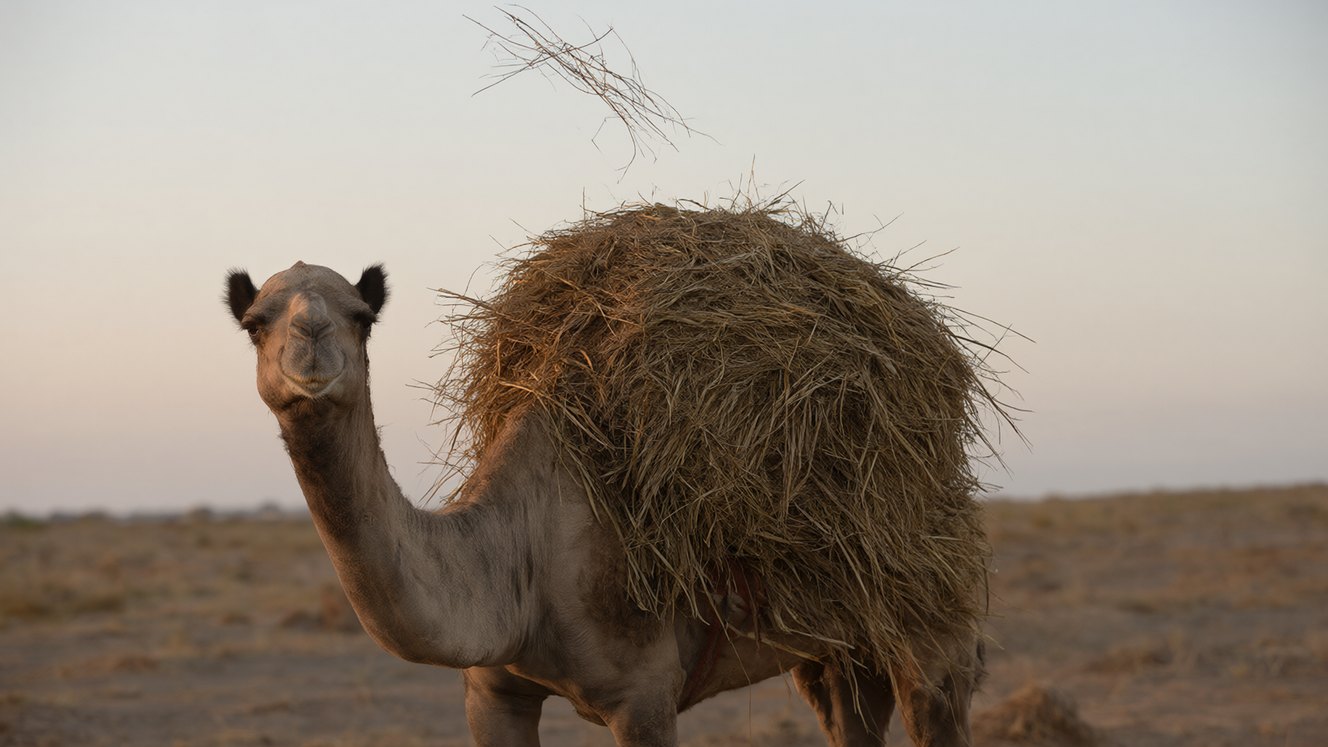
The last straw? Image made locally with Qwen Image 2.1.
When David Jones went into administration, a lot of people said the market is dead, and that the government or the Reserve Bank killed it. I don't think the official numbers back that up. In the 2026 financial year, Kmart, Woolworths and Uniqlo all grew their profits. Shoppers are still spending. They're just spending at value stores, not department stores. Higher interest rates were probably the last straw for David Jones, but the camel was already carrying a very heavy load.
This is the third post in my David Jones series. The first covered why a 188-year-old store fell, and the second was what the Brisbane City store looked like the day after. This time I went back to the source documents: the companies' results filed with the ASX, David Jones's accounts lodged with ASIC, and the Reserve Bank's own statements. I also talk it through in Cantonese on my Brisbane真好 podcast.
Did the government or the RBA kill David Jones?
Not on their own. Rates and inflation hurt every retailer, yet several big ones grew their profits this year, so they can't be the whole story.
Someone told me yesterday that Labor had killed the department stores. First, I should say I'm a swing voter. I've voted for both major parties, one at one election and the other at the next. So I'm not here to defend anyone. I just don't like blaming one thing for everything.
The pressure is real. The Reserve Bank, which sets interest rates independently of the government, lifted the cash rate to 4.85% on 3 November 2026. That was its fifth rise this year, and inflation was 4.3% in September. Myer's own results blame three rate rises, higher fuel prices from the Middle East conflict, slower income growth and a warm start to winter for weak sales in June and July. So the mood is hurting. But is it really that simple?
Is Brisbane City actually quiet?
Not from what I saw. I walked around the City yesterday, and the mood on the street was not bad at all.
The contrast was what struck me. Uniqlo's old store in Queen Street has closed, but not because Uniqlo is leaving. It's moving into the old H&M site, which looks about twice the size, and the hoarding says it opens on 27 November. On weekends, the queues at Costco are crazy. Queen Street Mall had plenty of people sitting, eating and walking around.
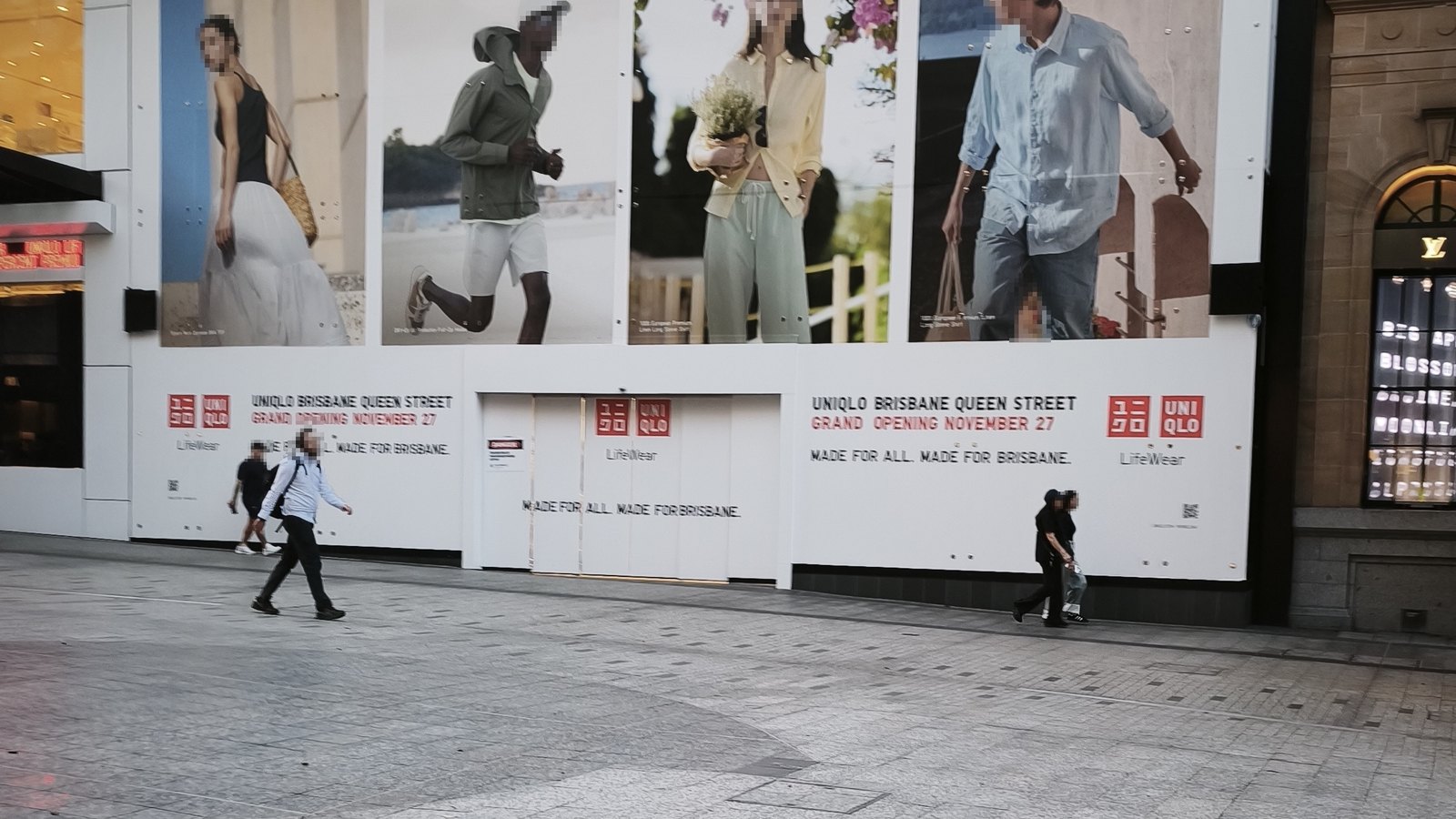
My own photo: Uniqlo's new, bigger Queen Street store opens on 27 November. Faces are blurred.
One walk is not a survey, of course. So I checked what the big retailers reported in their latest annual results.
What do the official results say?
The value retailers grew, and the department stores went backwards. Here are the latest full-year figures from each company's own filings.
| Company | Year | Sales | Profit |
|---|---|---|---|
| Kmart Group (Kmart, Target, Anko) | to 30 Jun 2026 | A$11.75b, +2.8% | Earnings A$1.109b, +6.0% |
| Woolworths Group | to 28 Jun 2026 | A$71.5b, +3.6% | NPAT before significant items A$1.599b, +15.4% |
| Uniqlo International (Fast Retailing) | to 31 Aug 2026 | ¥2.41 trillion, +26.2% | Business profit ¥439.8b, +44.1% |
| Myer Group | to 25 Jul 2026 | A$4.09b, +11.3% (+0.3% like-for-like) | Underlying NPAT A$42.5m, −32.1% like-for-like; statutory loss A$276.5m |
| David Jones | to Jun 2025 (latest lodged) | About A$2b, −8.7% | Pre-tax loss A$95.5m (FY24: loss A$74.1m) |
Profit measures differ by company, so compare the direction, not the size. Uniqlo doesn't report Australia on its own.
Profit change in the latest year
Is Myer doing well with A$4 billion in sales?
Not really. Its sales passed A$4 billion and rose 11.3%, but almost all of that growth came from buying Apparel Brands, the group behind Just Jeans, Jay Jays, Portmans, Dotti and Jacqui E.
When I first saw the headline I thought, wow, impressive. Then I remembered the merger. Myer's results compare the two years with Apparel Brands included in both, and on that like-for-like basis sales rose just 0.3%. Myer also says it ran more promotions than planned to bring shoppers in, which squeezed its margins. Underlying profit fell 32.1% on that basis. After a A$279.6 million write-down of goodwill, brands and stores, Myer posted a statutory loss of A$276.5 million and paid no final dividend.
So Myer is the other half of the picture. It hasn't collapsed, and it has net cash of about A$100 million. But it shows the department store model is under pressure too, not just David Jones. In the first eight weeks of the new year, Myer's comparable sales were flat (+0.2%), and its Apparel Brands stores were down 5.9%.
Where is the money going instead?
To retailers that sell on price, or that have huge scale and a clear brand.
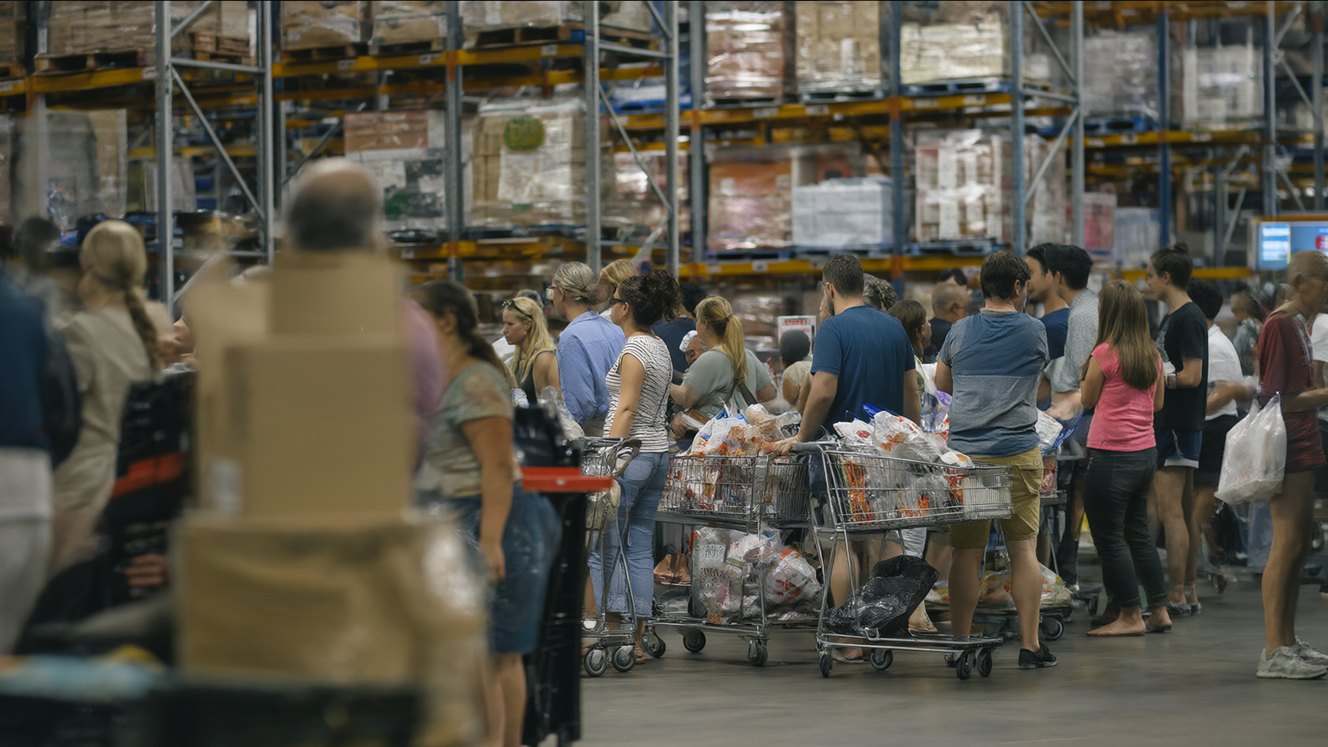
Bulk buying and long queues. Image made locally with Qwen Image 2.1.
- Kmart. Earnings rose 6.0% to A$1.109 billion. Wesfarmers says Kmart cut prices on more than 2,500 items during the year, and both customer numbers and transactions grew. Its own Anko brand reminds me a bit of Taobao: cheap, fast and always something new.
- Woolworths. Profit before significant items rose 15.4% to about A$1.6 billion. BIG W even returned to profit, with A$64 million of earnings after a loss the year before.
- Uniqlo. Fast Retailing doesn't publish an Australian profit figure. But Uniqlo International's business profit rose 44.1%, and the company says its Southeast Asia, India and Australia region grew revenue and profit by double digits. That fits a store that is doubling its size in Queen Street.
Both Woolworths and Wesfarmers still warn that households are under pressure. Woolworths expects "the challenging economic environment to continue". That's the point, though. In a tough market, people trade down to value. The money is still moving around the economy. It just isn't going to David Jones.
What do David Jones's ASIC filings show?
A business that was losing money and selling less well before rates rose this year. Its accounts lodged with ASIC show a pre-tax loss of A$74.1 million in FY24 and A$95.5 million in FY25, while sales fell 8.7% to about A$2 billion.
Two more details stand out. David Jones is a large proprietary company, so it must lodge a financial report with ASIC within four months of its year end. Reports say its FY25 report arrived about six months late, in April 2026, and its latest report was not lodged on time either. When a company is late with its own numbers, that's rarely a good sign. (The ABC, also citing ASIC documents, gives the FY25 loss as A$62 million. That is probably a different measure, such as after tax, but I couldn't confirm it.)
In my view, the problems started well before 2026. After South Africa's Woolworths Holdings (no relation to our supermarket) bought David Jones for A$2.1 billion in 2014, it changed the store a lot. The best spots went to its own group brands, mainly Country Road. It no longer felt like the old David Jones. Then private equity firm Anchorage Capital Partners bought it in a deal announced in December 2022, reportedly for around A$100 million, and kept cutting costs. The store that used to be clearly high-end kept drifting down.
To be fair, some things are still OK. To me, the Brisbane City store at Queens Plaza still feels a little more upmarket than the rest.
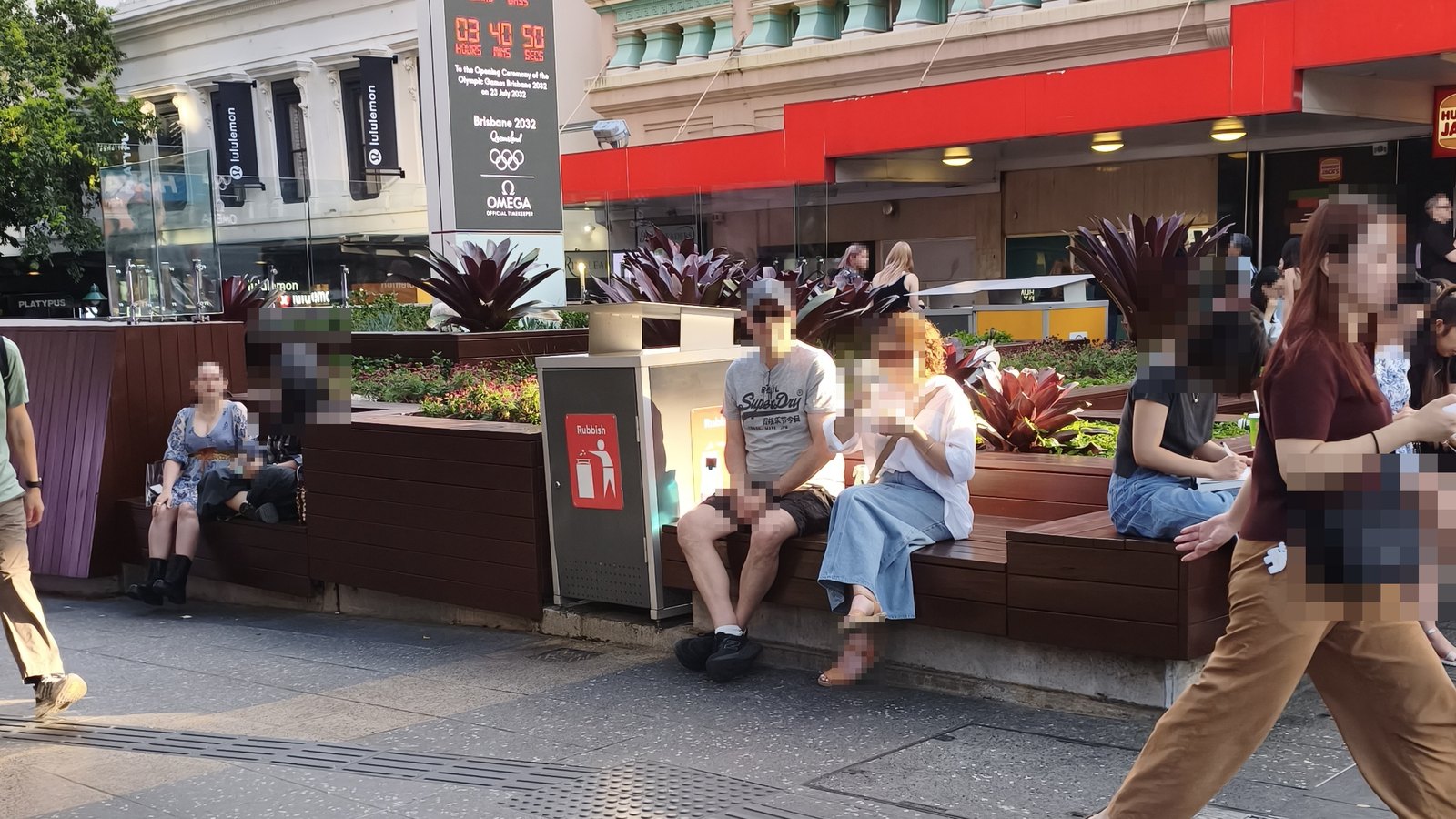
My own photo: Queen Street Mall, Brisbane City. Faces are blurred.
What happens next for David Jones?
The administrators will try to sell or recapitalise the business while the stores keep trading, and creditors meet for the first time on 17 November.
On 5 November 2026, the directors appointed McGrathNicol as voluntary administrators. The lender, Hilco, appointed FTI Consulting as receivers and managers of ACP Riley Street Midco Pty Ltd, the parent of David Jones Pty Limited, and related companies. The 38 stores and the website are still open, and about 6,000 people work there.
ASIC's guide for creditors explains the steps. The first creditors' meeting has to be held within eight business days, and this one is set for 11am on Tuesday 17 November. A second meeting, usually about five weeks after the appointment, decides the company's future: a deal with creditors (a deed of company arrangement), handing control back to the directors, or liquidation.
Who could be next after David Jones?
I don't know, and I won't pretend to. I think David Jones fell first because it already had its own problems, not because it was the only one in the water.
The first sandcastle to fall is the weakest one. Image made locally with Qwen Image 2.1.
Is the higher-rate economy the last straw? I totally agree. Is there no business left at all? No, the results above show there is. The retailers that sell on value, or have huge scale, are doing fine. The ones in the middle, without a clear reason to visit, are the ones at risk when the wave comes in. Myer's flat start to the year and its falling Apparel Brands sales are worth watching. Living costs matter here too: prices have risen faster than wages since 2019 (my wages vs inflation breakdown has the numbers), and the RBA's November rise to 4.85% won't help this Christmas.
It needs time, and I won't say anything for sure. Take it as my two cents. If you hunt bargains too, my weekly Coles vs Woolworths price comparison is free.
What do you think: did David Jones die because of the market, or because of itself? And who do you think is next? Tell me in the YouTube comments.
Fact check: what I said vs what the sources say
| What I said | What the sources say | Verdict |
|---|---|---|
| Rates rose five times this year | Fifth 2026 rise on 3 November, to 4.85% | True |
| Myer sales about A$4 billion, up 11.3% | A$4,088.8m, +11.3% actual; +0.3% like-for-like; statutory loss A$276.5m | True, needs context |
| Kmart earned A$1.11 billion, up 6% | Kmart Group earnings A$1,109m, +6.0% | True |
| Woolies profit up 15% | NPAT before significant items +15.4% (after them, +18.1%) | True |
| Uniqlo international profit up 44% | Uniqlo International business profit +44.1%; no Australian figure | True |
| David Jones was bought by Woolworths, then by private equity | Woolworths Holdings (South Africa), 2014; Anchorage Capital Partners, announced December 2022 | True |
Sources
- Myer Holdings, FY26 Results and Myer Group Growth Strategy Progressed, ASX announcement, 23 September 2026.
- Wesfarmers, 2026 Full-year Results, ASX announcement, 27 August 2026 (Kmart Group, page 8).
- Woolworths Group, F26 Full Year Profit and Dividend Announcement, 26 August 2026.
- Fast Retailing, Financial summary, FY2026, released 8 October 2026.
- ASIC, Voluntary administration: A guide for creditors (INFO 74).
- Reserve Bank of Australia, Statement on Monetary Policy, November 2026.
- The Nightly, David Jones reveals $95m loss, 28 April 2026 (accounts lodged with ASIC).
- ABC News, Brands asked to keep supplying David Jones despite unpaid debts, 7 November 2026 (ASIC documents, about 6,000 staff, first creditors' meeting).
- Retail World, Voluntary administrators appointed for David Jones, 6 November 2026 (appointees and companies).
- Flux, David Jones late to report its FY25 loss (late lodgement).
- Street walk and photos: my own, Brisbane City, November 2026. Faces are blurred.
Checked 7 November 2026. This is my personal view, not financial advice. The research used AI-assisted search, checked against the company filings above. Three images were made locally with Qwen Image 2.1, and AI helped me edit the English.