Google Playground lets you make a game by chatting with AI, but you can't use it in Australia yet. I'm not waiting. I already build games with a coding agent: a few free HTML games on this site, and now a space strategy game in Godot, where Claude writes the C# and also builds the 3D models in Blender.

What is Google Playground?
Google Playground is an experimental website from Google Labs where you describe a game in a chat and it builds one you can play in the browser. Google announced it on 7 October 2026 with the line "If you can think it, you can play it." The Labs page sums it up in three words: create, play, share.
Here is how it works, going by Google's own pages:
- You type what you want in plain words. No coding is needed. You can start from a blank page, remix a starter prompt, or let it help you shape an idea, then test the game straight away and ask for changes.
- Popular genres include trivia, tower defence and racing. The example games on the Labs page include a dream-themed platformer, a 3D word spelling game called Word Cube, a retro 3D tank battle and a snowboarding game with a combo timer.
- A game can stay private, be shared with a link, or be published to the Explore gallery, which highlights games by player ratings and how much they are played.
- Some genres get in-game leaderboards and multiplayer. A Play Games profile gives you a handle, and you can like and follow games and creators.
- It runs in the browser, so games work on a phone or a laptop.
- Every published game goes through a safety check against Google's Community Guidelines, and players can report games.
Google is also working with Unity on Unity Spark, a version for more serious creators with "high-fidelity 3D" and the Unity runtime. Unity says it is coming "later this year". It isn't out yet.
Can you use Google Playground in Australia?
No. Google launched it for users in the U.S. who are 18 or older, and the Labs page says only "Available in select countries." Google hasn't said when other countries will get it. The Labs page also says "Subscription may be required", and creation access depends on your Google AI plan.
I think it looks fun. A parent and a 10-year-old could make a small game together in an evening, and that is a good thing. But it isn't here yet, and the games you make are hosted and shared on Playground rather than on your own website.
How do I make games with a coding agent instead?
I use a coding agent, Claude Code or OpenCode, as the programmer, and I stay the designer. I write down what the game should be, the agent plans the work and writes the code, and I play it and say what's wrong. The difference from Playground is that I get real files at the end: HTML, C# and 3D models that I own and can put anywhere.
The small games on this site were made this way, with Claude and OpenCode. Treasure Maths is a 3D times tables game, Block Drop 3D is a falling-block puzzle in WebGL, and Rocket Spelling reads a word aloud and the child types it. They are plain HTML and JavaScript files. There is no app store and no login, and they load on a phone.
What does a bigger game look like with Godot and Claude?
My bigger project is AdvGen: Orbital Empires, a turn-based space 4X game in Godot 4.7 with C#. You explore a hex galaxy, mine minerals and energy, research technology, build new space stations, and try to beat one AI rival by conquest, science or economy. It isn't released yet.
Here is where it stands, counted from the project folder:
| Part | Size |
|---|---|
| Game rules and AI (plain C#, no Godot) | about 6,400 lines |
| Godot scenes, UI and 3D view (C#) | about 10,000 lines |
| Automated tests (NUnit) | 393 |
| 3D models built in Blender | 25 |
| Git commits since 8 July 2026 | 125 |
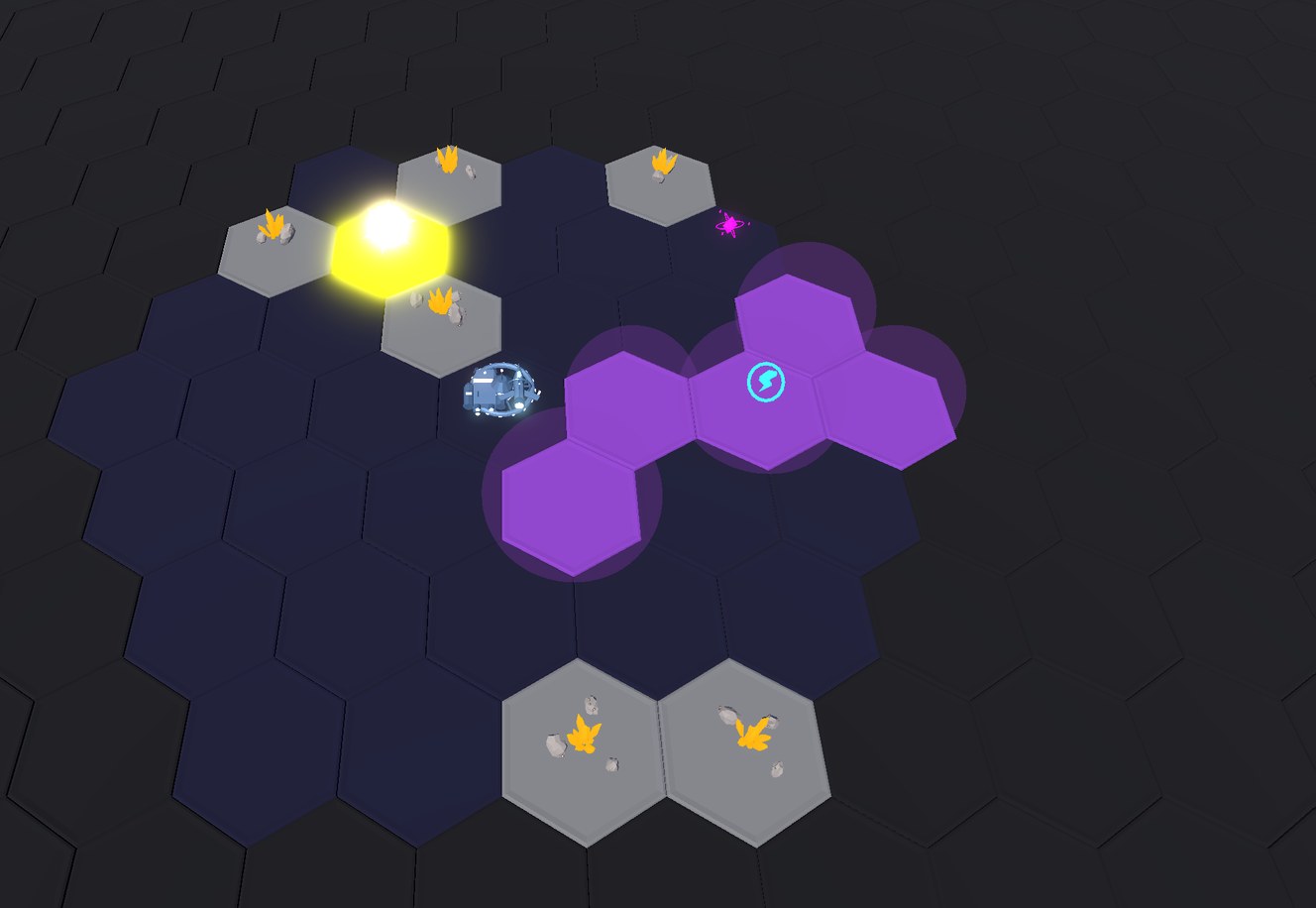
One design choice made the agent much more useful. The game rules live in a plain C# library with no Godot code in it, so the tests run from the command line with dotnet test. Claude can't watch the screen while I play, but it can run 393 tests in seconds and see what broke. That matters most for the AI opponent. Every move it makes is scored and written to a log, so when it does something silly I can ask "why did it do that?" and get an answer from the log.
Can Claude make 3D models in Blender?
Yes, if you let it build them in code. Claude doesn't sculpt. It writes a Python script for Blender that puts together boxes, cylinders and spheres, joins them into one mesh and exports a .glb file for Godot. The script for Orbital Empires is about 600 lines and makes all 25 models: ships, station modules, asteroids, a black hole and the hex tile.
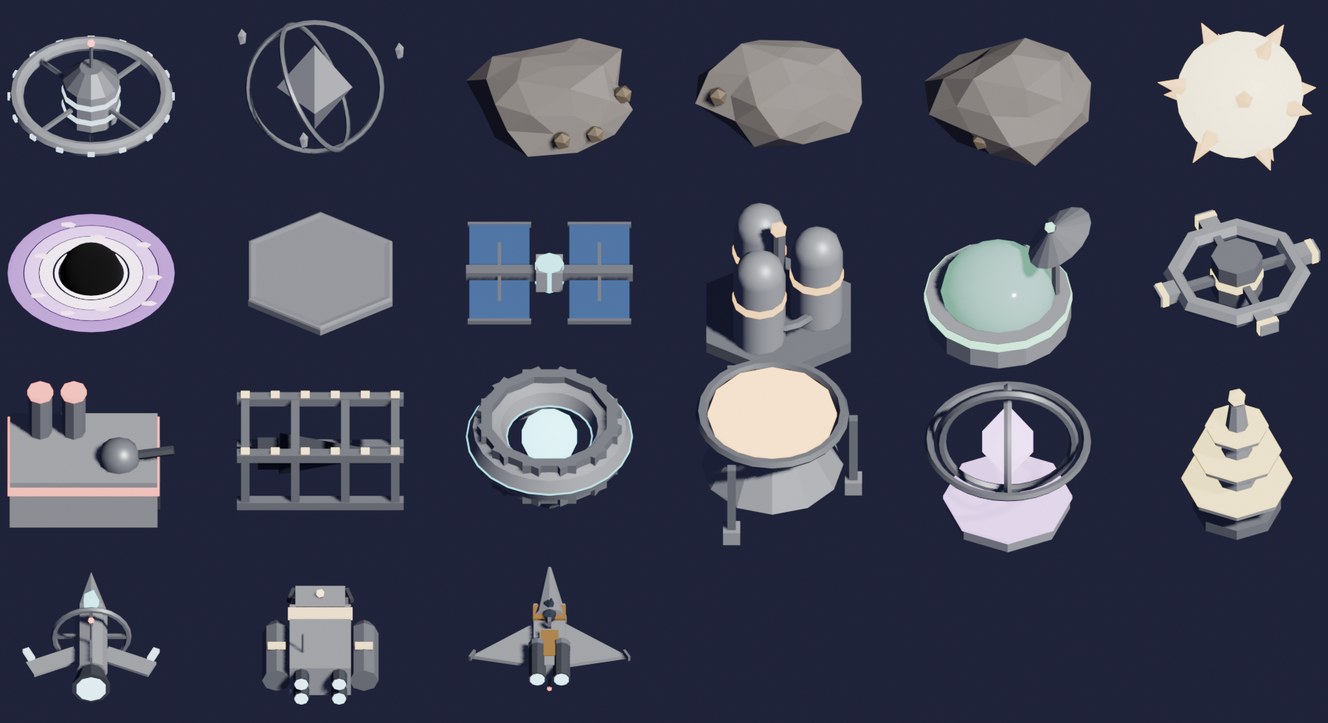
There are no hand-made .blend files at all. If I want the fighter longer or the refinery a different colour, Claude edits the script and runs Blender in the background again. The same script can render a preview sheet like the one above, so the agent can check its own work as an image. The models are simple low-poly shapes. They are not art you would put on a poster, but they are good enough for a strategy map, and they cost nothing.
Which is better: Playground or a coding agent with Godot?
It depends on what you want at the end. If you want to play with an idea for an evening, Playground is easier, when it reaches you. If you want a game you can keep, change, test and publish on your own site or sell, a coding agent with Godot or Unity is the better path.
| Google Playground | Coding agent + Godot | |
|---|---|---|
| In Australia | Not yet (U.S., 18+) | Yes |
| Coding needed | None | Some, to read and test what the agent writes |
| What you get | A game hosted on Playground | Your own files: code, models, exports |
| Engine cost | Subscription may be required | Godot is free (MIT licence) |
| Best for | Quick ideas, fun with family | Games you want to finish and publish |
The agent doesn't replace the design work. Claude writes the code in Orbital Empires, but the decisions about rules, balance and what is fun are still mine, and so are calls like the licence. I wrote more about that shift in why IT degrees still matter in the age of AI.
Where should a beginner start?
Start with one small HTML game, not a 4X. A single file that runs in the browser is easy for an agent to write and easy for you to test. Ask for one feature at a time and play it after each change. When that feels comfortable, move to Godot, and keep the game rules in code the agent can test without the editor.
If you have kids, try the free games on this site first and then ask them what they would change. That question is a good first prompt. I'd like to hear what you build, or what you think of Playground if you're in the U.S. and have tried it. Send me a note through the contact page.
Sources
- Google, Introducing Playground: Create and play custom games, 7 October 2026
- Google Labs, Playground
- Unity, Google and Unity partner on new AI gaming platform, 7 October 2026
Checked 19 October 2026. Project numbers are from my own AdvGen: Orbital Empires repository on that date. The cover image was made locally with Qwen Image 2.1, and AI helped me edit the English.