
Digit Slide
23 × 100? Slide the digits two places left on the place-value chart and watch the zeros fill in. Twelve cases of × and ÷ by 10, 100, 1000 and multiples of 10, like 6 × 30.
Start at basecamp with big numbers, walk through the decimal point into tenths and hundredths, slide digits up and down the mountain, and spot odd or even from a single glance.
Five free games plus short lessons for Year 4 place value, decimals, × and ÷ by 10, 100 and 1000, odd and even numbers, and clever strategies. No downloads, no accounts, no ads.

Each game trains one Year 4 number skill, and every answer shows the working, whether you were right or took a wrong turn.
23 × 100? Slide the digits two places left on the place-value chart and watch the zeros fill in. Twelve cases of × and ÷ by 10, 100, 1000 and multiples of 10, like 6 × 30.
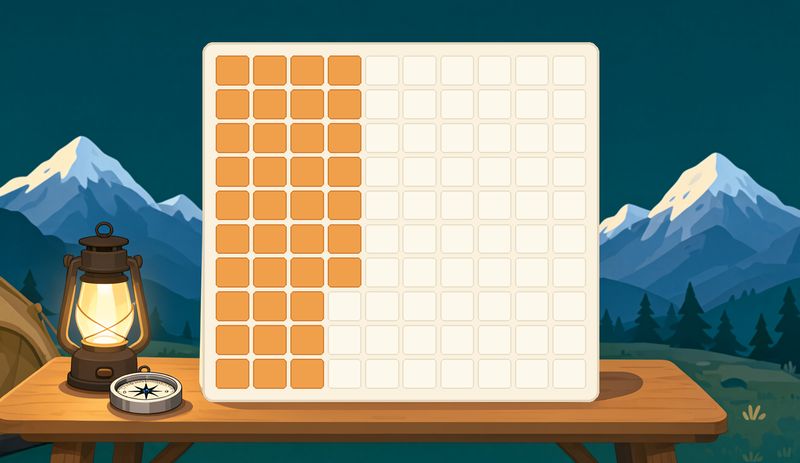
Shade 0.45, then 6 tenths, then the sneaky 0.05. Every column is a tenth and every square a hundredth, so decimals become something you can see and touch.
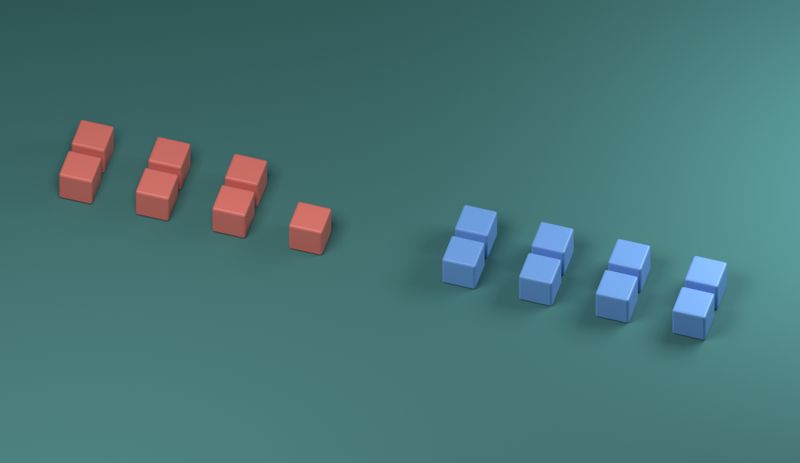
Is 75 931 odd? One glance at the last digit decides. Then predict whether 357 + 219 or 13 × 7 will be odd or even, without working it out.
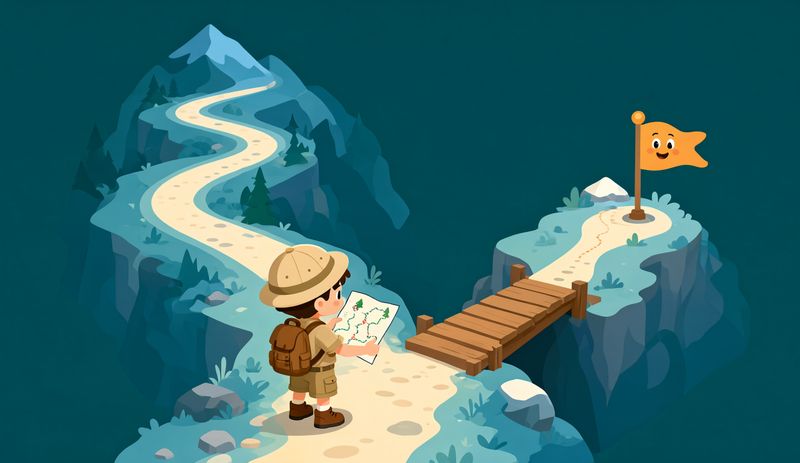
First pick the smartest plan (bridge to 200, double and double again, use a fact you own), then solve. The last case is a calculator job: estimate first, then check.

Ten questions from warm-up to challenge that mix everything: digit values, halfway decimals, × 100 machines, even-number lists and the most efficient strategy.
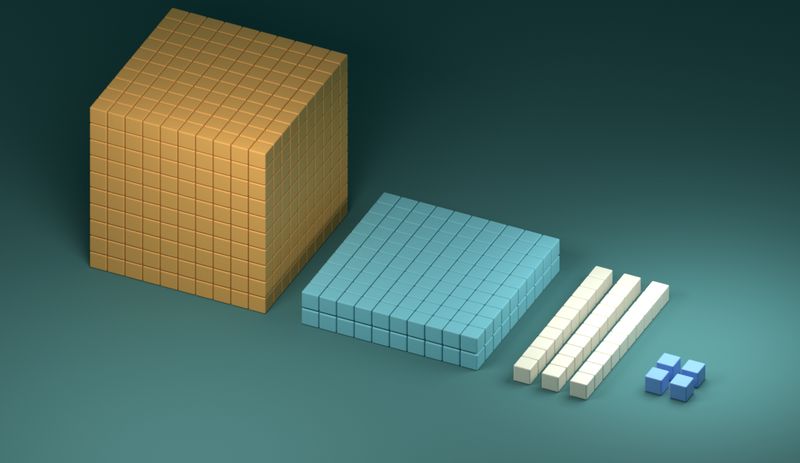
Five short lessons with worked examples, a Word Power list, two hands-on activities and a place-value reader: type any number and see every digit in its house.
A 7 can mean seven ones, seven tens or seven tenths. Every game asks "which house does this digit live in?", the question that makes decimals and big numbers make sense.
"Add a zero" breaks on 4.5 × 10. Sliding digits one place per × 10 always works, for whole numbers now and for decimals later.
Choosing a strategy first (bridge, double, use a known fact, or reach for a calculator) builds the flexible thinking that speeds up every later year.
In Year 4, place value stretches in two directions. Whole numbers grow to tens of thousands, and the decimal point opens two new places to the right: tenths and hundredths. Children learn that each place is worth ten times the place to its right, which is why multiplying by 10 slides every digit one place left, and why 0.9 is bigger than 0.15 even though it looks shorter.
"To times by 10, add a zero" works for 23 but gives the wrong answer for 4.5 (the answer is 45, not 4.50). Digit Slide shows what really happens: the digits keep their order and move to bigger houses, and zeros only hold the empty places. Multiples of 10 are handled in two steps, a fact the child already knows and then a slide: 6 × 30 = 6 × 3 × 10 = 180.
The last digit decides whether any whole number is odd or even, however big it is, because every ten shares into pairs. That same idea predicts sums (odd + odd = even) and products (anything × even = even). Strategy Trail then practises choosing an efficient plan, such as bridging 199 + 56 through 200, doubling twice for × 4, or estimating first and using a calculator for a long list of four-digit amounts.
Place Value Peaks supports the Australian Curriculum: Mathematics Version 9.0, Year 4: AC9M4N01 (tenths and hundredths), AC9M4N05 (multiplying and dividing by multiples and powers of 10), AC9M4N02 (odd and even numbers) and AC9M4N06 (efficient strategies and digital tools). The exact wording of each content description is on the References page.
Content description codes are from the Australian Curriculum: Mathematics Version 9.0, © Australian Curriculum, Assessment and Reporting Authority (ACARA) 2010 to present, licensed under CC BY 4.0. ACARA does not endorse, sponsor, or affiliate with Place Value Peaks or Maths Explorers Club.
Everything runs in the browser on a computer, tablet or phone. No downloads, no accounts, no ads. Best streaks are saved on the device only.
Year 4 number skills: tenths and hundredths, multiplying and dividing whole numbers by 10, 100, 1000 and multiples of 10, odd and even numbers, and efficient mental strategies for the four operations, including when a calculator is the right tool.
It is written for Year 4 (about ages 9 to 10) and follows the Australian Curriculum: Mathematics Version 9.0. Year 3 children can try the Odd or Even and Digit Slide games, and Year 5 children can use it for revision.
Yes, it is free. There are no ads, no accounts and no downloads. Best streaks are saved in your browser on this device only.
Yes. Every game runs in the browser on a phone, tablet or computer, using taps or clicks.
AC9M4N01 (tenths and hundredths), AC9M4N05 (multiplying and dividing by multiples and powers of 10), AC9M4N02 (odd and even numbers) and AC9M4N06 (efficient strategies and digital tools).
Place Value Peaks is one of several free learning games by Michael Leung. All run in the browser, with no ads and no sign-up.
The Year 4 algebra trail: crack pattern rules, weigh number sentences on a see-saw and find the unknown.
A free 3D times tables game for ages 5–12. Open treasure chests with the right answer and build a rocket.
Hear a word, type it, launch the rocket: the Year 3–4 word list plus everyday words.
Free, ad-free learning games take time to build. If they help at home or in class, you can say thanks with a coffee.